10 Horrible Home Upgrades You’ll REGRET
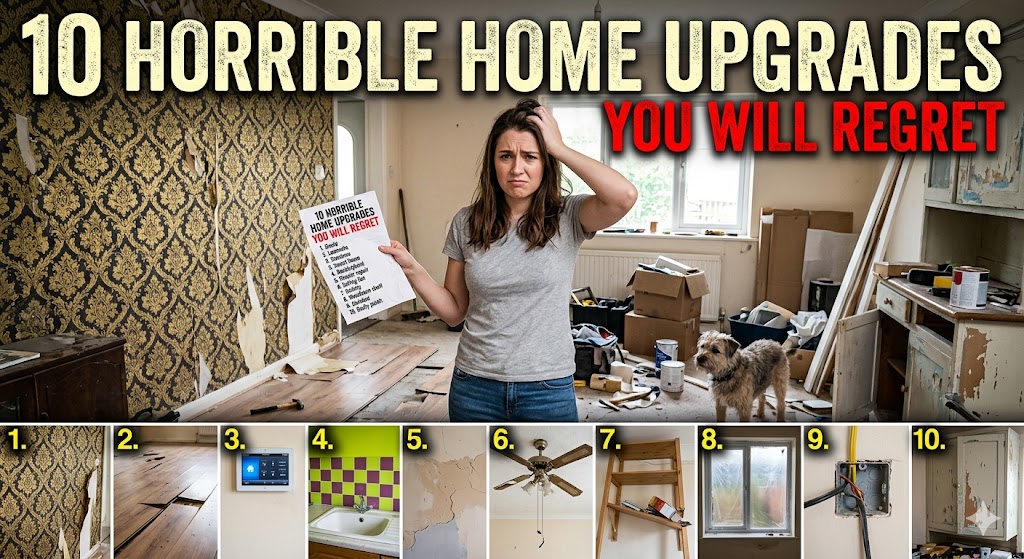
Spend enough time on Instagram and you'll start convincing yourself that a marble island and open shelving would completely transform your kitchen. Then you actually get them — and reality hits fast.
Some home upgrades look amazing on Instagram, but in real life, they cost you money, comfort, and your sanity. Today, I'm walking you through 10 home features that look good in a magazine, but become daily regrets once you actually live with them. And while you're at it, because I'm going to give you better alternatives for each one so that you don't waste your time or your budget. As we're going through this, if you've made these mistakes or know someone that has, so that you can help anybody reading this article.
The first thing I want to talk about is those beautiful microwave and oven combo units. These combo appliances are designed to save space and give you that high-end built-in look. But what they don't tell you is that when the microwave breaks, which is far more common than the oven failure, you're stuck. You often can't replace just the microwave, so you're looking at replacing the entire combo unit. And worse, manufacturers stop making parts for these fairly quickly. If your model's a few years old, good luck finding a match.
Why Combo Appliances Can Cost You More in the Long Run
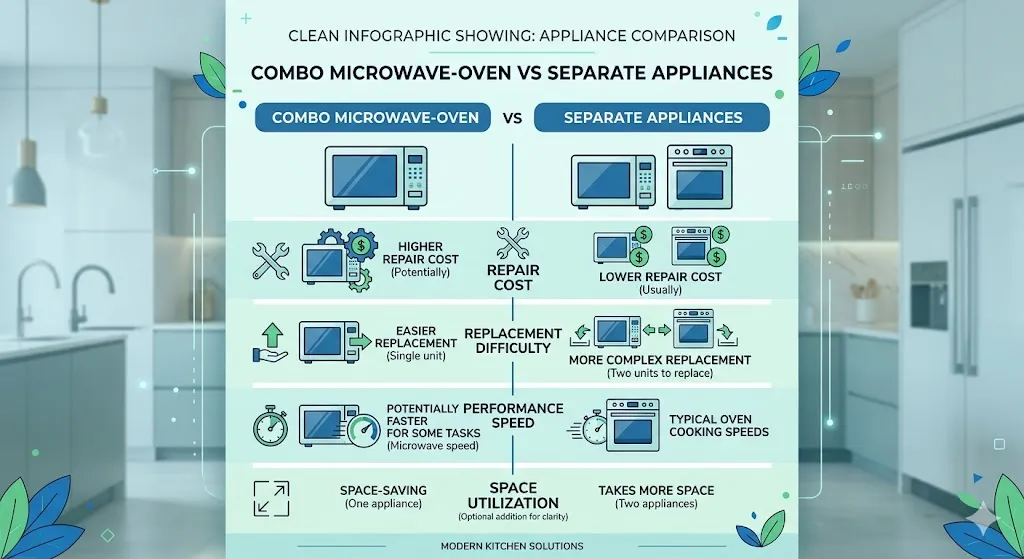
Combo units may look sleek, but replacing them can be costly and inconvenient.
And let's talk about performance. The microwaves in these units tend to be underpowered. They're smaller capacity, slower cook times, and the oven often missing the features you'd get in a standalone unit.
In fact, a couple of years ago, one of my clients dropped over $3,000 on a combo unit. The microwave had stopped heating, and there were no replacements part. They had to demo the whole thing and refigure their entire cabinetry to fit new separate units.
a better option is to buy separate appliances. Use a trim kit for a built-in look, and if one breaks, you're not tearing out your whole kitchen.
The second one I'm going to talk about is very, very trendy on Pinterest, on Instagram, and it looks really nice, but it's not functional, and we're talking about open shelving in kitchen. As I said, it looks amazing on Pinterest, but open shelving is a daily cleaning chore no one tells you about. Dishes, glasses, mugs, they all collect grease, dust, and cooking residue. Especially if you cook frequently, you're wiping down plates, and glasses before you're ever using them.
unless your dishwear is fully matching and colorcoordinated, it just looks messy. Plastic containers, kids cups, random coffee mugs, these things don't belong on display. And if you're anything like me, my dishwear is chipped. We just went to Target and bought all new dishwear only to have it completely chipped just a couple of months later because the kids are the ones loading it in and out of the dishwasher. So imagine having that on your display.
Open Shelving vs Cabinets: Style vs Daily Practicality
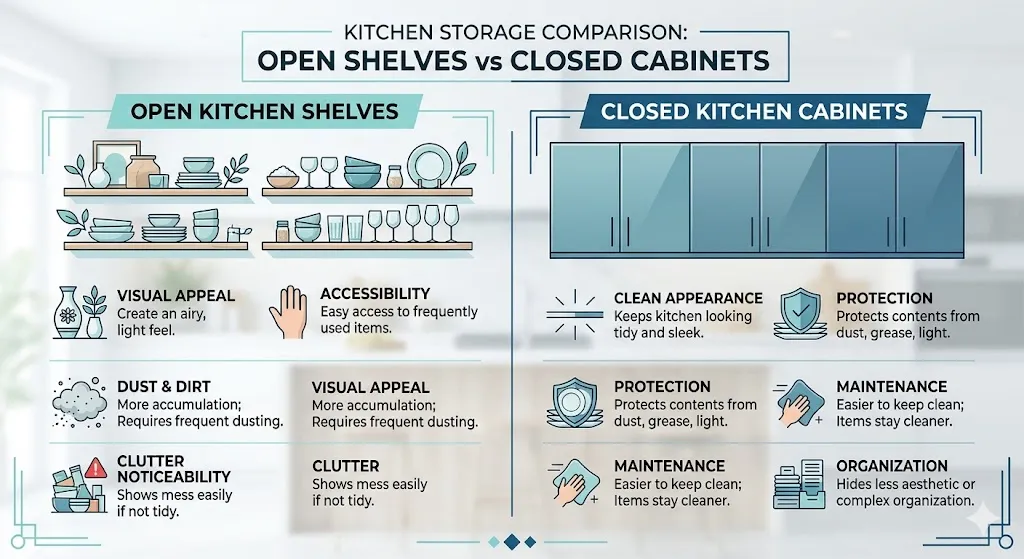
Open shelves look great online but require constant cleaning and organization.
On top of that, let's talk about the daily impact. You'll either end up using lower cabinets more for storage or spend time constantly rearranging your shelves to keep up appearances.
A better option is to install regular cabinets and mix in one or two open shelves for display items only. Keep things practical while still giving you some style.
The third thing I'm going to talk about is really, really popular and can be done correctly if you live in a really big house, but most of us don't. And I'm talking about oversized or split kitchen islands. Big islands sound great on paper. In fact, they look great on Instagram. More seating, more counter space, more storage. But if the layout doesn't give you at least 42 inches of clearance all the way around, it's going to feel tight and it's going to feel awkward. Dishwashers open right into walking paths. Fridge doors hit corners. You'll be doing the sideways shuffle just to move around. And during the holidays or family gatherings, it becomes a traffic jam.
And on top of that, split islands add insult to injury. you have two smaller surfaces separated by a walkway. instead of one functional prep area, you're bouncing back and forth just to make a sandwich.
Kitchen Island Design Mistakes That Hurt Functionality
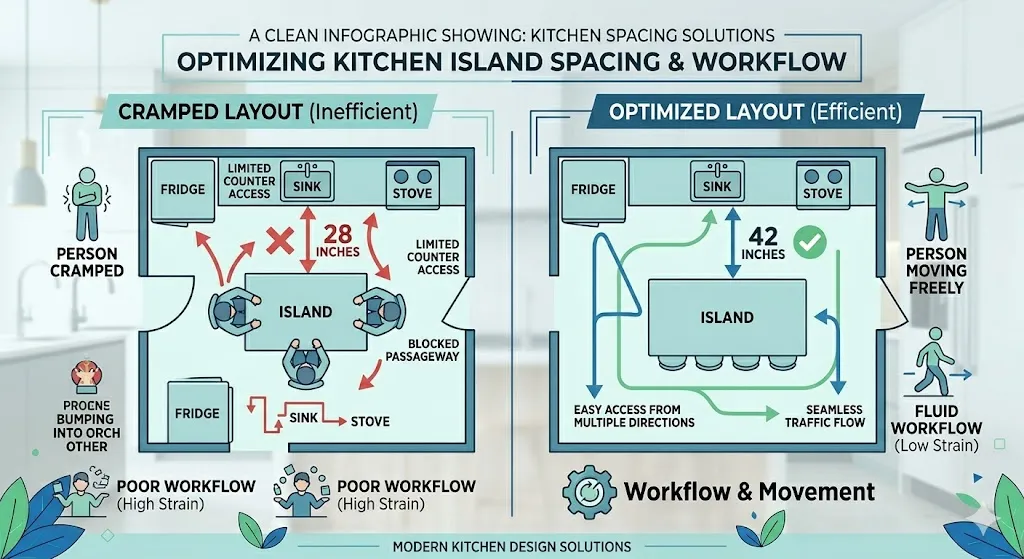
A poorly sized island can disrupt movement and make your kitchen feel cramped.
I just heard a story about a couple who had this large 10-ft island that they absolutely loved until they realized they couldn't open the dishwasher and have someone walk by at the same time. They ended up knocking out part of it.
the better option is to design for flow, not just size. Island should enhance your kitchen, not turn it into a maze.
let's talk about number four, which are glass cabinet doors. They give off that clean, elegant showroom look, but in a real kitchen, it's a total nightmare. Glass reveals everything. Fingerprints, water spots, streaks, they all show. And what's inside those cabinets better be spotless. One box of cereal or mismatch mug ruins the entire aesthetic. I personally can't even fathom having glass cabinet doors with all the fingerprints on just the cabinets alone in my house for my three boys. You imagine that on what the glass looks like?
Plus, the glass is fragile. Even with soft closed hinges, one slam or house shift can cause cracks, often replacing custom cut glass, which is not cheap. In fact, you could spend hundreds of dollars per door just to replace a cracked pane.
A better option is to limit glass to one or two upper cabinets where you store nice glassware or display items. Keep the rest solid so you can actually live in your kitchen.
number five is a popular item, and a lot of you are probably going to disagree, but waterfall countertops. They look sleek and high-end, but functionality, to me, it's a disaster. These extended stone slabs come down the sides of your island, which look great until a kid kicks it or a bar stool scrapes it. Or better yet, you bang a vacuum into the corner. Waterfall edges are prone to damage because they're in hightra zones. And repairing a chipstone corner, it's not like patching drywall. It's expensive and sometimes impossible to match.
Glass Cabinet Doors: Hidden Maintenance and Cost Issues
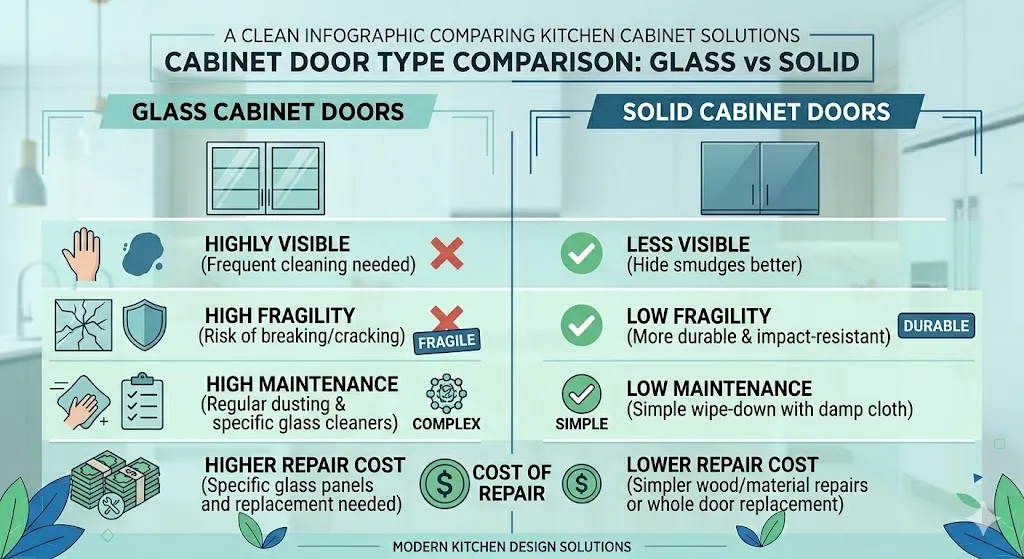
Glass cabinets require constant upkeep and can be expensive to repair.
And on top of that, if you want to know a hidden issue, these designs also limit your seating. Most bar stools won't fit underneath properly. So, you'll either be sitting at a weird angle or constantly banging your knees.
And if that wasn't enough, let's talk about the cost impact. Waterfall edges can add $1,000 to $5,000 or even more depending on stone type and installation complexity.
A better option is to stick with a standard overhang for stools. Make it clean, functional, and much less prone to damage.
number six is something that I had an issue with in my prior house, and that is no quiet room in open floor plans. Open floor plans feel airy and connected, but with everyone working and studying from home now. They've lost some of their shine. Every sound travels, you can't take a call without someone else hearing. Try recording a article or hosting a meeting like this. Try doing this article at home with three kids running around. It's impossible.
I love open floor plans, but I love them in big large houses where you have additional space outside of that main living area to go and be quiet. But what I'm seeing is a lot of smaller houses, 12, 13, 1,400 ft², leaving absolutely nowhere to hide or get work done without everyone hearing you or you hearing everyone.
I got a real life story of a family that I worked with that had to convert a walk-in closet into a mini office because there was no room with a door.
here's the thing. You don't need to kill the whole open concept idea. You just need to build in one enclosed space like a den, a study, a flex room, some sort of finished basement, somewhere to close the door and get focused. You'll use it more than you think.
number seven, we're going to talk about marble countertops. Marble is beautiful. Absolutely no argument, but it's also soft. It's porous and it's incredibly sensitive. It stains from things like wine, coffee, and oil. It etches from acidic foods like lemon or vinegar and it scratches if you so much as drag a plate across the surface.
I know what you're saying. Well, you just have to maintain it. Well, the maintenance side is an absolute nightmare. It needs to be sealed regularly. Spills have to be cleaned up immediately. And on top of that, you still get wear and tear.
I had a friend a couple of years ago that had to rip out an $11,000 marble island after one event with wine and pizza. It made permanent marks that they could not remove.
Marble vs Quartz Countertops: Durability vs Aesthetics
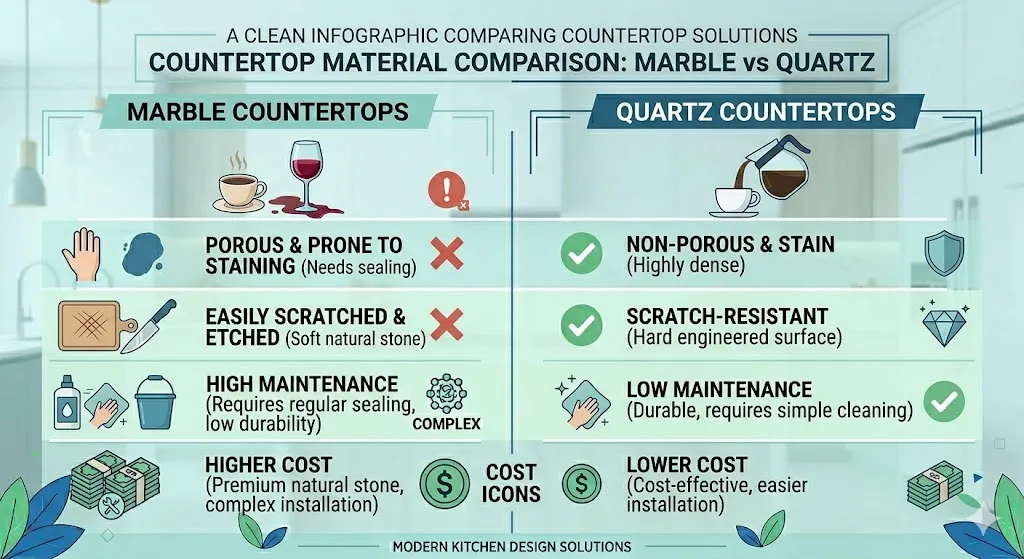
Quartz offers the look of marble without the high maintenance and damage risk.
a better option is to do something like quartz with a marble look. It's durable, it's easy to clean, and 95% of people can't tell the difference.
number eight is something that most of us probably don't have to deal with, and that's home theaters. But these things were huge in the 2000s and early 2010s, but now they're rarely used. And that's because big screen TVs are cheap. I think you can get like an 80-in TV from Costco for like a,000 bucks. It's crazy. Sound bars are even better than ever, and people like reading from their couch where they can actually pause, snack, or scroll. Home theaters often end up as dust collectors, junk rooms, or makeshift gyms.
A better design is to make that space flexible. Something like a game room, a media room, or a dual use space with blackout curtains and comfy seating. You'll use it more and it'll hold value better long term.
let's talk about one where a lot of the females are probably going to push back, and that's Whirlpool tubs. Now, they sound luxurious, but in practice, they're a pain, and they're disgusting most of the time. They're loud, they take forever to fill, and they require constant cleaning to keep the jets from getting gunky. Most people use them maybe once or twice, and then never again. They become oversized laundry hampers for a lot of people. I walk into houses all the time where people are using them for some sort of storage. And that's actually funny because I recently asked a homeowner when I went into their property if they ever use theirs and she laughed and said it's just toy storage for our kids.
So an alternative might be a deep soaking tub which is more comfortable. It's easier to clean and there's no noisy motors to break. But when I say that, I'm not talking about a tub in the center of the room. I'm talking about a tub off to the side, just not jetted.
And that's because my number 10 is giant centerpiece tubs in bathrooms. Those massive freestanding tubs in the middle of the room, they're stunning in a magazine. But I'll tell you, they're awkward in reality. They eat up a lot of floor space. They're rarely used, and they often make bathrooms feel cramped instead of spa-like. What most people actually want is a large, luxurious shower. the rainfall heads, the benches to seat on, the seamless glass enclosure.
So, a better plan is unless you're a serious bath person, the person that does the little candles on the side, sips the wine, the bubbles, articletapes himself. Now, you probably don't want to articletape yourself. But if you're that person, then maybe you should have one. Unless you're that person, you should skip the centerpiece tub. Use the square footage for better shower features or more storage.
There's a big difference between features that look good in a showroom and ones that actually make daily life better. be intentional with your upgrades. Think about how you would actually use your home, not how it photographs.
As you've gone through this, tell me one upgrade you actually regretted or saw and thought that looks like a complete headache.
Some things just look better on screen than they do in real life. Save yourself the money, the stress, and the demo crew.