Loan Details:
Payment Breakdown:
Principal & Interest: Tax: Insurance:Loan Comparison:
| Term | Monthly Payment: |
|---|---|
| 30 years | |
| 20 years | |
| 15 years |
Amortization Table (First 24 Months)
$0
Top Mortgage Lenders
Explore More Mortgage Tools
Latest Mortgage Guides & Tips
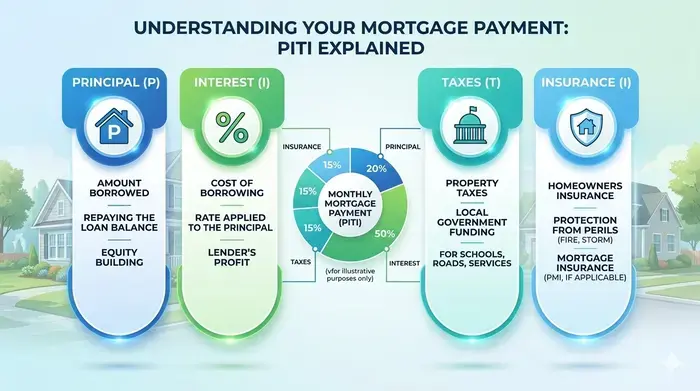
Understanding PITI: Mortgage Payment Basics
Learn the 4 key components of your monthly mortgage payment.
Fixed vs Adjustable Rate Mortgages: Which is Better?
Compare the pros and cons for your situation.
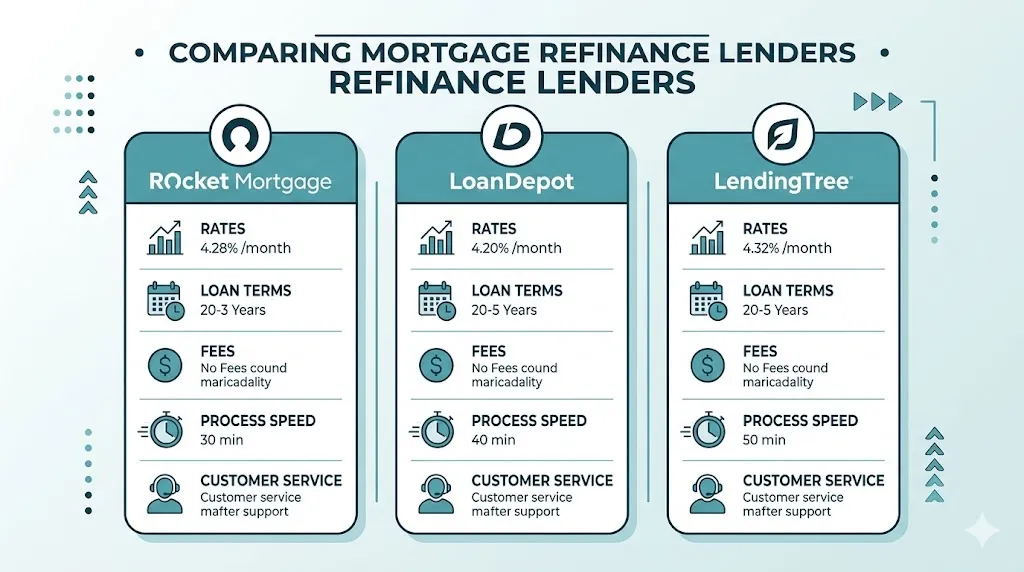
Top Mortgage Refinance Lenders Overview
A quick overview of leading refinance lenders and what they offer
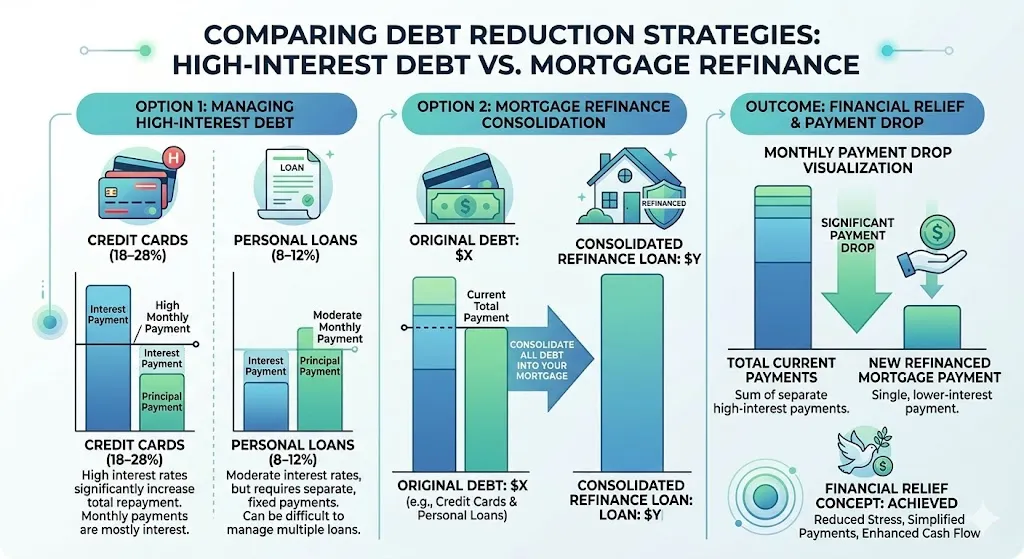
Using Cash-Out Refinance to Pay Off High-Interest Debt
See how consolidating debt into a mortgage can dramatically reduce monthly expenses
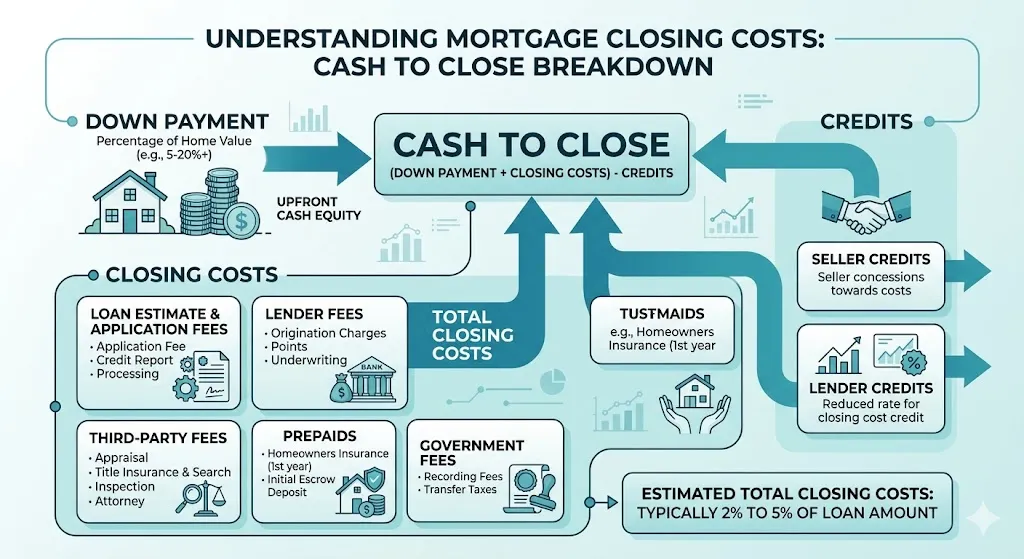
What Are Mortgage Closing Costs and Cash to Close
A clear breakdown of how closing costs and down payment combine into your final cash to close
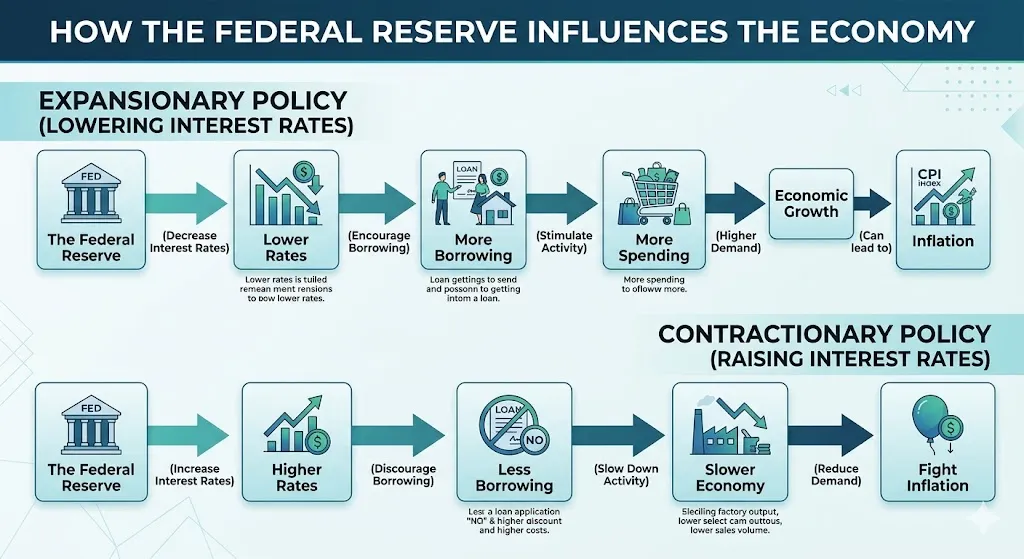
Mortgage Rates Explained Why They're Rising When the Fed Cut Rates
Fed rate changes directly influence borrowing, spending, and inflation levels
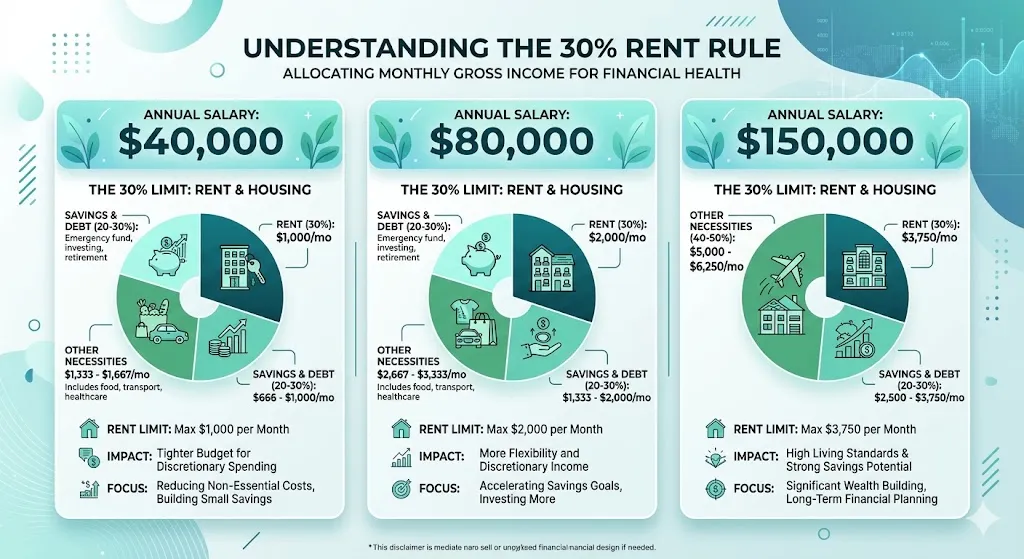
How Much Rent You Can Afford Based on Salary (30% Rule)
A simple breakdown of how much rent you can afford using the 30% income rule across different salary levels.
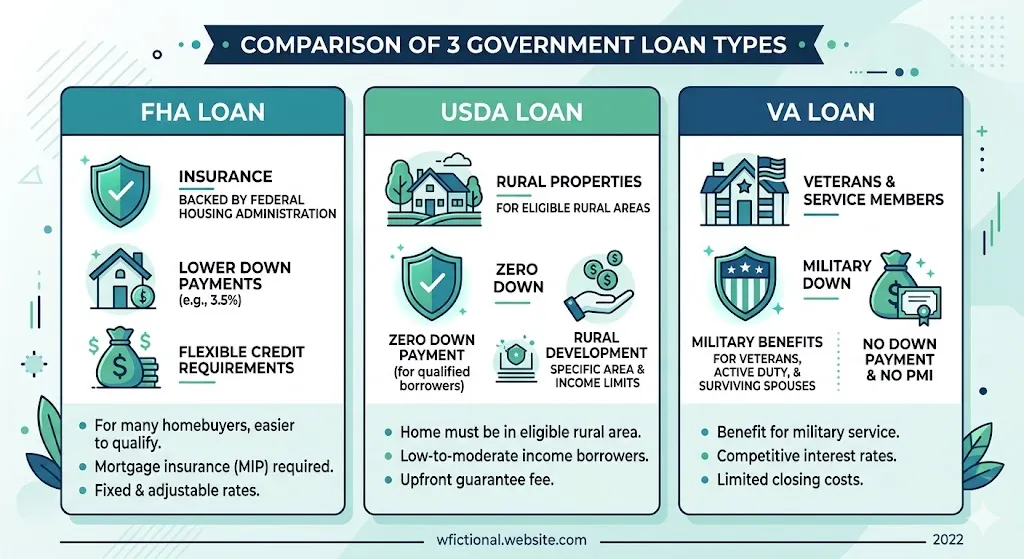
Government Home Loan Programs Explained (FHA, USDA, VA)
A simple breakdown of the three major government-backed home loan programs and how they differ.
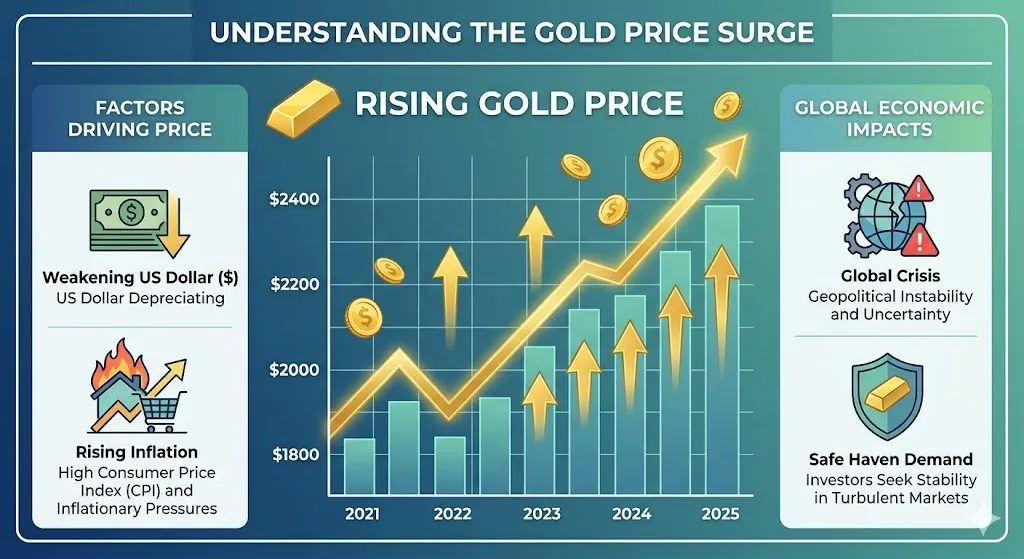
Why Gold Prices Are Rising Rapidly in 2026
A breakdown of the major forces driving gold’s historic price surge in 2026
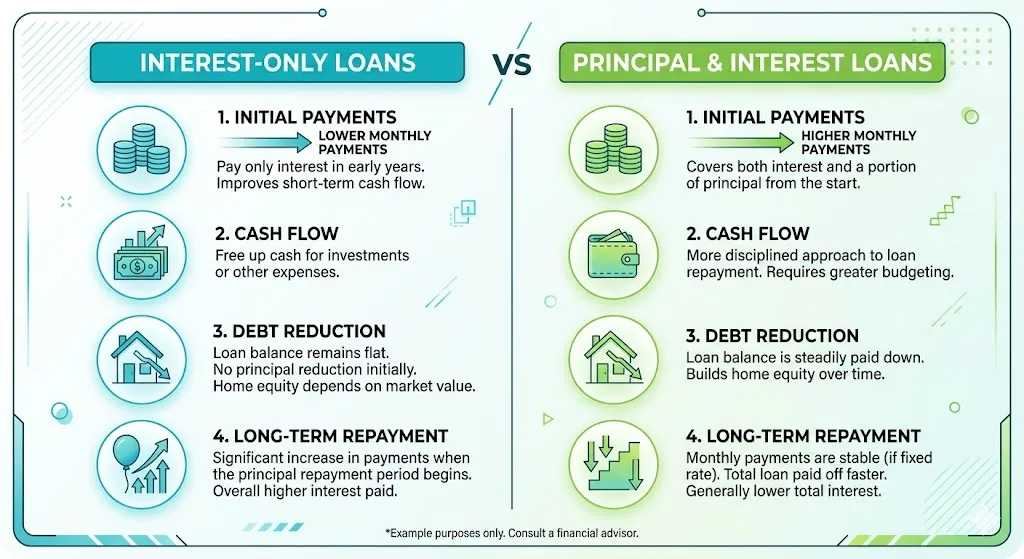
Interest-Only vs Principal & Interest: Key Differences Explained
A side-by-side breakdown of how each loan type impacts investors
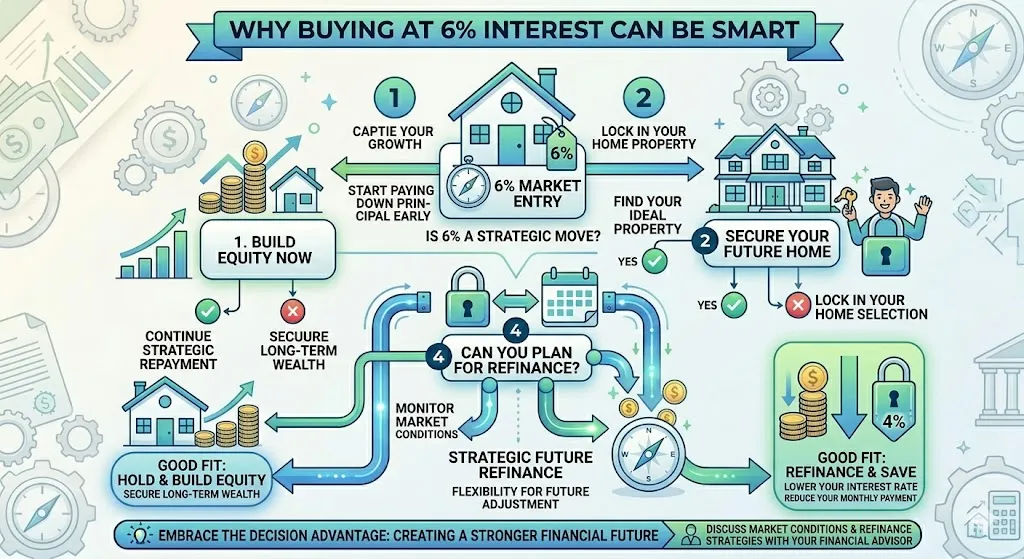
Buying A House with a 6% Interest Rate Is SMART
Lock in today’s price and refinance later when rates drop
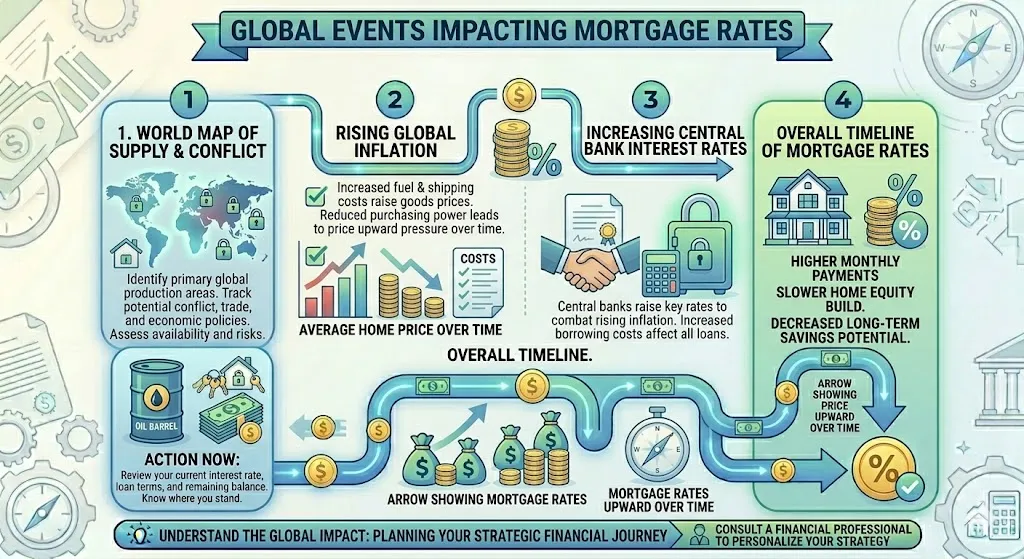
How Global Events and Oil Prices Impact Mortgage Rates
Global conflicts and oil prices can directly influence mortgage rates
Types of Mortgage Loan?
hey! everybody my name is Pardeep ,i have 5 years experience working in finance sector so i'm here to help you master your money and build your wealth, Now we're going to be discussing about the ultimate guide to mortgages so a home mortgage or a primary residence mortgage is typically the longest and the largest loan that most people take out throughout their entire lives a lot of people have basic understanding of what goes into a mortgage but the more and more i interact with people on social media in my dms or just on x.com for example i can start to see that they don't really understand the entire inner workings of a mortgage.
so today we're going to talk about the four factors that go into a mortgage payment we're going to talk about the different types of mortgage products out there that way can best suit your needs to know that you're getting into the best product possible i'm going to take you through a demo of my own home affordability spreadsheet ( or use my calculator : Affordability Caclulator ) that way we can mess around with the house price the down payment amount the insurance the taxes all that good stuff.
P-I-T-I AKA principal interest taxes and insurance
let's get into it : okay so very quickly let's run through the four factors that go into a mortgage payment if you understand the acronym of p-i-t-i that simply stands for principal interest taxes and insurance if you're a real estate investor you know these four letters like the back of your hand if you don't let's run through these very quickly so p stands for principal this is simply just the amount of money that you owe the bank for lending you to be able to purchase the house that you're moving into okay so the example that we're going to be using for this is a 350000 house and we're going to be putting 20 down so guess what the down payment amount is if we're putting down 20 on 350 and what is the mortgage amount going to be.
you can calculate here okay so if you answered seventy thousand dollars for the down payment and you owe 280 on the mortgage that is the correct answer so moving on what is interest interest is simply just the rate at which you are borrowing the money from the bank you're paying the bank to borrow their money that is how the bank is compensated okay so the higher risk you are meaning the lower credit score you are the higher the rate that the bank needs to make in order to compensate themselves for taking on risk aka you're going to get a higher interest rate on your mortgage so higher risk higher rate lower risk lower rate the better your credit the lower this interest is going to be so i'll show you how the affecting the interest numbers actually affects you in the long term in my spreadsheet later.
this is a no-brainer so property taxes are used to help fund schools infrastructure government workers things like that that is why property taxes are a part of owning a home so these taxes are typically calculated on the assessed value of the home and the lender can actually roll these into your mortgage payment they're going to be escrowed meaning they're going to be set aside in a special account and once they're due typically twice a year that's going to be paid to the municipality that they're owed so this taxes will actually get rolled into your mortgage payment in most cases.
Understanding PITI: The 4 Components of Your Mortgage Payment
PITI explained: the four factors that make up your total monthly mortgage payment
finally we have insurance so insurance sounds just like what it is uh property insurance is if you know a tree falls on your house it's just like car insurance you're going to get compensated after some sort of deductible okay and you pay for it monthly typically however there's this other thing down here called pmi which is private mortgage insurance so typically if you put less than 20 percent down on a property pmi private mortgage insurance is typically there to allow the lender to get some breathing room if you will this doesn't go towards the principle of your payment it just allows the bank to be able to turn your property into a security and sell that mortgage to other bigger banks and it also gives them a little bit less risk for taking on that mortgage if you don't have twenty percent down some cases uh lenders will allow you to put less money down with no pmi which we'll get into right now okay so we have five different types of mortgages there actually are a few more which i'll list at the end of this list.
5 Type of Mortgages:-
These are the five most popular starting with fixed rate mortgages so:Fixed rate mortgages
i'm sure you've heard this this is what most people think of when they hear mortgages these can be offered typically in 10 15 20 or 30 year increments the most popular obviously being the 15 and the 30 with the 30 being the most popular overall so this interest rate never changes so if you remember the acronym p-i-t-i principal interest taxes insurance the interest portion of this loan over the course of the term it could be 10 15 30 years that interest rate never changes that's why it's called fixed rate mortgage .
How a Fixed-Rate Mortgage Keeps Your Payments Predictable
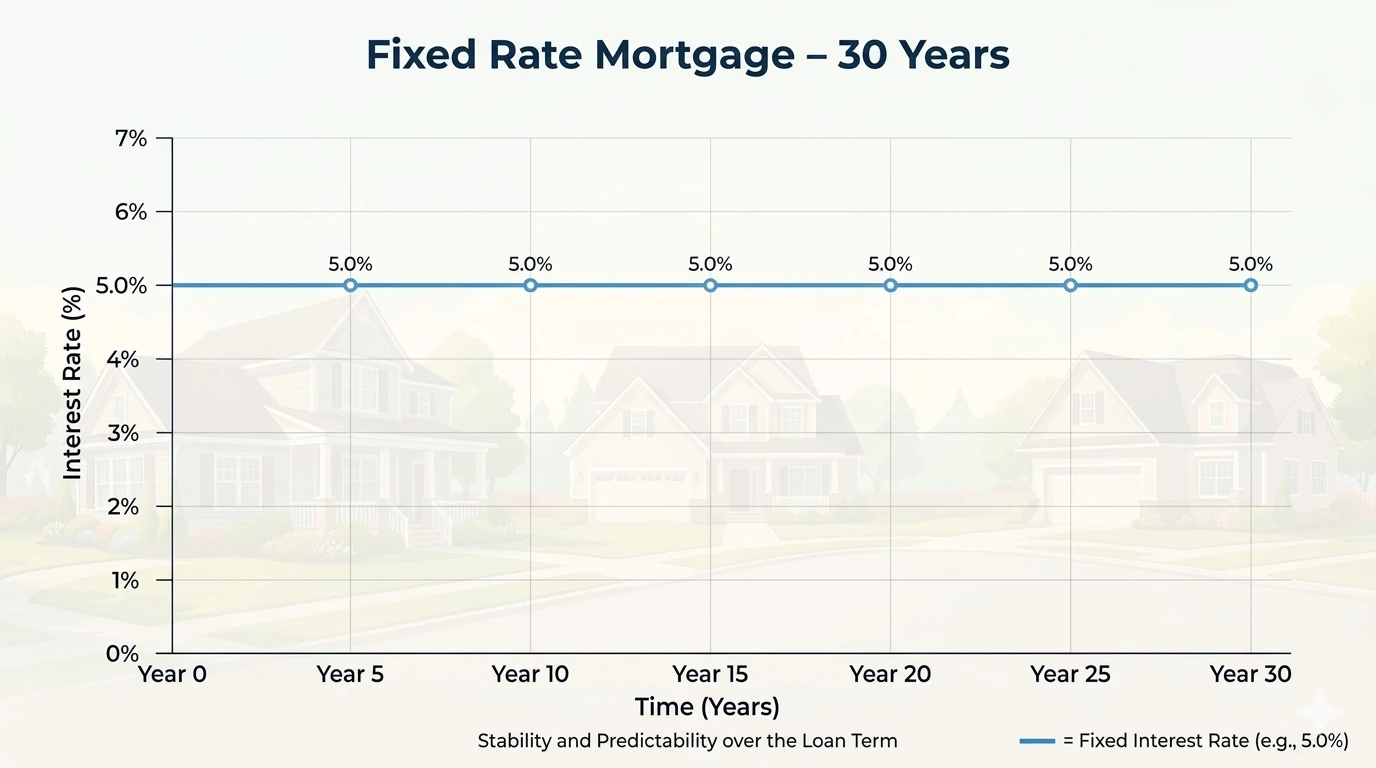
With a fixed-rate mortgage, your interest rate stays the same for the entire loan term — no surprises.
Adjustable rate mortgage
Adjustable rate mortgage or an arm so this has a rate that's fixed for a specific period of time typically the first number here so you have five years, five years i'll explain that in a second here it's fixed for a certain period of time and then it adjusts over time depending on the second number so for example if we look at a 5-1 arm that means that the first five years is fixed and then it adjusts annually every year after that so these are typically based on the one-year treasury bills or libor okay so if you don't know what libor is it's just an acronym for london inner bank interbank offered rate so if you want to look at an example of a five five that's fixed for five years and then it's also fixed for every five year period after that it adjusts every five years after that so this typically benefits people that don't want to have a mortgage for long or they feel like interest rates are going to be going down and if you know what i how i feel about interest rates.
Adjustable-Rate Mortgage (ARM): How Rates Can Change Over Time
-Graph.webp "ARM example: fixed for the first few years, then rates can adjust annually or every few years.")
ARM example: fixed for the first few years, then rates can adjust annually or every few years.
FHA
Number three is the fha loan the fha loan is insured by the federal housing administration this allows down payments all the way down to 3.5 percent so when we talked about a 20 down payment which is the example that we're going to use in the beginning and also on the computer this actually allows you to put down three and a half percent so say for example the house is a hundred thousand dollars if you put three and a half percent down on this what is the number well simple math tells you that it's 3500 bucks and you can get into this property, okay this is typically for people with low credit scores you're gonna pay pmi the private mortgage insurance that we talked about but it's a good way for people who have the lower credit scores and not 20 down to get into their first home.
FHA Loans: Get Into a Home with Just 3.5% Down

FHA loans make homeownership possible with a low down payment — ideal for first-time buyers.
VA Mortgage
fourth is a va mortgage this is just basically insured by the department of veteran affairs so veteran meaning you know military service people that kind of a thing the nice thing about a va loan is that you don't have to have any down payment whatsoever you can actually put down zero percent okay so on a hundred thousand dollar house you can put down zero if that makes sense you will have to pay a va funding fee it changes all the time there's a table and there's also no pmi on this zero percent down payment.
so basically the va loan is a great way to get into a home with very little money down yes your mortgage payment is going to be higher which will go over in the spreadsheet but you have very little money out of pocket which actually allows you to potentially invest that difference so this is a very good loan and then.
VA Loans: 0% Down Payment for Eligible Veterans & Service Members

VA loans offer zero down payment and no private mortgage insurance for qualified veterans.
USDA
fifth we have the usda loan this is actually backed by the department of agriculture yes the that usda and basically this allows you to get into a home with no down payment as well however you are limited uh to basically home improvement loans or purchase loans but it has to fall within a certain income limit certain geography limit and then also there's a property value cap so you can't be buying mansions in the suburbs with this kind of a loan is typically more rural areas, so this benefits people who want to live a little bit more rural and have a very little down payment out of pocket.
and finally there are two more loans that i didn't talk about just because if you need these kinds of loans you're typically i don't want to say well off but you're buying you know pretty expensive houses or you're very disciplined with your money and you have a lot of cash so that is a :
USDA Loans: 0% Down for Eligible Rural Homebuyers

USDA loans help buyers in eligible rural areas purchase a home with no money down.
Jumbo Loan
jumbo loan and then also a interest only mortgage so if you want to learn a little bit more about those feel free to google that but let's get into the demo now in the home affordability chart using our 350000 house as an example :
Jumbo Loans: Financing Luxury & High-Value Homes

Jumbo loans are designed for properties that exceed standard conforming loan limits.
lets talked about this couple or this individual buying a three hundred fifty thousand dollar house which are putting down twenty percent which results in a seventy thousand dollar down payment that actually results in a principal loan amount or a mortgage amount of two hundred and eighty thousand dollars so if you remember the acronym that we talked about with the p i t i uh that is simply just the p in that acronym so moving forward you can see here that the interest rate that we're going to use is 2.89 and we're also going to use that on a 30-year fixed-rate mortgage so typically the most popular mortgage that is used by people out there is a 30-year mortgage and i'll play around with these numbers you can see how everything changes uh we're going with 12 payments per year aka once a month which results in a mortgage payment of 1164 the interest costs over this 30 years which people never think about is actually a hundred thirty nine thousand dollars so let that sink in, if you pay the minimum amount over 30 years your interest on this loan is going to be a hundred thirty nine thousand dollars resulting in a total cash outlay of four hundred and nineteen thousand dollars outside of the down payment.
it's basically just the loan amount plus the interest gets you this number right here now what most calculators don't take into calculation is that they don't ask you for the amount of taxes so let's just take this home let's pretend like we're in a certain county that charges you know x amount of dollars let's just call it 6500 per year now the insurance on this house will just use a thousand as easy numbers and maybe a little bit more depending on if you live in like a flood zone or a hurricane area or if you're somewhere in the midwest with tornadoes.
Explore More Helpful Content
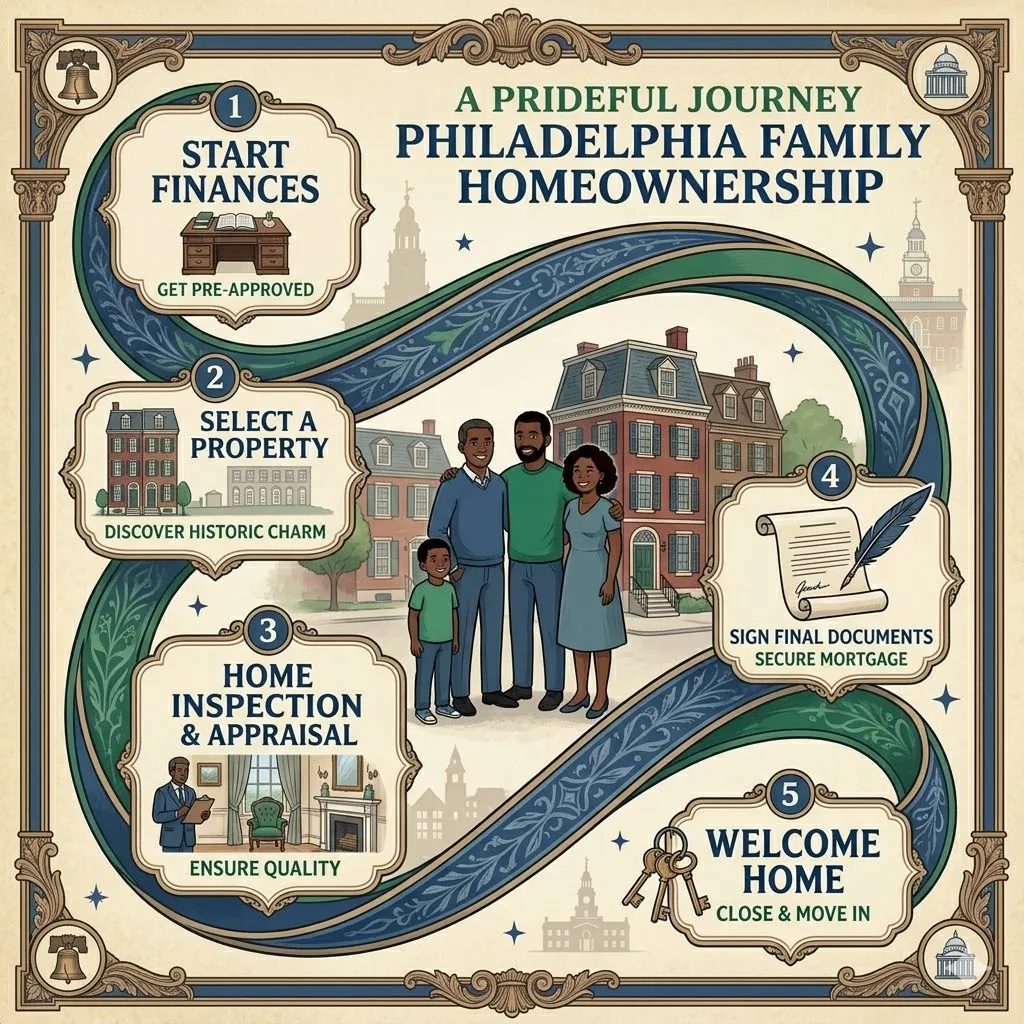
Philadelphia Mortgage Calculator & Loan Programs
Affordable mortgage solutions and FHA, VA, USDA loan options for Philadelphia buyers.
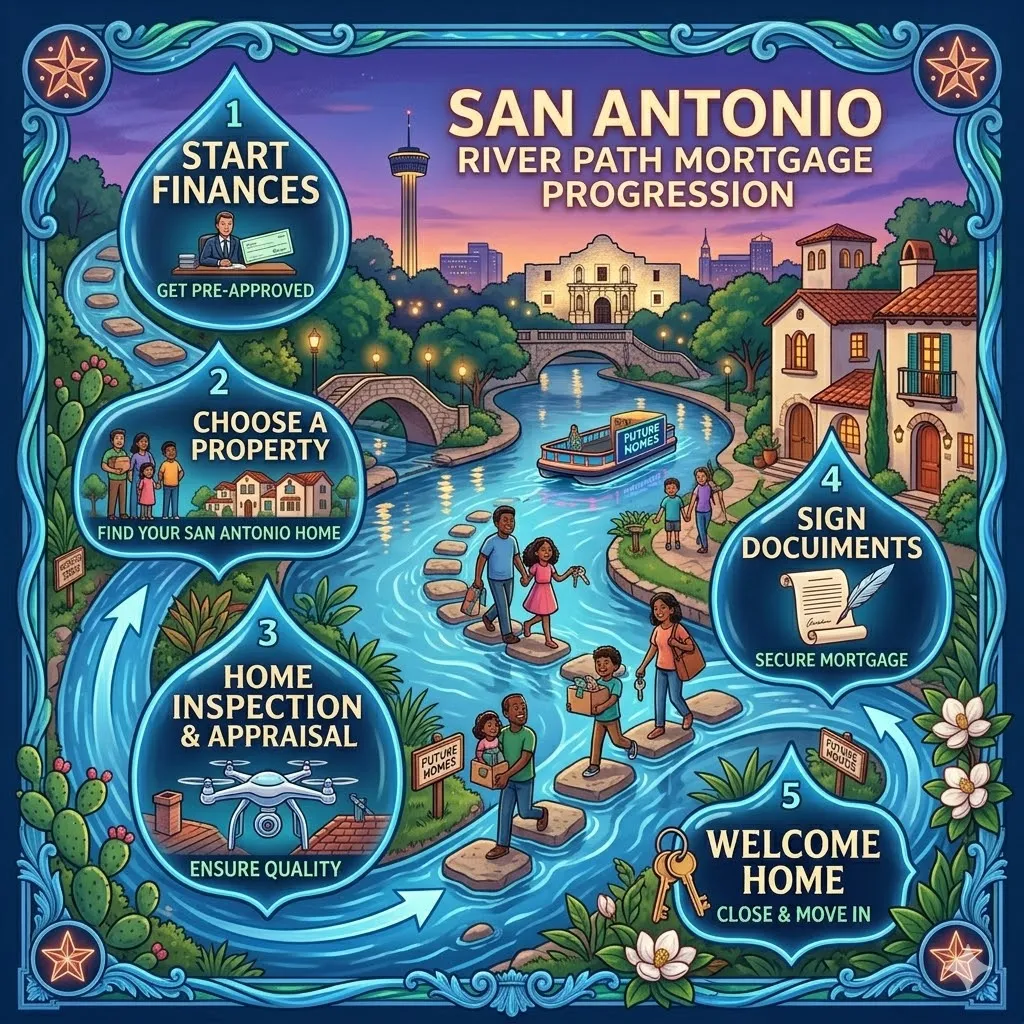
San Antonio Mortgage Rates & Payment Calculator
Easy mortgage calculator with current interest rates for San Antonio home purchases.
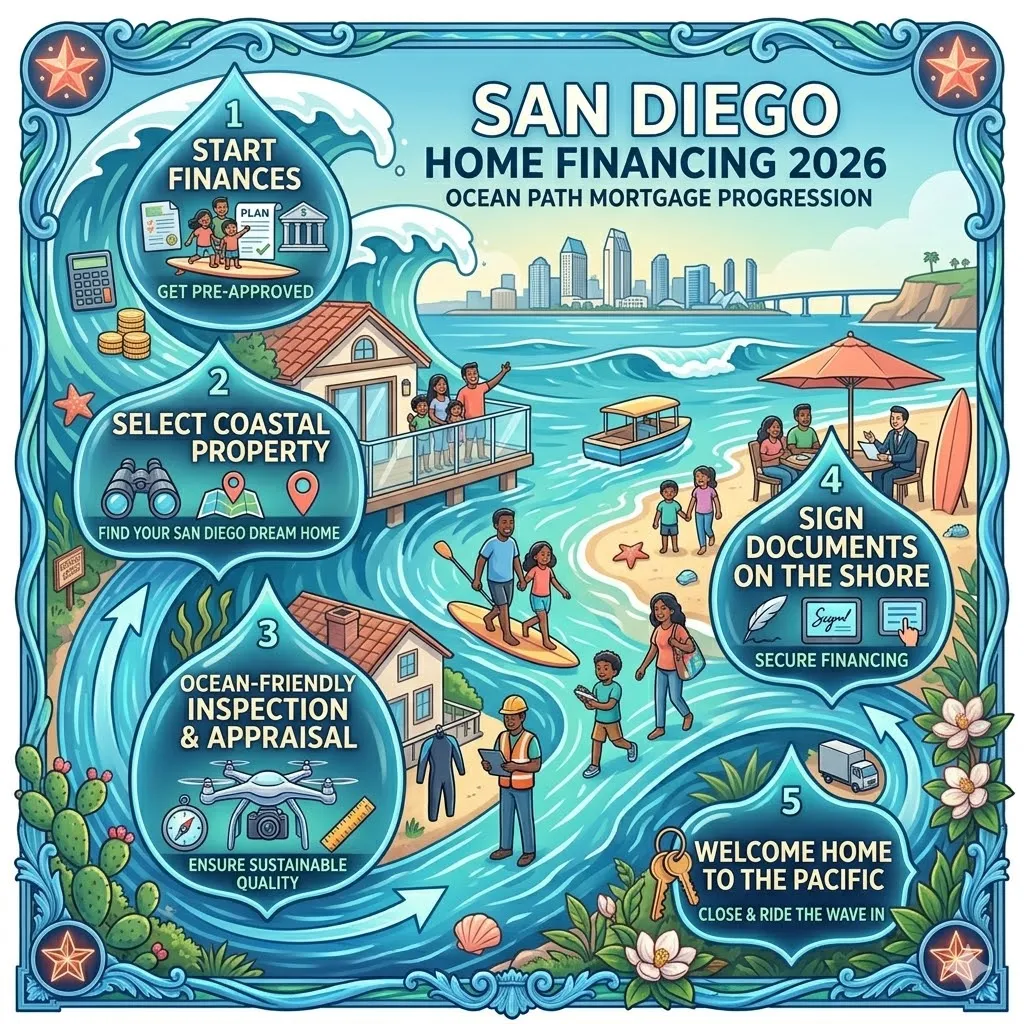
San Diego Mortgage Calculator & Financing Guide
Compare mortgage lenders and calculate payments for properties in San Diego.
Dallas Mortgage Rates & Home Loan Estimator
Fast mortgage estimates and expert loan guidance for Dallas-Fort Worth area buyers.
San Jose Mortgage Calculator & Real Estate Financing
High-value mortgage solutions and rate comparisons for San Jose homebuyers.
Houston Mortgage Calculator & Loan Options
Reliable mortgage tools and current rates for Houston metropolitan area buyers.
Houston Mortgage Calculator & Loan Options
Reliable mortgage tools and current rates for Houston metropolitan area buyers.
Houston Mortgage Calculator & Loan Options
Reliable mortgage tools and current rates for Houston metropolitan area buyers.
Houston Mortgage Calculator & Loan Options
Reliable mortgage tools and current rates for Houston metropolitan area buyers.
How to Get/Buy/Score a house step by step.
It seems like everybody is in the market for a house these days, especially where I live. But buying a home is a huge commitment and a potentially long term commitment at that. So I'm going to walk you through buying a house step by step and 11 easy steps.
11-Step Guide: How to Buy a House in 2026
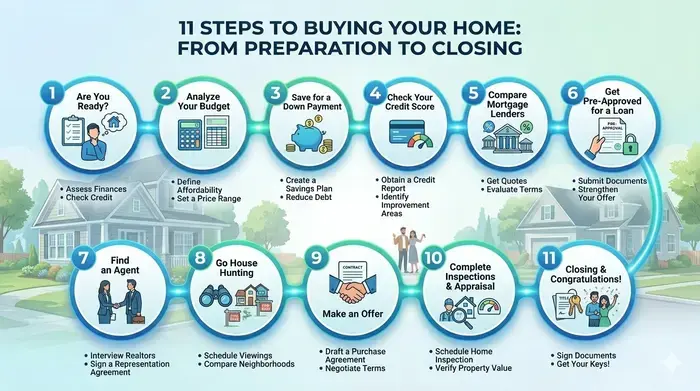
Follow these 11 steps from readiness check to closing — your roadmap to homeownership.
Let's get right into it. Okay, so step number one is, are you even ready to own a home? So you have to really dig deep down inside, look at yourself in the mirror and ask yourself, am I in a position and am I ready and responsible enough to own a home? So the first step I would recommend is having steady income and employment. So if you have your regular paycheck coming in, you're able to kind of budget and understand what your money situation is going to be.
This is a good thing. If you know your job is stable, this is a good thing. If you're in sales or if you have a unreliable source of income, you know, your commissions could be up, they could be down. You could be a business owner and you don't know how much money you're going to make in a certain month. I recommend having at least six to 12 months of reserves to at least somewhat compensate for this first point.
The Step Two is understand your debt to income ratio. So the banks are going to base this on your gross monthly debt obligations divided by your gross income. I actually like to look at this on net income, but just for the gross income basis, this should at least be under 36%. In my opinion, if you're above 36% of your monthly debt divided by your gross income, that is too high of a debt to income ratio and it could actually cause some problems and underwriting when getting a mortgage.
And then finally, Number Three how is your credit? Have you looked at it lately? If you're a good credit score, that's only going to get you a better rate, meaning the cost of borrowing money is going to be cheaper over the length of the loan. Okay. Number four is knowing how much house you can afford. So this is probably the most important aspect of home ownership because this will either determine if you're living comfortably or if you're going to be house poor. So first and foremost, I highly recommend if you haven't already checking out my home Affordability calculator, this alone can prevent you from making a huge financial mistake by buying too much house.
That way you know exactly how much house you can afford. Okay. So step Number Five these are your down payment and closing costs. So if you don't know what a down payment is, that's simply a percentage of the home that you're paying for with cash and then you're taking a mortgage for the rest of the amount. You can put anywhere from zero to 100% down. 100% is paying cash, 0% is using something like a VA loan or a USDA loan, which doesn't apply to most people.
On a conventional mortgage, you can typically put anywhere from three to 99% down. However, most people typically put anywhere from three to 20% down. However, most banks, if you put less than 20% down, you're going to get PMI, which stands for private mortgage insurance. You want to avoid PMI because this doesn't go towards principal or interest. It is literally just a monthly fee, aka insurance for the bank or the lender giving you that mortgage. So I would recommend 20% down.
Obviously more people, more and more people are putting down less. But if you do put down 20% down, you do avoid the PMI. So if you want to use 20% as an example on $100,000 home, $100,000 times 0.2, that just gives you $20,000 as a down payment. So when you're going into a house purchase, you're going to have to have a down payment of some sort, and then you're also going to have closing costs right here. So what are closing costs? If you do opt to get a mortgage, you're going to have to get involved with a bank and they're going to require things like appraisal, title, closing fees, bank fees. These typically range anywhere from about one to 6% of the value of the home. If you're smart, you'll put away about 3% for closing costs just to make sure that you have that money ready and available.
Step Number Six is getting your mortgage pre-approval. This is simply just going down the street to the bank or credit union saying, Hey, Mr. Banker, my partner and I were looking to get this house. Can you at least tell us what we're pre-approved for when we are starting the mortgage process with you guys? And they'll take your information, they'll look at basically your income, your debt to income ratio, your credit score, your other obligations, so on and so forth. And they'll come back to you with a dollar amount that you're essentially pre-approved for, uh, for amount of loan, AKA mortgage. So this will actually help allow you to budget better and you'll know, Hey, this is the amount of money we have down. This is the amount of money we can borrow.
This is the amount of money or the amount of house we can afford. Okay. So what this helps to do is this helps you get under contract fast if you do find a home you like. So instead of trying to talk to the seller and have your real estate agent write an offer letter, you can actually show the seller, Hey, I'm interested in your house. This is my offer. Here's our pre-approval letter. Great. So as the seller, I actually have some confidence in you seeing the letter or the pre-approval letter from bank X saying that you're approved for amount Y of dollars. And this helps me know that once I get into contract with you, you're able to close quickly and you do have the funds available.
Step Number Seven is working with a real estate agent or a realtor. So this could be, you know, your father-in-law, this could be a friend that you work with doing it on the side. They can be a full-time agent. The skills and skill sets of agents vary. There's some that are really good, some that are really bad. So make sure you know who you're getting into bed with before you go on this house hunting journey. Okay. So this person is essentially representing you in the purchase. They are kind of like a lawyer representing you or your medical professional giving you advice or a financial advisor, for example. So their specialty is to write offers, negotiate, guide you through the entire process. They should be your trusted advisor when looking at these homes. You don't necessarily need one. However, if you are a first-time home buyer, I would recommend you work with a good one because they can kind of calm your nerves down.
They can walk you through the process and they can kind of be your guide throughout this whole sales process or this sales journey. Number three is that they are compensated typically in most cases by the seller. So the seller is selling their home.
They are working with a listing agent. This is your buying agent. You are purchasing the home. Typically they're compensated anywhere from I'd say 2 to 3 percent depending on the price of the house. So you are not actually paying them anything unless you have some other sort of negotiation in place. The seller is paying both the listing and the selling agent to sell their home.
Number Eight is starting the house hunt or starting your search. So the search begins. Number one, the most important thing is establishing your criteria. So at this point you've established your price, the square footage that you would need, the amount of bedrooms, bathrooms, depending on your family size or your living situation, and also most importantly your wants and your needs. If you're doing this with a spouse or a significant other, figure out what things you align with. Figure out things that are wants.
Figure out things that are needs. Okay. We both want a swimming pool.
We both want a gazebo. We both want, you know, four car garage, whatever.
I'm just making stuff up. Make sure that you're both on the same page because you'll see once you start to see more and more houses, this is going to be areas for contention and argument. So make sure you outline what you want in the beginning. this is a up arrow and a down arrow. It's basically just ranking your priorities. Okay. So if you have a list of wants and needs, make sure that you give your real estate agent who's going to be looking at the MLS for these houses for you and also you and your partner or spouse. Make sure that you're ranking these priorities highest to lowest. You know, what can you live with? What can you live without? And then finally, number three, this is kind of just a tip from my background.
I've worked in commercial real estate on the development side and also on the leasing side. I look at everything from a dollar per square foot perspective, price per square foot. So you may have two different houses, you know, and let's just say their amenities are similar. It's a comparable property. Look at the dollar per square foot. Is one coming in at $150 a square foot and the other one's coming at a $185? Well, what is that $35 per square foot difference? So that way it kind of gives you a baseline of understanding, this neighborhood, things seem to be going for $150 a square foot. This neighborhood, things seem to be going for $250 a square foot. You know, why is that? Am I getting a good deal or am I getting ripped off? So I look at everything on a price per square foot basis if all the amenities and upgrades are similar.
Step Number Nine is making the offer and negotiating. This we're going to talk about actually making the offer. So number one is submitting and writing an offer. You want to get everything in writing and remember everything is negotiable. So if you liked a certain statue or a piece of art or, you know, whatever, or a piece of gym equipment or fitness equipment, you can negotiate all that in writing. Most likely they'll actually let you do this outside or after the contract's been signed. However, it helps to get everything in writing first and foremost. So basically the offer is basically what you're willing to pay for it. Any contingencies on financing or inspection, things like that. And once all those things are checked off, you can then move on to finally completing the offer. However, that'll be discussed later in the video. So what you want to do is, Humans love stories.
So humans love stories. So when you're making your offer, say for example, you're a newlywed and you have a new baby on the way and your wife's pregnant and you know, it's lovey dovey. People love that. So if you have a house that's in a hot market and there's a bunch of offers coming in, it may actually behoove you to cover, to do a cover letter with,
hi, I'm sendra. This is my husband. we're pregnant.
We really love the neighborhood. Blah, blah, blah, blah, blah. Humans love stories....They may be more inclined to sell you the house or go with your offer. Even if it isn't the best one on the table, it doesn't happen all the time, but I have seen it.
Number Ten you'll put down earnest money. So earnest money is essentially a good faith deposit that goes towards the down payment or closing costs. However, if you walk away from the deal, you will lose that earnest money. If it is indeed on your fault or on you for walking away from the deal. So this is typically, you know, a couple grand, it could be less, could be more depending on the price of the house, but it's basically you putting a good faith forward or a good foot forward with the seller saying, Hey, I'm serious about this offer. So at this point, three things can happen.
The sellers can either 1. accept your offer, 2. decline your offer, or 3. they can come back with a counter offer and it can go both ways. And at that point you just continue the negotiation.
Step Number Eleven is once you get the contract accepted or you're under contract, depending on the length of the contract that will give you time to get an inspection and an appraisal. So these are two different things. Don't get them confused. So once the property is under contract, I recommend getting a home inspection. This is basically a gentleman or a woman who comes out, they inspect the roof, the inside of the house, you know, plumbing, radon, gas, mold, things like that. Anything that could be wrong or a foreseeable issue with the property. So they're looking for problems or issues. the appraisal is completely different. This is a certified professional that tells you or estimates the value of the home depending on comparables, depending on, you know, the build quality, the neighborhood, things like that.
I actually have ammo. So ammunition. So if the inspection or the appraisal comes back, say for example, the inspector comes back and says, this roof is shot, there's mold in the basement, there's radon, & more.
You can use that as bargaining or negotiation ammunition in the negotiation part. And you can actually get either a credit or some money off the house, depending on the amount of money it costs to remediate these issues that the inspector finds. Secondly, the appraisal, say you're looking at a house for easy numbers, it's 100 grand. The appraisal comes back at 90. You can then maybe use that 10 grand to get some money off the asking price as well. So inspection and appraisal, super important.
Number Twelve is just to piggyback off of what I just said with repairs and credits very quickly. As mentioned, when stuff does come back, you can ask for a discount off the purchase price of the home. You can ask for a credit at closing, for example, or you can have the seller fix it or remediate it. So by the time you do your final walkthrough, you can see that they fixed all the issues that you brought up in the contract. So very simply, just wanted to recap this. This is where you can save a lot of money.
Number Thirteen So I decided to give it its own section. Okay, so number 10 is completing your final walkthrough. So you want to go through the house after the seller is taking everything out, all their possessions that you didn't negotiate on or you didn't want or you didn't purchase from them.Basically, you want to see if everything is where they left it. You don't want any beautiful fixtures taken off the wall. You don't want any damage happening after the move out.So you may even want to take before and after pictures. That way, when you go to final walkthrough, you say, hey, what the heck happened here? There's a big gash on the wall. There's a big hole in the drywall. So do your final walkthrough, make sure everything is in order. Secondly, have the seller show you around, have them show you everything. So if there's a nice speaker system, for example, or there's an alarm system or there's automatic lights or there's a sub pump in the basement, for example, you want to make sure that they show you everything.
That way, you're not trying to reach out to these people after the fact, after you've already taken possession. So make sure that you get a final walkthrough through the seller and make sure that they show you all the quirks and features of the house. .
Congratulations you are almost a homeowner. So your lending institution is going to send you a closing disclosure. This is basically an outline of things that you need to bring to the closing table. This will happen roughly two, three, four days before the actual closing date. And it's basically just telling you what you need to bring to the closing. Number two is reviewing your numbers.
Make sure that the lender, the numbers that they gave you during your pre-approval and all the mortgage disclosure documents with the principal and the interest and the amortization schedule, make sure all that stuff adds up and you are indeed getting the mortgage that you are essentially promised to be getting from your lending institution. And then finally, this is your settlement statement. This is very important because this is basically showing you all the closing costs, the purchase of the purchase price of the home, the down payment amount, etc.
All that good stuff. Make sure all this stuff balances out to zero and you're not paying more than you should. So congratulations, you are now house poor and you're going to be in debt for the next 30 years of your life.
🥰I'm just kidding. The one thing I want to, the takeaway from here that I want to say, I'm just messing around, but in all seriousness, a house is a big responsibility. You got to set aside money every year for maintenance.
You know, if you're renting right now, your landlord is taking care of all that. Once you're a homeowner, the HVAC goes out, if the roof goes, you know, it gets crushed by a tree or whatever, that's all on you as the homeowner. So just be cognizant of that.
Owning a home is awesome. It's a great source of pride, but it does come with a lot of responsibility. So if you got value out of this Article, i'm Happy.
Buying vs Building A House (Pros & Cons)
we're actually going to be discussing whether you should build or buy a home and some of the pros and cons that come with doing both of those things so with real estate prices at all-time highs at the time and with interest rates that are extremely low right now people are actually starting to consider building versus buying used or buying an existing home so i mentioned we're going to talk about some of the pros and cons of building a home and i'll touch on the existing home portion as well let's get into it okay so the way i'm going to present this is with the pros and cons of building a home and i'm going to interject the pros and cons of buying an existing home so this will make more sense once i start so let's get into it
Buying an Existing Home vs. Building New: Pros & Cons
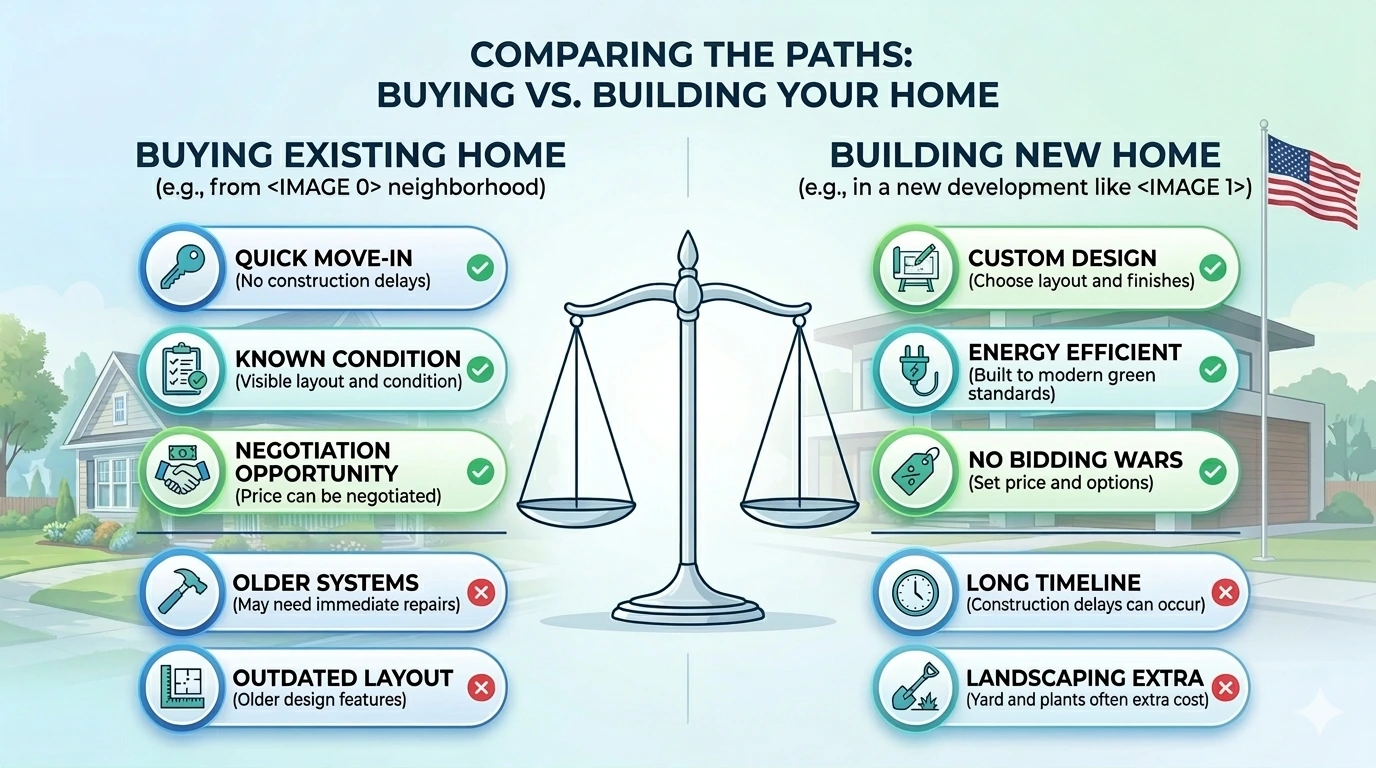
Weigh the benefits of quick move-in and known condition vs. full customization and energy efficiency.
number one is you get exactly what you want when you are building a home that is obviously the reason why you are building a custom-built home so you can get exactly what you want so you're in complete control when you build a home you can work with an architect a general contractor you can be the general contractor you can work with a builder but basically you have control over the floor plan the finishes the layout the colors the landscaping pretty much everything it's a blank canvas in most situations
if you are in a cookie cutter development which i'll talk about later in the video now to counteract that point with an existing home you can still finish an existing home the way you want however you lose a majority of the control when you're talking about layout and floor plan so with the layout and floor plan sometimes you have load bearing walls that you can't demo sometimes you have certain structural issues that you can't change so that's definitely a pro in favor of building a home.
now the second point that most of you may not think about is that there are no bidding wars when it comes to building a home so in my market right now houses are getting bit up thousands of dollars over asking price just because there's such low supply and so much demand in the market with a new home there is no competition unless you're literally you know trying to compete and buy a certain lot or buy the land that's typically when you have competition with newer homes however when it comes to building the home say you already own the lot there's no headache and no bidding wars when it comes to that .
There are no headaches with building a new home and for anybody that's built a new home you're probably like dislike, you're probably saying Pardeep you're an idiot what are you talking about that's why i have a huge asterisk right there so let me get into this right after the policy genius spot hey everybody so check this out policy genius is america's leading online insurance marketplace since 2014 they've helped over a hundred thousand families get insurance right and have placed 45 billion dollars in coverage by combining cutting-edge technology with expert human help so check this out we have life insurance homeowners insurance renters auto in case something happens to fido we got pet insurance disability, you name it they have it so what policy genius does is they compare the top life insurance companies to find you the right coverage at the best possible price with policy genius you can save up to 40 percent just by comparing quotes so they are the second largest term life insurance broker in the united states policy genius helps you shop over 40 insurers to find your best fit so if you remember my whole life and term life this is a huge benefit and because policy genius is an independent broker they fight for the customer not the insurance company so you can see here i'm basically going through a personalized quote.
it couldn't be any simpler you guys i'm going to go through this process very quickly i'm not going to show you my birth date because i'm getting older but you know if you want to check this out all you have to do is visit policygenius.com whiteboard finance to shop the market and start saving today so new homes have little to no maintenance because literally everything is new with existing homes you have to worry about the roof the mechanicals the finishes the windows the lighting all that stuff may be decades old depending on what part of the country you're buying in and how old the original house was built so if the original owners didn't do any of that stuff guess who has to foot that bill it's either going to be you or hopefully your insurance company but that's that's a topic for another time, so no headaches with a new home and yes trust me i'm going to get to this asterisk on on the flip side of the so newer homes or new homes are obviously more efficient.
they're typically more energy efficient because they're using better technology they have newer windows they have improved technology with the mechanicals and they're also using energy efficient materials so if you're somewhere that has four seasons this is very important because it'll get you need your house to stay hot in the winter and you need to be cool in the summer and all of these newer homes have energy efficient technology that lets them do is that.
this is common sense with a new home is that you are the only owner so think of this as a one owner vehicle or a one owner car you're the first and only owner of the house so far meaning that with existing homes you have to the previous owner may have had pets they may have had mold they may have been dirty people in general they may have been hoarders you don't know the worst thing is they may have been smokers actually where the walls are literally yellow but hopefully that gets remediated before the sale so my point is is that you know that everything in this house is fresh it's new if you're a clean person you can maintain it for years or decades without the house ever having any of those issues from an existing owner okay so let's talk about some of the cons of building a home and i'm going to interject some points of existing homes and that as well so number one is stress building a home is incredibly stressful especially if you aren't on the same page as your spouse or significant other.
so i continued the asterisks from the pros because i didn't mean to make it say that building a new house has no headaches whatsoever i meant once you're moved in and settled in and everything is working how it should then there's typically no headaches because everything is new however the process of building a home is extremely stressful so you have to buy the land you have to get the financing if you're not paying cash you have to deal with the general contractor or the project manager or the subcontractors if you are the general contractor or the builder sometimes i know couples that have gone through this process that have gotten a divorce during the home building process because it is so stressful so what i would recommend doing is getting a dedicated project manager especially if you're working one of the national builders like adries or orion homes or whoever they will help you get through this process and alleviate some of this stress the thing with existing homes is that you know exactly what you're getting so it alleviates some of that stress yes you can still disagree with your partner on fit and finish and colors and things like that however when it comes to floor plan and layout and all that you know big stuff and managing subcontractors an existing home doesn't have any of those headaches. so you have to wait to move in so depending on your builder and the type of home that's being built you have these national builders that build these cookie cutter homes that go up in 90 days.
then you have custom built homes that could take anywhere from you know a year to two years depending on the size and scope of the project it typically takes 90 days to about two years to build a custom built home so what are you going to do that whole time typically you have to either rent a space whether it's an apartment or an existing single family home i actually had a tenant in one of my properties he was a domino's franchisee owner this guy made like 20 30 grand a month he owned a bunch of these dominoes and he actually rented from me and he was the best tenant ever however he did leave about a year and a half later so existing homes you don't have to do this because it already exists so you don't have to wait to move in you pick a closing date you get the keys you change the locks boom you're moved into your new home so move-in weight is a big issue with new homes number three is that there's little negotiation little to no negotiation so you know me i'm old school i like to haggle on everything with existing homes you can haggle on the stuff that's inside the house you can hang on the price of the house you can say hey your roof is old knock off you know 15 grand off the price of the house you know otherwise get it fixed that kind of a thing with new homes there is little to no negotiation so other than materials you know say you're buying in bulk for example it's hard to negotiate the price on building a home especially with a national builder because typically they know their margins Their prices are set okay so with an existing home you have a lot more negotiation. room
we're going to talk about hidden costs so new homes are advertised as starting at however you don't really start racking up the bills until you start adding what you really want so as i mentioned earlier to fit and finish and things like that play a big role in what the price per square foot is ultimately going to be for the cost of the house so there's a big difference between you know custom cabinets and granite countertops than you know something that comes from like rooms to go or something and you get it done for super super cheap so if you have laminate countertops and you know not custom cabinets of course there's going to be a big difference there so with existing homes you don't typically have hidden costs unless you're talking about closing costs and things like that that you just simply weren't aware of but when it comes to you know fitting or outfitting.
An existing home the hidden costs aren't there and then finally we have construction and landscaping so this is my beautiful drawing of an evergreen tree that's that means landscaping in my hieroglyphics but that's why you watch this channel for my art abilities right so you typically if you're moving into a development for example and you're one of the earlier purchasers obviously your house is going to be built before everyone else is so you're dirt you're dealing with noise dirt mud you know debris potentially nails in the road things like that also no one's going to have landscaping for a year, year and a half to two years the other thing with that that no one really thinks about not only does your landscaping look like crap every nothing is mature okay so existing homes they may potentially be in a mature development so they're gonna have beautiful you know tall trees evergreens things like that depending on where you live with the cookie cutter developments where they just buy a big tract of land. just flatten everything you know that's not a mature development it's just going to be literally a cookie cutter development so obviously you can buy a buy a plot of land and build a new home somewhere super nice but i'm just talking about for a majority of the people.
Home Affordability Calculator: See What You Can Really Afford
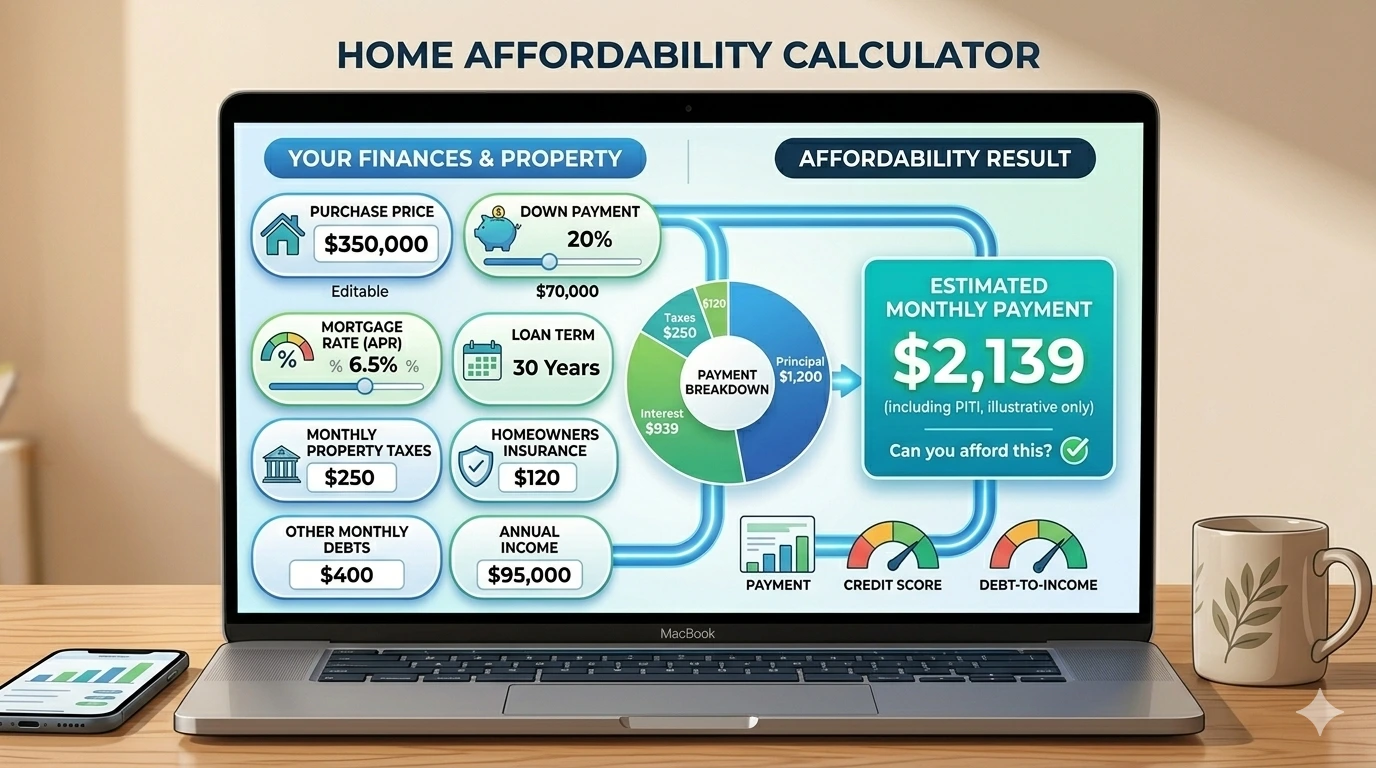
Plug in your numbers (price, down payment, rate, taxes, insurance) to avoid buying too much house.
so finally my thoughts at the end and that's why you should stay until the end not because you want to hear my thoughts or because i'm a genius because i'm not, i'm just a regular person,it's because this is where you can apply logic to what i just presented and you're also helping, so anyway my thoughts on this are what can you afford okay so i know most of you came to this here wondering what my opinion is on whether you should build or buy or what.
The numbers work out to be that's impossible to answer real estate is hyper local it all depends on where you live you can literally be on a different side of the train tracks and it changes the numbers completely so i cannot possibly create encompassing openion for the entire country or the entire world to be exact because i have people all over the world so first and foremost what can you afford it doesn't matter if you want a brand new house if you can't afford it if you cannot afford to build a new home then you have to settle with an existing home and then you have to settle with an existing home that you can actually afford and it's just the house yes your house is your sanctuary it's where you relax it's where you raise a family it's where you're part of a community it's where you know you go to unplug i get all that trust me however once you get bombarded with all these videos on instagram and youtube and hgtv and oh you know i'm a teacher i'm a butterfly collector and i'm looking at houses in the neighborhood of 700 000 you know it's like what you know like are you even a real person uh so what my point to all this ramble is is that that allure goes away over time okay so yes when you're moving into a house you want to outfit it you want to finish it you want to do all your you know furniture you want to make it your home i get that but trust me that goes away and guess what it just turns into a money pit over time it's a liability.
yes on your balance sheet a house is an asset of course but at the end of the day it truly is a liability because you'll always have property taxes you'll always have maintenance you always have upkeep and and stuff breaks okay so remember these two things and you should be a-okay as always