50 Year Loans - What This Means For Home Prices!
before you get excited about the idea of lower monthly payments, exactly why a 50-year fixed mortgage is a trap disguised as a lifeline. Unless you've been hiding under a rock, President Trump has been floating the idea of a 50-year fixed mortgage. And headlines, yeah, they're loving it. But just because it makes headlines doesn't mean it actually makes sense. This isn't innovation, guys. It's desperation wrapped in a longer amortization schedule.
50-Year Mortgage vs 30-Year Loan: True Cost Comparison
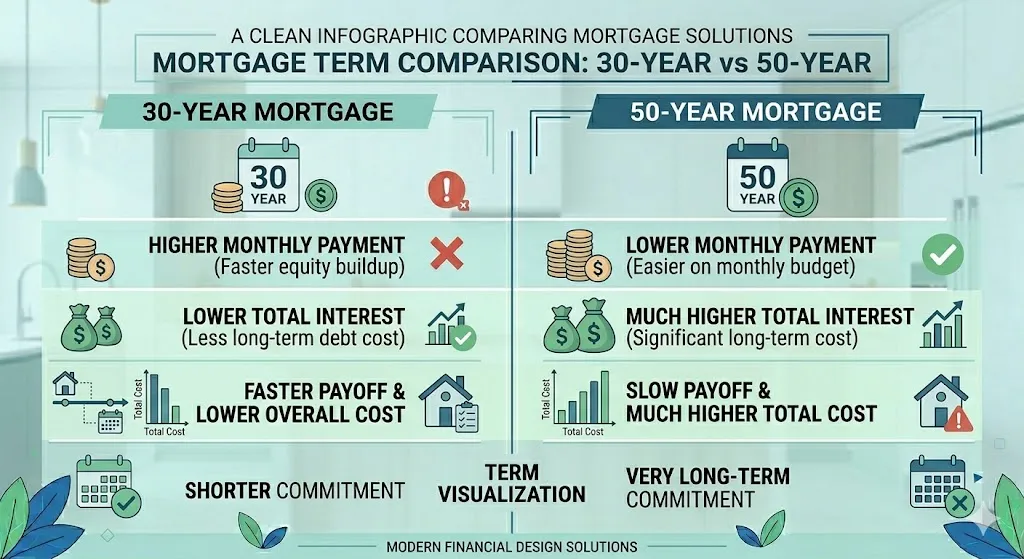
Lower payments may look attractive, but long-term costs can nearly double.
And that's because it doesn't actually fix housing affordability. This article isn't about politics. It's about how the wrong financing strategy can actually wreck your home buying experience along with your wealth.
would you actually sign up to pay nearly double in interest just to shave, say, $150 off your monthly payment? Because that's not a solution. That's a slow bleed.
As many of you know, I've been helping buyers make smart home decisions for over 20 years as a real estate agent here in Southern California. And if I've learned anything, it's this. Buyers fixate on monthly payment, not realizing they're stepping over dollars in many cases to save dimes. And that's because buyers live in the payment, not the price.
we're going to dig into the numbers, the equity trap, the policy red tape, and what this would actually mean for your financial future if it ever becomes real.
you've probably seen it in the actual headlines, maybe even in the sales pitch from your mortgage guy. Lower monthly payments mean more buyers can afford homes. realize that sounds good on paper, but let's unpack the actual math.
Let's start with say a $440,000 home. That's about the median home price in the United States. And let's say you put 10% down and you're financing $400,000. Well, if you were to get that loan at today's interest rate, say 6.22% 22% on a 30-year fixed, that mortgage payment would be $2,455 a month without taxes and insurance. So, just your principal and interest.
The thing to understand about a 50-year fixed mortgage is that it's not going to have the same interest rate as a 30-year fixed mortgage. Because, if you've ever paid attention, a 15-year fixed has a lower interest rate than say a 30-year fixed. And guess what? A 50-year fixed loan is going to have a higher rate. And that's because an investor is going to have to hold that paper for a longer period of time. So you got to compensate them in order to do so.
And based on what a lot of experts out there believe, they're thinking that interest rates are going to be somewhere between 04 to say .7% higher on that 50-year fixed mortgage. So if we took that same $400,000 loan and we said it's 4 higher, so we're financing it at 6.64% 64% today. Over a 50-year period of time, that mortgage payment is $2,297. So, yes, it's less expensive, but it's $158 difference per month.
I know for a lot of people out there, $158 is a lot of money monthly, but you have to realize it's not only about the savings. Over the first year, you're going to save about $1,900, $1,896 bucks. But over the life of the loan, here's the kicker. you're going to pay an extra $497,000 in interest. Now, depending on how you're looking at that, that's not affordability. That's a wealth trap.
How 50-Year Mortgages Slow Down Home Equity Growth
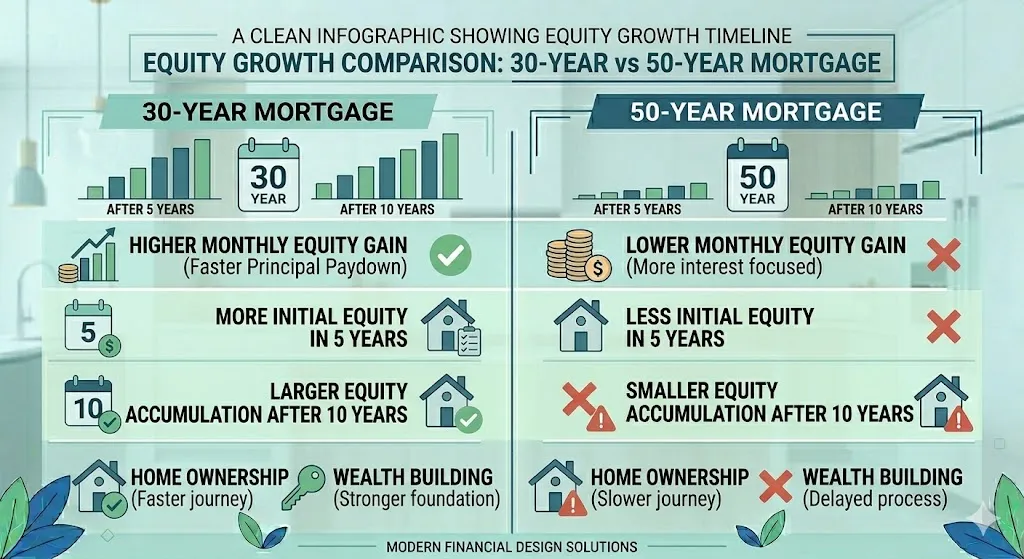
Longer loan terms delay equity, reducing your ability to build wealth.
In many of my articles over the years, I've said one of the biggest ways, one of the greatest ways to build wealth long-term is to own real estate. And that's because home ownership is supposed to be a path to wealth. You build equity, you protect yourself from rising rents, and eventually you own something outright. And that's because every single month you make your mortgage payment, not only are you paying down the principal balance of that loan, you're also getting equity over time.
But here's the thing about a 50-year fixed mortgage, it's heavily loaded with interest in those first couple of years. you're not really paying down that principle every single time you make that monthly payment. And because home prices have appreciated so much over the last say 5 years, there's a high likelihood that home prices move sideways to slightly up over say the next 5 to 10. Which means by spreading out that loan term an additional 20 years, it's going to take you a lot longer to accumulate that wealth.
On top of that, the average age for the firsttime home buyer right now is 38 years old. So, if you have a first-time home buyer coming in at 38 years old getting a 50-year fixed mortgage, that means they're not going to be 88 until they pay off that loan.
I realize, yes, you can refinance and potentially get into another loan at some point in the future, and there's a high likelihood that nobody's actually going to keep that loan the entire duration, but when we're talking about a 50-year fixed loan, understand that you're paying the balance so slowly that after 10 years, you've barely scratched the surface. you maybe have 9% equity in that property versus if you had a 30-year fixed mortgage in 10 years, you'd have paid down about 20% during that same period of time.
On top of that, you're locked in longer. You're exposed to more risk, and you're stuck with fewer options if life changes. Say, for example, you get a divorce, you get a job transfer, you get some sort of dip in the market. You've got less flexibility.
Why Lower Monthly Payments Can Become a Financial Trap
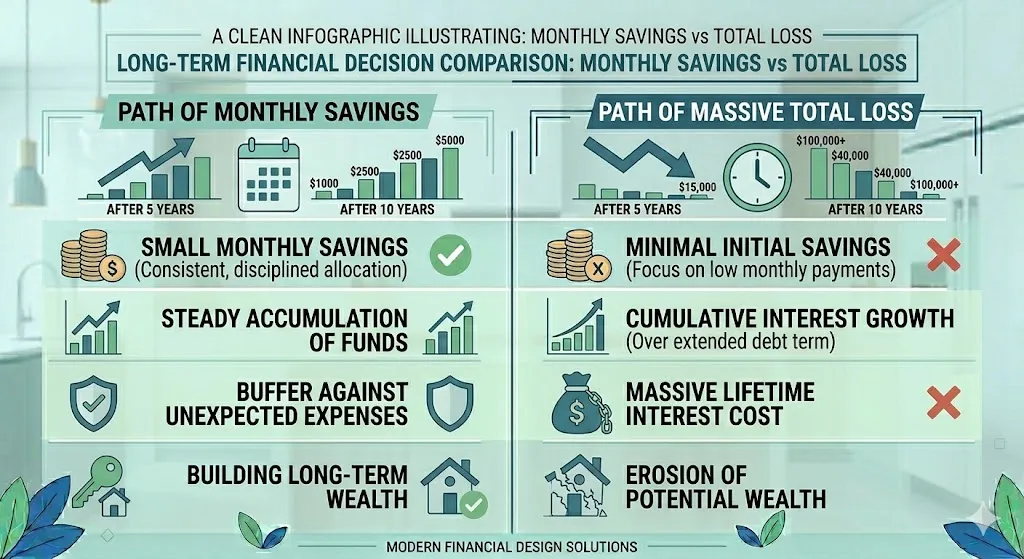
Saving a little monthly can cost you hundreds of thousands long-term.
Now, before I tell you the story about Mark,
Now, let's bring this all to life. Let's say Mark's a first-time home buyer. He's tight on a budget and sees a 50-year fixed mortgage as his way in. But here's the thing. 5 years in, maybe he gets a job change. He gets a divorce. He needs to relocate. But here's the thing, his house hasn't appreciated much because, as we talked earlier, over a 10-year period of time, he's only gained 9% appreciation. And the earlier stages of that 5 years that we're talking about here, he's going to have paid very little principal. So, after closing costs, after agent compensation, and after paying off the loan, chances are Mark, he's going to be upside down on that home, which means he's either going to have no move, no options, or both, and probably a lot of regret.
I know what someone out there is saying. Well, if you invest the difference, you'll come out ahead. Here's the problem. That only works if you invest every penny of that monthly savings and actually earn a solid return consistently over decades. But let's be real, most buyers don't invest. They spend it. They do car upgrades. They dine out. They buy random Amazon buys. They go to Starbucks and get the cappuccino frappuccino coffee, whatever it's called. So, the reality is you're not investing the savings. You're actually losing it. and now you're stuck with a bloated loan and no wealth to show for it.
I think one of the important pieces to talk about here is that this isn't even a real option yet. Most people don't even realize this isn't a thing that you can actually get. You can't call your lender today and say, "I want a 50-year fixed mortgage."
And the reason for that is because the DoddFrank Act that was signed in after the GFC actually makes qualified mortgages only 30 years. So, anything longer than a 30-year fixed mortgage doesn't meet the qualified mortgage guidelines, which means it can't be sold to Fanny or Freddy. It's a nonQM loan. And if this stays a nonQM loan, guess what? It's probably going to have higher interest rates than what we've already discussed.
So, in really simple terms, unless federal lending laws change, 50-year loans are not going to be backed by Fanny or Freddy. That means your traditional lender, your broker, whoever you're calling right now, aren't going to be offering these loans at scale. So, what you'd end up with instead, even if this does come to market, is a non-qualified mortgage. Again, higher interest rates than what we talked about earlier. It's going to have more risk. It's going to have fewer consumer protections. So, it's going to be even less appealing than the less appealing loan that it already is.
a lot of what we're seeing right now with the 50-year fixed mortgage is political theater. It's somebody saying something to get attention. The midterms are really close. We're going to start saying things in order to get people re-elected.
Now, again, this is not political, but we often hear things like this about grants, whether it was Obama or Bush or Clinton or whoever during their presidency. talking about first-time home buyer grants, talking about fixing affordability, and they name all of these things and most of the time nothing comes to fruition. We've even seen it before in versions of like the NEGAM loans that were back in the GFC days. On top of that, interestonly loans, interest only ARMS, these things were extended terms to improve affordability. And what happened with all of those is people got in over their heads. Equity didn't keep up and when the market corrected, it was a complete disaster.
How 50-Year Mortgages Could Drive Home Prices Higher
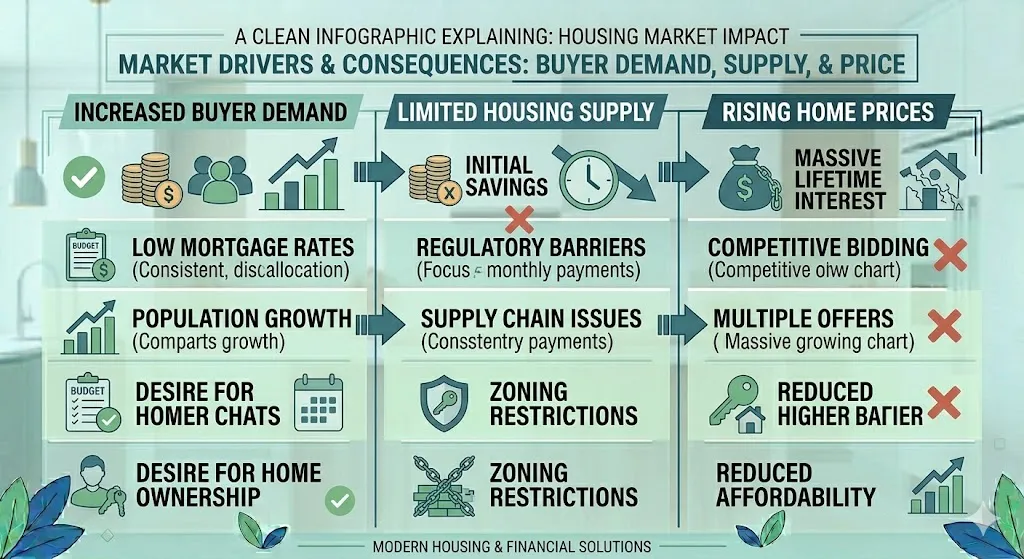
More buyers with access to loans can push prices even higher.
Now, one of the people I follow closely is Logan Modashami over at Housingwire. And he said something perfect. He said, "Subsidizing more demand from a 30-year to a 50-year fixed mortgage is not the policy we want to take on now." And that's because the issue is not demand. It's supply. We don't need more buyers chasing too few homes. We need more homes. And here's the honest truth that most politicians don't want to talk about. This isn't a financing problem. It's a housing shortage problem.
I know what a lot of you out there saying. There's plenty of houses. There's vacant. There's shadow inventory. There's not. There's not. Otherwise, it would have come to the market by now. Why wouldn't you bring that supply to the market when prices were at all-time highs? The reason is because it's not there. And depending on who you follow, the US is short anywhere from say 2 million homes upwards of 6 million homes. And we're not building fast enough to catch up.
In California, it costs about $100,000 to break ground to build a house. On top of that, zoning restrictions everywhere. labor shortages right now, immigration policies taking a lot of potential labor out of the country, which means less people able to build some of these homes. On top of that, high construction costs, high material costs. All of this contributes to the bottleneck. And guess what happens when interest rates go high and the market starts to slow down? builders slow down as well because they don't want to have an overupp of homes.
So, as the market slows, as the economy weakens, building slows down, and that's more of what you're going to see probably over the next couple of years is less new construction coming to the market, which only adds to further supply issues down the road.
And the problem with the government is instead of addressing the root issue, they do gimmicks that increase demand without actually increasing inventory. What do you think's going to happen to home prices if you add a 50-year fixed mortgage to the current environment? It's going to give more buyers an opportunity to become homeowners. You add more home buyers to the current environment. Guess what happens to prices? It pushes prices up, which means competition gets fiercer. The very people this plan is supposed to help end up getting priced out again.
Smart Mortgage Strategies Instead of 50-Year Loans
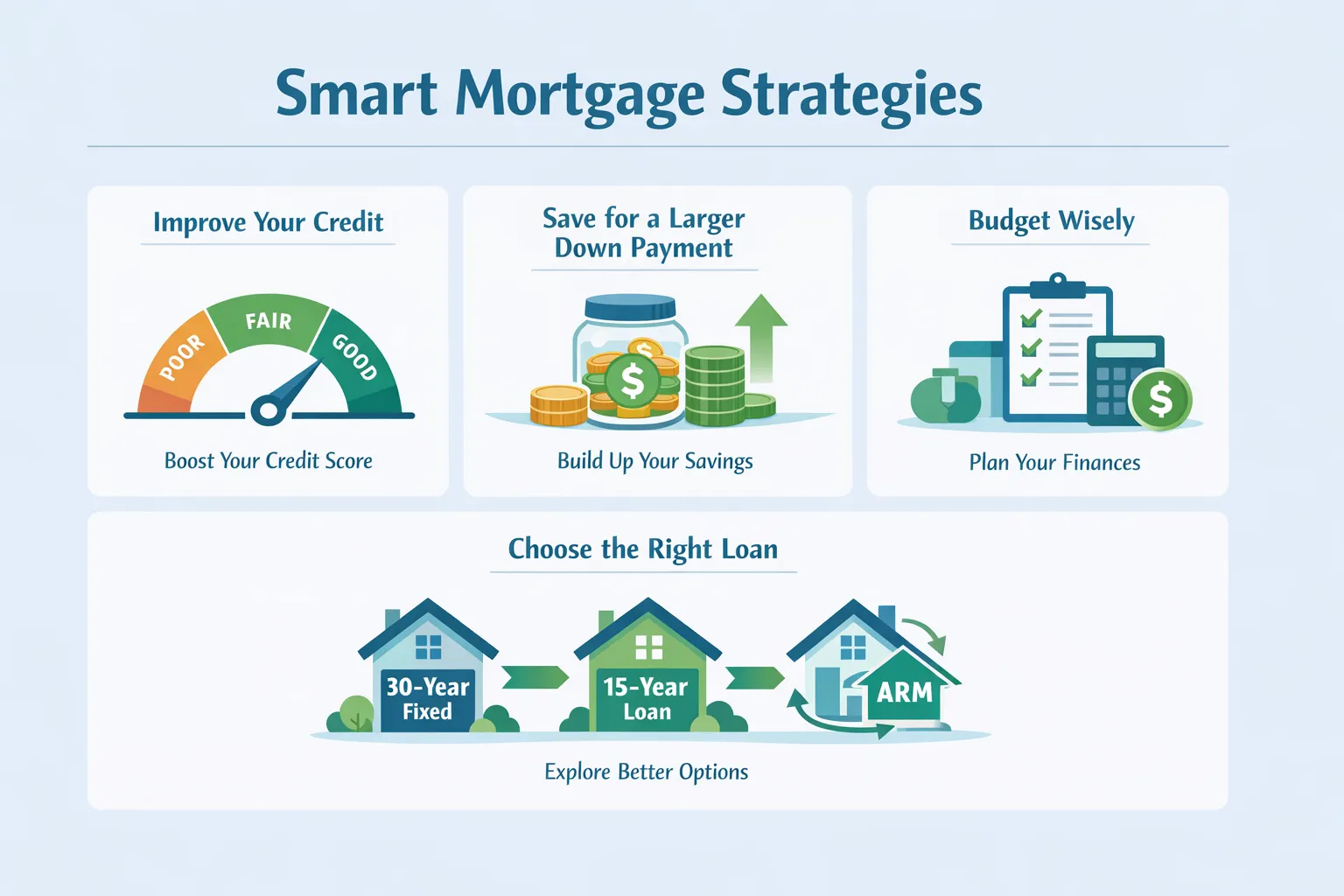
Focus on proven strategies that build long-term wealth and stability.
So, in my opinion, not only does this not fix affordability, it keeps prices high and pushes them even higher. The last thing we need is more government intervention. you need the government to get out of the way and let the market dictate what's going to happen. In most markets out there, at the time I'm filming this article, the pressure is still on on the buyer side. And the supply side in many markets out there is nowhere near caught up.
The real solution here isn't a longer mortgage. It's more housing.
If you were to ask me today, is this something that could actually happen? probably not. And if you look at the recent study that Reszi Club did, it shows over 65% of people view the idea as very unfavorable. Now, the question is, do those people already own real estate? Do they already have a 30-year fixed mortgage on their home already and thinking it's a terrible idea? Or are these people that don't own mortgages and also think it's a bad idea?
The one thing we know after the GFC is that no lender wants the long-term risk. No regulator wants to roll back lending protections. And politically, it's a hard sell, especially when buyers already feel squeezed.
But the reason I'm talking about this, this does matter. It's the reason I'm talking about it because it reflects the kind of band-aid thinking that keeps getting recycled while buyers keep getting burned because no one's addressing the real issue.
So, if you're a buyer out there, what should you be focusing on? you got to forget the gimmicks. focus on your credit, focusing on things you can control, how much money you have for a down payment, how much money you have in savings, are you financially ready, are you stable, do you have a longerterm time horizon. in many cases in this environment, buying below your max budget. not stretching everything to a max, and not putting minimal down payment on a long-term 50-year fixed mortgage if it becomes available.
focus on the 30-year fixed mortgage. has a 90-year history of actually working well for people to produce wealth long term. there's a reason it's never been changed is because it actually has a history of working.
If you are looking for a mortgage that'll help you with a little bit more affordability, maybe a little lower interest rate, let you qualify for a little more home or have a little lower monthly payment, maybe focus on an adjustable rate. Something say between 7 and 10 years. not really going below 7 years because there's a chance that home prices do move sideways for the better part of that term. And the last thing you want to do is get caught up in a property where you don't have any equity and haven't been paying down that principal.
On top of that, also look into things like seller credits to potentially help you buy down your rate permanently. Don't just do a short-term buy down. Try to use it to buy down your rate where it actually stays lower. And most importantly, understand that affordability is about the full picture. Not just getting into the property, but staying in it and building wealth over the long term. You need to have a longer term time horizon when you're buying real estate. You can't be thinking in one to two to three years.
if you were to boil this down into a final take, a 50-year mortgage is not a solution. It's a symptom of a broken system. And if it ever becomes real, it'll do more harm than it'll probably do good.
Your goal shouldn't just be to buy a house at whatever cost. If it takes a 50-year mortgage or whatever. if that's the only solution, you plan on being in the home forever, maybe. But compare your options and know what you're up against before you sign on the dotted line. More importantly, your goal should be to buy the right house with the right financing. Because even if it does come with a lower payment, can end up costing you far more in the long run than you ever save.
if you're potentially in the market to buy a home, here's what you need to do.