Get PreApproved for Home Loan 2026 Tips & Tricks
I think that the biggest fear that most first-time homebuyers have is trying to figure out whether or not they're even qualified for a home in the first place and the entire process really starts with getting pre-approved for a mortgage. I've partnered up with my friends over at Money Under 30 to give you the absolute best tips and tricks that I've got to make sure that you can get pre-approved to buy your first home this year.
Why Pre-Approval Is the First Step for First-Time Homebuyers

The excitement of getting your first home starts with pre-approval – don't skip this step!
I help people just like you learn how to buy their first home and navigate the mortgage process. If at any point you've got a question, send it to me.
That's where your entire home buying journey really should start. A lot of first-time homebuyers will probably go on sites like Zillow and Redfin, Trulia, maybe work with a realtor and start looking at some homes first before they even consider their finances, but that's probably one of the biggest mistakes you can make because you want to make sure that your finances are in order and that you can even afford to buy the home in the first place before you go out and shop.
It can be scary to be talking to a loan officer, to be talking to anyone really about your finances, because for most people it's a very personal and private thing, and to be honest your lender is going to probably find out more about your finances than even you knew. But I promise the entire process is super important to make sure that you can comfortably afford that new mortgage payment so you can worry about living in your dream home instead of affording your dream home.
All right, let's start with what lenders even look at during the pre-approval process. For me I like to simplify it down to just three things: income, assets, and credit. Let's start with income. When we're getting you qualified for a mortgage we're using your gross income — that's your income before taxes and everything else is taken out. This means if you're a regular W-2 employee this is your income before taxes. If you're self-employed it's a little bit trickier because you have all these different deductions.
Usually it's your effective income after deductions — that's what your taxes are usually calculated on. So once again, your income before taxes but after deductions if you're self-employed. What's great is a lot of times you can have a co-signer. For example, if you're married you have your spouse as a co-signer on the loan and we're going to use your gross household income. So make sure you're keeping this in mind. Try to consider everyone in your household who's going to be living in the house, consider using their income and using them as a co-signer to help you qualify for this mortgage. If you don't have a co-signer that's fine too — there's a lot of people who have helped throughout the years who literally just bought their homes by themselves, so it never hurts to try. Income is probably one of the most important pieces to getting pre-approved because this is really going to dictate how much you can afford, so if you want to make sure that you can even afford the home you want to live in, start budgeting.
Mortgage Pre-Approval: What Lenders Review (Income, Credit & More)
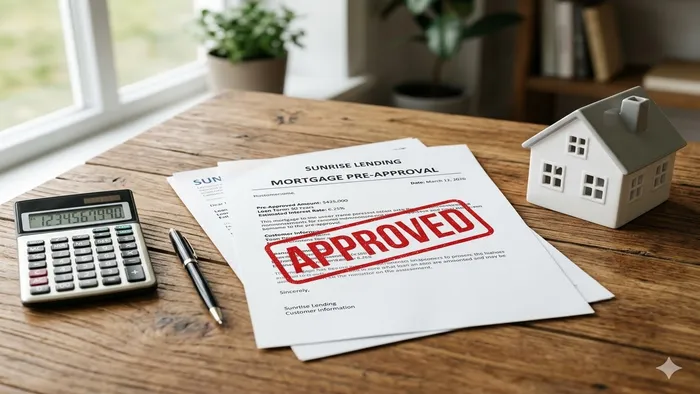
Pre-approval letter shows sellers you're serious – get yours early!
As a good baseline your mortgage payment should be anywhere between 30 to 35 percent of your gross income. When I refer to mortgage payment here that's just your principal and interest payment. The reason why is I know a bunch of you are living in different cities, different states, might be looking at different properties — 30 to 35 for just the mortgage principal and interest payment is gonna be a good baseline for you to figure out how much you can realistically afford, because once you start adding on those property taxes and insurance on top of that the payment gets a little bit more expensive. Keep in mind also your finances might be different — 30 to 35 percent of someone's gross income who's making five thousand dollars a month is way different than someone who's making fifty thousand dollars a month. So keep that in mind.
Another note on income that I get asked all the time is you need two years of job history, but that doesn't necessarily mean that you need to be at the same job for two years. As long as you're more or less in the exact same field for the last two years or you've shown career growth over the last two years you're more than fine to be jumping between jobs. In fact this is actually a good thing, especially if you're showing that your income is increasing as you move from company to company while still staying in the same field. Same rule applies if you're a business owner — we're gonna need at least two years of tax returns and your tax returns are showing that your income is increasing year over year. This is definitely going to help you qualify for a loan as well.
A trickier thing here is if you're trying to use your overtime, bonus income, or commissions to qualify. You have to average this over a 24-month period. This means if you've only just recently started receiving commissions or bonuses you might not be able to use as much of that income to help you qualify. Lastly, a job isn't the only kind of effective income that you can have — things like child support, alimony, stocks, bonds, capital gains, you can use all these different kinds of things as effective income if it's properly documented over the last two years.
All right, let's start talking about credit. This is probably the second biggest question I get asked when talking about mortgages — what kind of credit score do I need to even qualify for a home loan? Well, it really depends on the kind of program that you're going for. As a general guideline, if you're applying for things like FHA or VA loans you're gonna need at least a 580. As a general rule of thumb, if you're over 640 you're pretty much good for majority of the programs out there. But as far as minimal factor scores, here's a list of all the minimal FICO scores that you're going to need for different kinds of programs.
A big tip that I can give you when it comes to monitoring your credit score — don't use Credit Karma. It's usually free for a reason. Credit Karma makes their money by giving you a different kind of scoring model. They use the VantageScore model where we use the FICO model when it comes to mortgage lending, so the scores that they're showing you on Credit Karma can be sometimes 20, 30, 40 points higher or lower than what your actual credit score is. It's not very accurate. Not to mention the fact that Credit Karma's always trying to upsell you on taking out debt consolidation loans, applying for new credit cards. If you continue to go down that rabbit hole you can end up hurting your odds of getting pre-approved instead of helping it. Instead I highly recommend things like myFICO — they're much more accurate — or maybe even going directly to the source with places like Experian, Equifax, or TransUnion. They've got credit monitoring as well. It's not free, but if you're really concerned about monitoring your credit for buying a home I highly recommend using one of those tools.
Credit Scores Needed for Mortgage Approval – FICO Ranges
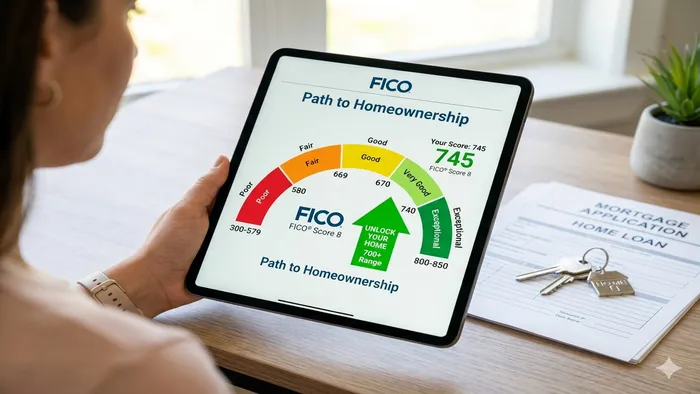
Aim for 640+ (ideally 700+) – check your real FICO, not Credit Karma estimates.
You can't talk about credit without talking about debts. The less debt you have the more likely you're gonna get approved for more. Here's why — once again going back to income, your debt-to-income ratio is going to be the biggest factor when it comes to figuring out your purchasing power. What's great is most lenders will let you go as high as 45 to 50 debt-to-income ratio depending on the program that you're using, but obviously the less that you have the more you'll be able to afford. I typically like to recommend to my clients to start paying down that high-interest debt — the ones with higher payments. Those larger debts are really going to make a bigger impact on your purchasing power than anything else. But that doesn't mean that you should ignore those smaller debts too. For every $50 a month in debt that you can knock out, that gives you an extra $10,000 in purchasing power on average. So for example, paying off a car payment that's $500 a month could give you a hundred thousand dollars more in purchasing power. So you really want to look at your budget and start prioritizing those higher payments, but also don't leave off those small ones if you can knock those out too.
What about student loans? This is a very common issue that I have especially as more millennials continue to enter the buying space. Believe it or not, student loans aren't the deal killer that they used to be when it came to mortgages. In fact, lots of mortgage providers like Fannie Mae, Freddie Mac, even FHA have become a lot more flexible with how they're treating student loans. It really depends on how much student debt that you have, but for the most part it's actually pretty easy to qualify for a mortgage even with a little bit of student debt.
And now the last one and probably the biggest one — cash. How much money do you need to actually buy a home? First of all you need to understand how much of a down payment you're going to need. If you're using things like a VA loan or a USDA loan, congratulations, you need zero percent down. If you're using an FHA loan you're gonna need three and a half percent down, and a conventional loan you're gonna need three to five percent down. What's great is a lot of these programs can be paired with a down payment assistance program, so it could take these costs all the way down to zero in some cases. But just because you have your down payment covered doesn't mean that there aren't other costs to buying a home too. These things are called closing costs.
Save for Down Payment & Closing Costs – Realistic Expectations
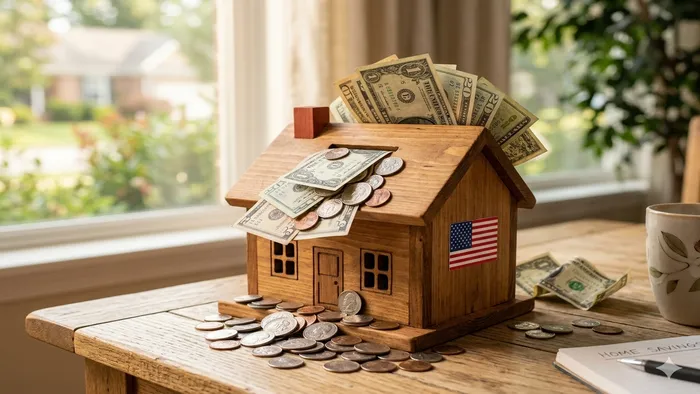
Plan for 5-7% of home price in cash for down payment + closing costs combined.
On average the closing costs for a home are gonna be anywhere between two to three percent of the purchase price depending on the area that you're living in. Honestly, the biggest part of your closing costs isn't even gonna be the stuff for your lender — the title or escrow company usually takes the biggest portion. Your closing costs are going to be going towards your property taxes and it can get pretty expensive, including in places like San Diego, California, places like Austin, Texas, places where they have really high property tax rates. So as a baseline for most home buyers I like to say have anywhere between five to seven percent set aside for your down payment and your closing costs, because this is going to cover you for majority of the programs that you might be looking at.
Here's a quick example of how much you're going to need to buy a $500,000 home. Let's say you're gonna use five percent down using a conventional loan — that's going to be $25,000. On top of that you're gonna have your closing costs, that's gonna be another $10,000. So right at the gate you're at about $35,000.
Now that we've covered how much cash you're going to need, I want to talk about where that cash needs to actually be coming from. You can hear the term "cash to close" get thrown around a lot by both real estate professionals and mortgage professionals, but really we're not talking about cold hard cash — we're talking about cash that's been properly sourced. Typically the most common place that home buyers have their cash is in a checking or savings account. If you're reading this right now and you plan on buying this year, I would definitely recommend starting to deposit that cash immediately.
Some other acceptable sources of a down payment that might actually surprise you include things like your 401k from work, if you're in the military your TSP account, stocks and bonds, IRA. If you sell something and you have a deed of sale you can use those proceeds as well. There's plenty of places that you can use cash or get cash from in order to close on a property. One of the more common things I'm seeing right now is people getting gifts from relatives in order to buy their home. This usually has to be a direct relative — brother, sister, cousin, aunt, uncle, mom and dad obviously — so make sure that you're getting it from a proper source. But gift funds are also an acceptable source for both your down payment and your closing costs.
Debt-to-Income Ratio: Key to How Much Home You Can Afford
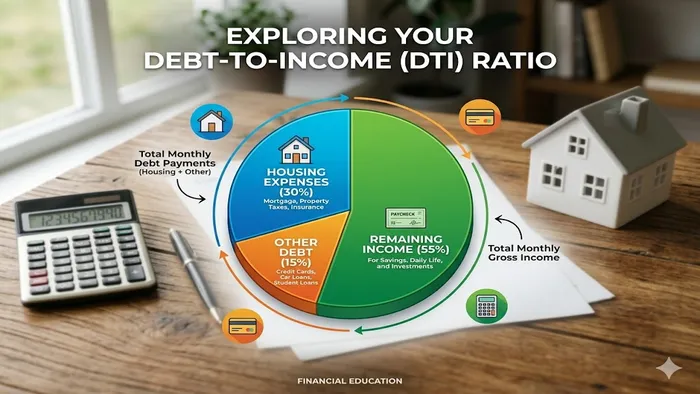
Keep DTI under 36-43% ideally – pay down high-interest debt first for more buying power.
All right, so you know exactly how much you need to make, you know what kind of credit and what kind of debts that you have to worry about, and you know how much money you need to close on your home. So what kind of documents are you going to need to bring with you to that pre-approval meeting? Once again, if you're a typical W-2 employee you're just gonna need your last two years of W-2s, last 30 days of pay stubs, and two months of bank statements and a photo ID. For majority of people that's basically all you're going to need.
If you're a business owner you're gonna need a little bit more — you're obviously gonna need your ID, you're gonna need two years of tax returns, and in some cases you might need to actually bring your business bank statements on top of your personal bank statements. And if credit is a factor in getting pre-approved, you're going to need to have your credit run. The good news is mortgage inquiries don't hurt your credit the same way things like a credit card inquiry might. It will impact your score — it is a hard pull, it's going to be about one to three points off your score on average. What's great is it opens up a shopping window where you have about 45 days to shop around for a mortgage with other lenders.
What I typically recommend is get pre-approved by about two or three different people because some lenders have what are called overlays, which are limitations on how much you can actually get pre-approved for. For example, one lender might have an overlay for your debt-to-income ratio of just 43 where another lender might let you go up to 50. So make sure you check with your lenders, ask them if they have overlays or if they write directly to the guidelines. This way you'll figure out if you're actually getting the most out of your purchasing power.
Closing Checklist: What to Expect at the Final Step
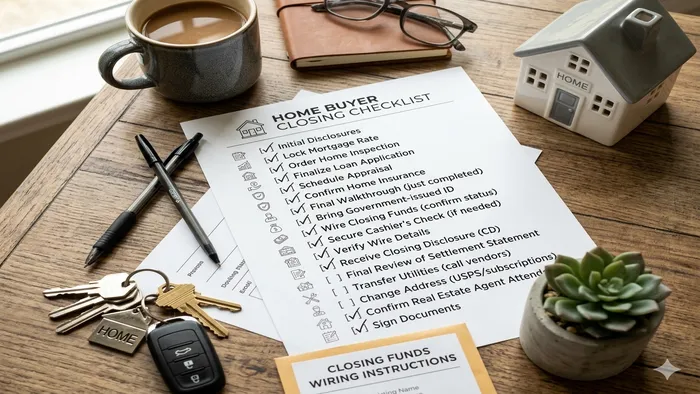
Prepare your docs early – pre-approval, pay stubs, bank statements, and more make closing smooth.
For the most part, if you've got your documents and you've got your finances in order, getting pre-approved is no big deal. But knowing what you need and knowing at least the minimums of where you need to get to can be a huge help. If you're not quite ready to buy a home yet, one of the best tips I can give you is even if you're not trying to buy a home in the next one or two months you should still consider meeting with a mortgage lender and getting pre-approved anyway. In doing so your lender will be able to help you flush out the areas where your application might be a little bit deficient and kind of give you a road map on what you need to fix in order to get pre-approved.
I can't tell you how many times I've met with potential first-time homebuyers who are coming to me right at the end of their lease only to find out that it's going to take them another three to six months to fix something on their credit or save up money for a down payment when they thought that they were ready to buy a home today. So ultimately they had to sign up for another lease and go right back to renting. Meeting with a mortgage lender as early as you can in the process is probably going to be one of the biggest keys to making sure that you can buy a home this year. If you have any specific questions on getting pre-approved feel free to reach out — I love to help.