Interest Only vs Principal and Interest Which Loan Is Better for Inves
Principal and interest or interest only — which is the best option when you're buying an investment property? In today's article, I'm going to break down which one is the best way to go, what are the pros and cons of both, what do I actually do as an investor myself, and what are some of the things you need to think about when making this decision. This is a great episode that's going to help you make the decision before you go for your finance and speak to your mortgage broker or with your lender.
Interest-Only vs Principal & Interest: Key Differences Explained
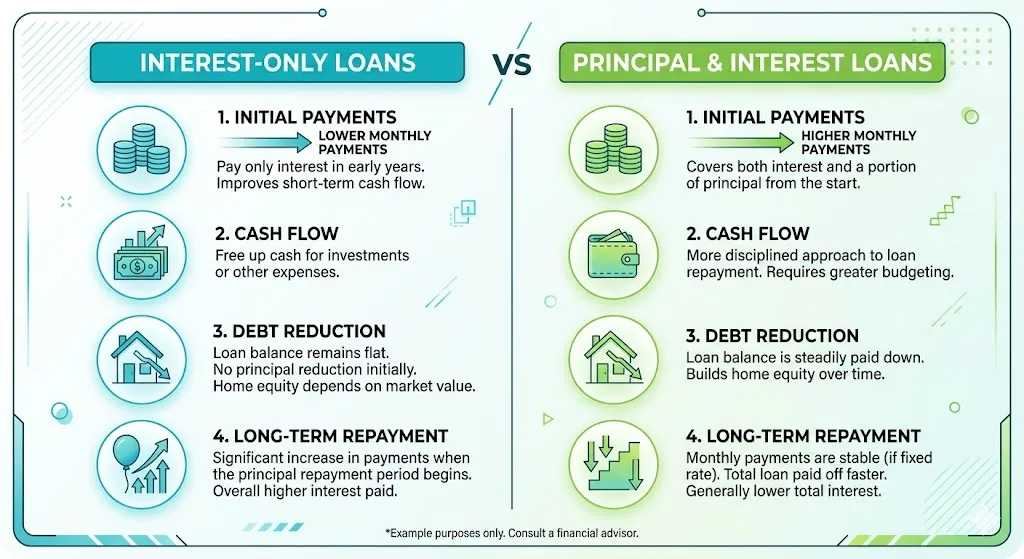
A side-by-side breakdown of how each loan type impacts investors
So firstly, let's talk about interest only because a lot of investors do go with that option. When you're only paying the interest, it means that your cash flow position is going to look better. You have to fork out less money each week, meaning that it might be more affordable for the average investor, especially if you got multiple properties. It might help you managing your money a little bit better.
But one of the downsides of interest only is firstly you'll find that a lot of lenders actually reduce your borrowing capacity which is a bit surprising because you'd think if you're paying less money each week maybe they'll lend you more money but from my experience when I go for loans if you go for a principal and interest option you often actually get a stronger borrowing capacity which means you can borrow more money to go towards your property. So that's something you want to ask your mortgage broker whether you can get a better borrowing capacity by going principal and interest.
The second thing is that interest only loans they typically have a period. So it's anywhere usually from like one to five years. At the end of that period then it reverts to principal and interest and at that point you can either refinance the loan as interest only or just head over to those principal repayments. So that can therefore affect your cash flow as well. So really note when that period ends because it can come as a little bit of a surprise especially if you've got multiple properties.
Why Interest-Only Loans Improve Investment Cash Flow
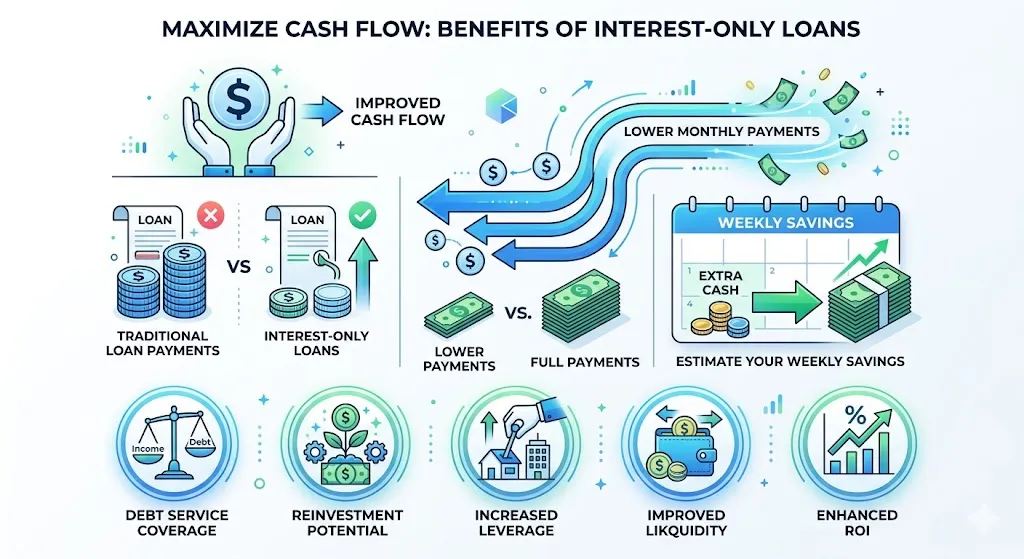
Lower repayments can make property investing more manageable
The other downside of interest only is sometimes the interest rate is a little bit higher. So recently when I refinanced I found that the percentage was about 0.25% higher. So forking out more money to have the benefit of interest only but it's not a huge amount but just something to be aware of.
Now what about principal and interest? Is it worthwhile? Well technically it means you can get a better borrowing capacity. It does mean you pay back the principal of the loan. So the life of the loan has an expiration date, usually 25, 30 years, at which point the loan would be fully paid off. So if you're looking to reduce your debt gradually and really forcing you to save money, that's what I like to call it, is force savings rather than principal, then it can actually be beneficial to start build your wealth and actually force you to save that money aside.
You'll find that the interest rate might be a tad bit lower. We love lower interest rates, but again, it's not a huge amount, but just something to keep in mind if you are looking to save a few dollars.
So, we're going to jump in now and look at what do the actual numbers look like between those two options.
Now, I'm making some assumptions here that we're purchasing a property at $750,000. That's what a lot of investors I'm working with at the moment. That's their budget and the interest rate currently is sitting at about 5.99% for the average investment loan.
If we are doing principal and interest, so P&I, we'll find that the repayments are about $556 per week. I've just made assumptions around average rents and things like that. This is going to really differ depending on where your investment property is, but this is after all of your expenses that we've estimated. So that holding cost is about $556 per week, whereas interest only is $383.
I always say that principal is a little bit like forced savings. So if you're wanting a way to force you to set money aside, then principal can be a good way to go. So as you can see, there's not a huge difference between the two. It's $173. So $173 that you'll be putting aside each week to repay that initial principal.
Hidden Risks of Interest-Only Investment Loans
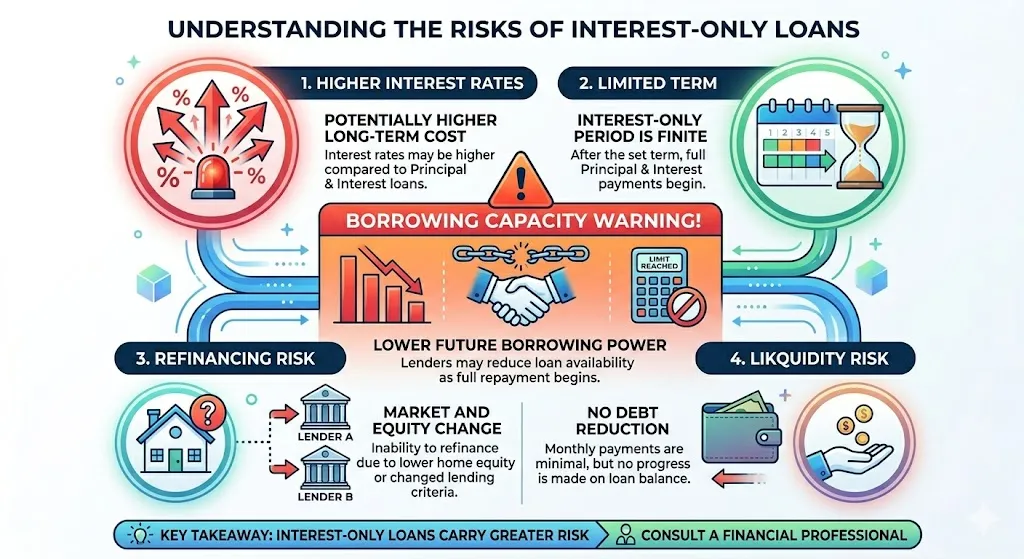
Understand the trade-offs before choosing interest-only financing
Now, this is pre-tax, so speak to your accountant. But what you'll find is that the interest only amount, that's the tax-deductible amount, whereas principal and interest, that is including the principal. And you can't tax deduct principal.
So, I've talked about the cash flow after all of your typical expenses for an investment property, but let's just focus on the actual cost of the actual mortgage itself. So, based on the $750,000 loan at 5.99% interest, the principal and interest payment is $53,902 compared to the interest only amount of $44,925. Now, that is a difference of $8,977 that you have to fork out each year to repay that principal. So, in my example, I pay myself a salary of the tax bracket, meaning that I pay tax at a rate of 37 in the dollar. So, if I tax deduct that difference, the difference is a saving on tax of about $3,321 per year.
So, what are some of the other things you need to think about and what do I actually do as an investor myself and which do I think is the best way forward?
So, over the years, I've refinanced my loans many times to try and firstly get access to more borrowing capacity and also to find a better interest rate. And typically what I do is I speak to a mortgage broker and see what options I can get. I can normally get more money if I go principal interest repayments and less money if I go interest only and also a better interest rate if I go principal and interest.
But what I normally do is look at the cash flow situation. If I can sustain paying principal repayments and I'm happy to fork out that extra money each year, then often I do go with principal and interest. But if cash flow is a problem and maybe the rents on the properties aren't that high, then I might go with the interest only to make it a little bit affordable each week.
How Principal & Interest Loans Build Long-Term Wealth
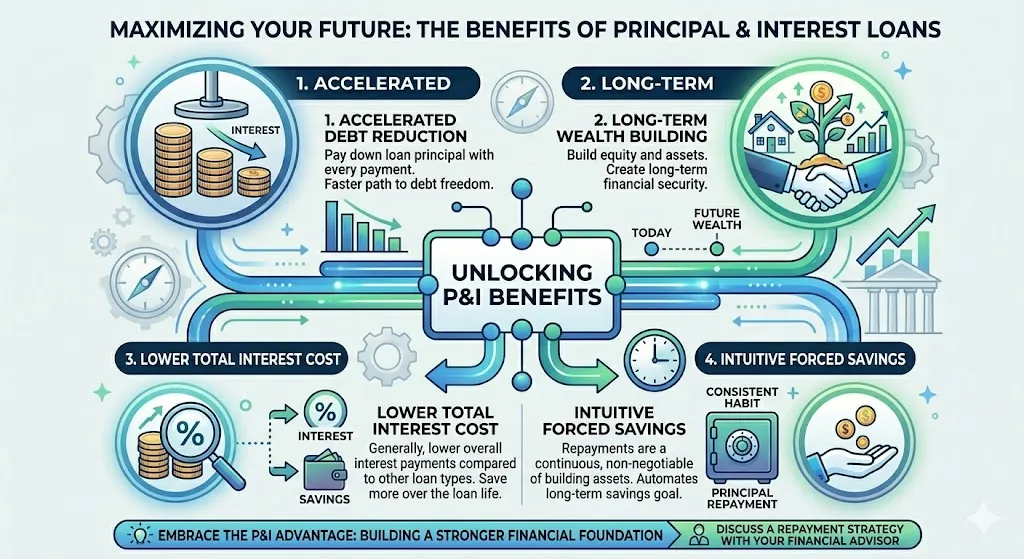
Paying down principal helps grow equity over time
But over the years, I've chopped and changed. And that's the thing, as long as you don't go a fixed rate, if you go variable, every so often you can check in with your broker, do a refinance, and even change it from interest only to principal interest and back again. And if your interest only period does expire, say you got a 5-year validity, you can then refinance it and go back to interest only and get another period of say 1 to 5 years of interest only.
So what I typically do is — at the moment most of my portfolio is interest only. I do have one loan that's principal and interest and that was just because of the way the bank wanted it to be. Sometimes you got to go through that short-term pain for the long-term gain.
But what I then do with the interest only loans is rather than paying back as repayments, I just put the extra money that I have into an offset account, which effectively is like paying more money back, so to speak, and I'm saving money off the interest. And it means I then have that money if I want to use it for maybe another investment or maybe I have something come up that I need to fork some money out on.
So essentially what I do is maximize the debt, go to an 80% loan to value ratio. So 20% cash deposit, 80% bank loan for all the investment properties and then any additional money that I have on top of that put it into the offset account and that's what I find works best for me.
How to Choose the Right Loan Strategy for Investment Properties
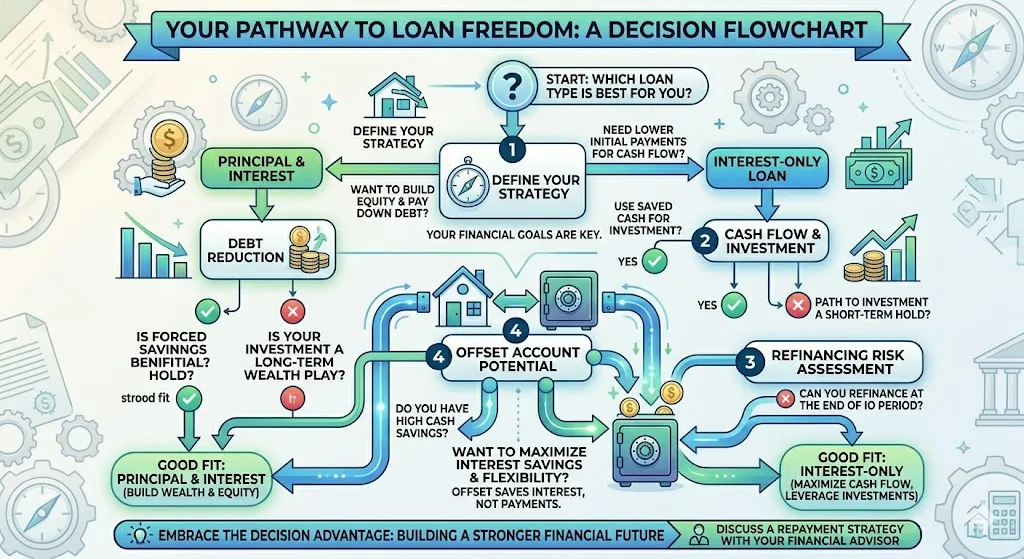
Match your loan structure to your financial goals and cash flow
Everyone's circumstances are different. So speak to your advisor, speak to your mortgage broker, speak to an accountant. All of the professionals you need to make the right decision for you. But hopefully this information will help you make a better decision when it comes to which option to go with. It can be a bit confusing, but ask the professionals. They're there to help.