Millions Qualify But Are Not Aware - How the Government Helps You Buy
Do you qualify for the many government assisted loans? I promise you after reading this article, you will have a complete understanding of whether or not you qualify and most importantly what you can do to qualify for these government assisted loan programs. There's millions of people that are not aware that they can purchase a house for as little as $1,000 investment. This is no joke. I'm not blowing smoke. This is the real deal. These are FHA, USDA, VA. We're going to go through the complete details of how you can own a home just like this one for as little as $1,000 total out of pocket.
Government Home Loan Programs Explained (FHA, USDA, VA)
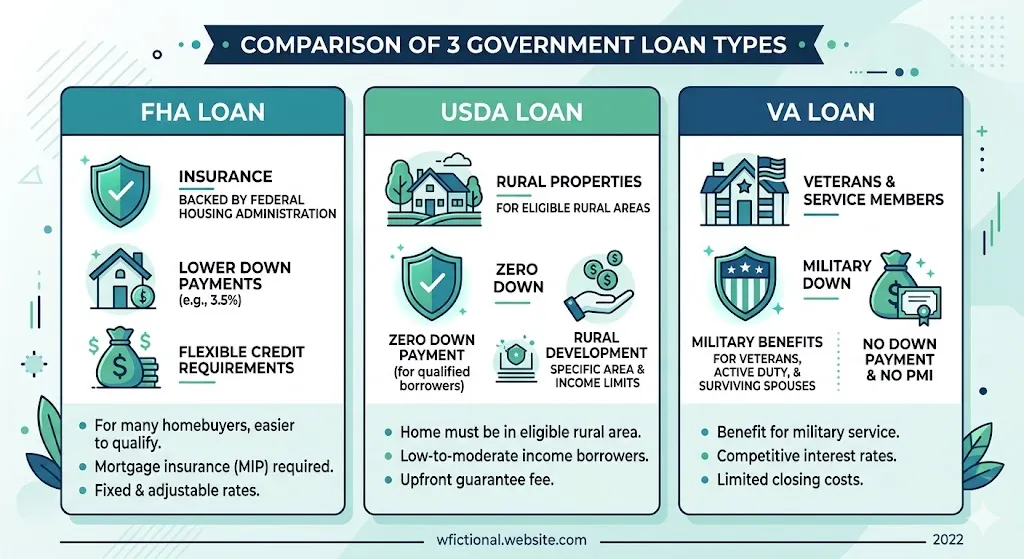
A simple breakdown of the three major government-backed home loan programs and how they differ.
You see, if you're like a lot of people, your biggest reason for not buying a house is you just don't know. It's the overwhelming concern. It's the fear, the fear of the unknown. But I'm here to show you and here to tell you and here to help you through the process. My name is Wayne Turner. I've been in the real estate business for 30 years. I have bought, flipped, built, sold. I've helped thousands of people with their real estate transaction. And I only share that with you so you can have the confidence and the comfort knowing that what you learn from me is from actual real life tried and true experience.
Most people call and tell me and they reach out to me. You can go to contactwne.com and I tell everyone if you've got a 620 or higher credit score, that's where the magic happens. 620 or higher credit score, you can get a USDA loan. If you have two years on the job to show proof that you have income, you've paid your taxes, then you reserve the opportunity to at least help yourself through this process.
So many people, I can't tell you, come to us on a daily, weekly, monthly basis that say, "Wayne, we need help. We never bought a house and we're concerned, we're scared, we don't understand." I get really frustrated because the school system makes you have to have two years of a foreign language, but yet they don't teach you money. They don't teach you credit. They don't teach you finance. You go to college. I got friends who've been to college. I don't have a college education. It's all I could do to get out of high school. But I got hustle. I got grind. I got grit. And I jumped into the real estate business in my early 20s and I've never looked back.
What's most important is people need to understand. And that's why I do these articles. That's why I created these channels. That's why I'm on TikTok and Facebook and YouTube because it came to me about three years ago that people need help. They need assistance. And I'm here to share that with you.
So, most importantly, you have to know about a USDA program. That's the United States Department of Agriculture. And they basically fall under the same guidelines as FHA. Most people have heard about FHA, the Federal Housing Administration. So what they do is they insure the loan which makes it easier for independent lenders and mortgage companies and credit unions and most banks don't even give you mortgages anymore. You don't hear of Capital One doing mortgages. You hear of mortgage companies and of course they give you a loan then it's sold to someone else. If you own a home you've experienced that which is irrelevant.
How to Buy a Home with as Little as $1,000
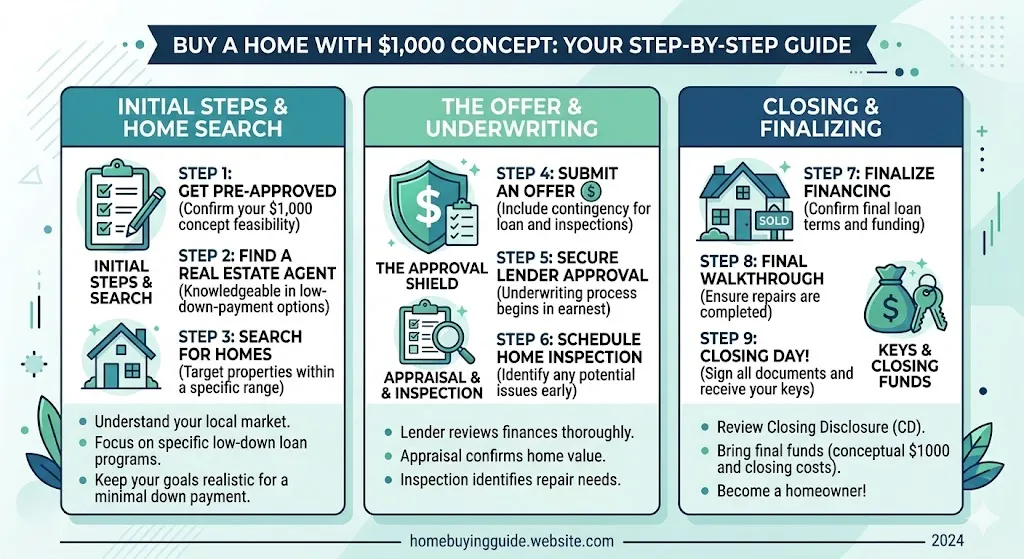
Learn how government-backed loans make homeownership possible with minimal upfront costs.
Most importantly it's important for people to know that your interest rate is fixed when you buy any of these houses. And interest rates are low right now. People complain about a 6% rate. And I'm like, my god, are you serious?
If you rent right now, think about this. You're paying 100% interest. It's no different than going and leasing a car. If you've leased a car out there, leave a comment. If you rented a house for years, tell me what you have gained other than you have to have shelter. So even though you have to have shelter, you have to understand that when you buy a house and you own a home like this one and you buy it for x number of dollars and in five years you can sell it for more money.
Now don't get me wrong, there's people out there saying, "Man, I took a hit. I took a loss." Well, here's where people take a hit and take a loss — when markets really jump high and that's typically where we see Florida and California and oftentimes weather plays a big part of that because people tend to flock to those areas. South Carolina is one of the fastest growing — more people are moving to South Carolina. Why? Because the skies are blue. It helps us with depression. Makes us feel good and the water's lovely.
So, what it boils down to is you have to understand that there are loan limits when it comes to FHA, but that depends basically on where you live, your city, your county, your state. You also have to look into USDA. So, you can buy a house just like this one for less than $200,000. You can get a United States Department of Agriculture loan. Now, these are loans insured by the United States government that says as long as you move into this home, you're going to use it as your personal residence. You can buy a house like this for literally only $1,000. And that $1,000 is basically just going towards your appraisal to make sure you don't overspend. The bank doesn't over lend. But it's in a home inspection. You never want to buy a home without it inspected.
But you have to understand the government is not loaning the money. The government is insuring the loan. So the lender can loan the money. And when the lender loans the money, it's insured by the government. It gives them a little bit more peace of mind. And that's why they call it private mortgage insurance. So you have a mortgage insurance that you pay if you don't put 20% down on a home like this one.
But what it boils down to is you buy a home, you're not renting. When you rent, you pay 100%. Because whether you live in it one year, two years, five years, 20 years, or 40 years, you have nothing to show for it other than paying for that shelter.
Minimum Credit Score & Requirements to Qualify
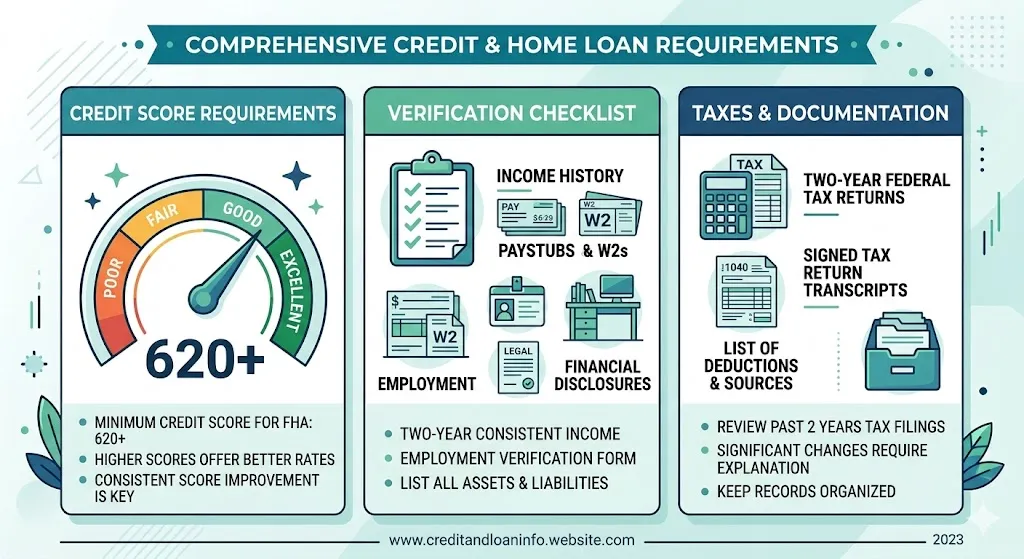
Understanding the key qualifications like credit score and job history can unlock home loan approval.
We're in war right now if you're reading this article in the second week of March and the housing market is still not going to crash. I'll do another article on that — on how typically when we see a war happen, the opposite happens. The home market doesn't crash. Actually, home prices tend to tickle up a little bit. And the reason for that is because of the uncertainty. A lot of people say, "Oh, well, we're at war — what's going to happen with my job? What's going to happen with the economy?" Most everybody tends to pull back a little bit. Gas prices go up. Inflation tends to rise a little bit, especially depending on where the war is happening. But at the end of the day, as I always say, you got to have shelter. And if you're going to have to have it, you might as well own it and not rent it.
Now, here's a little trick that I always tell people. Reach out to anybody that you know that has owned a home for 30 years or longer and ask them what they bought their first house for. After this article, make phone calls, text messages to people — mom, dad, parents, grandparents, aunts, uncles. Ask them what they bought their house for. I'm originally from Nashville, Tennessee, and I can tell you there's homes there that were bought for 20, $30,000, and now they're worth a half a million dollars. And don't give me that baloney of that was 900 years ago. No sir, no ma'am, that was 35, 40 years ago. So where else are you gonna make that kind of investment?
You have to understand that when war breaks out, what people do is hedge on inflation. You know what they buy? They buy houses. When they buy houses, the home values tend to go up. And so the economy and the government, they'll typically adjust those interest rates down to boost consumer confidence, which that's what we will see. The rates will either go down or they will go up. It really depends on the economy and the purchasing. If people pull back and they don't buy anything and they really start just slowing down, you will see the rates come down a little bit. When you see the rates come down a little bit, you'll see a surge in home buyers. When you see a surge in home buyers or the rates come down, and we're seeing it right now — as of March 6th, 2026 of this recording, mortgage loan applications are up 9%. You may be one of those looking out, thinking about buying a house. It's important to know that those people that are making loan applications, they're saying, "Now's a good time to buy. The rates are good."
Unfortunately it's frustrating in some economies and if you're out there, I need you to chime in and tell me — I'm in Connecticut, I'm in New Jersey, I'm in Alabama, I'm in Nevada, California, wherever it may be — and say I can't afford a house. It's really frustrating. I can tell you that in Denver, Colorado, a house like this one that would sell for about $200,000 would be a half a million dollars in Denver, Colorado. It's important that you know you have a voice and to communicate on platforms like mine to say, "Yes, this is what a house runs. This is what it costs." And when you look at a $500,000 house and you just put 5% down with a conventional loan and you borrow money at 6%, you're still looking at $4,500 a month. Who can afford that?
I'm human just like the next person, and you can tell I get a little peeved about it. But you have to understand that mortgage rates stayed less than five and a quarter percent for 14 years. Now, let's go here for a second. Let's look at history and let's think, wait a minute. All these corporations started buying houses. And it's even been said that they want you to rent and own nothing. And even though the rates have been less than five and a quarter percent for 14 years and then all of a sudden in 2023 the rates started rising and in April of 2023 they went from 5% to 8% — literally you're talking a 70% increase in rates — and then now we're looking at rates at 6%. I don't care who you are. Nothing in government happens by accident.
Renting vs Owning: Why Buying Builds Wealth
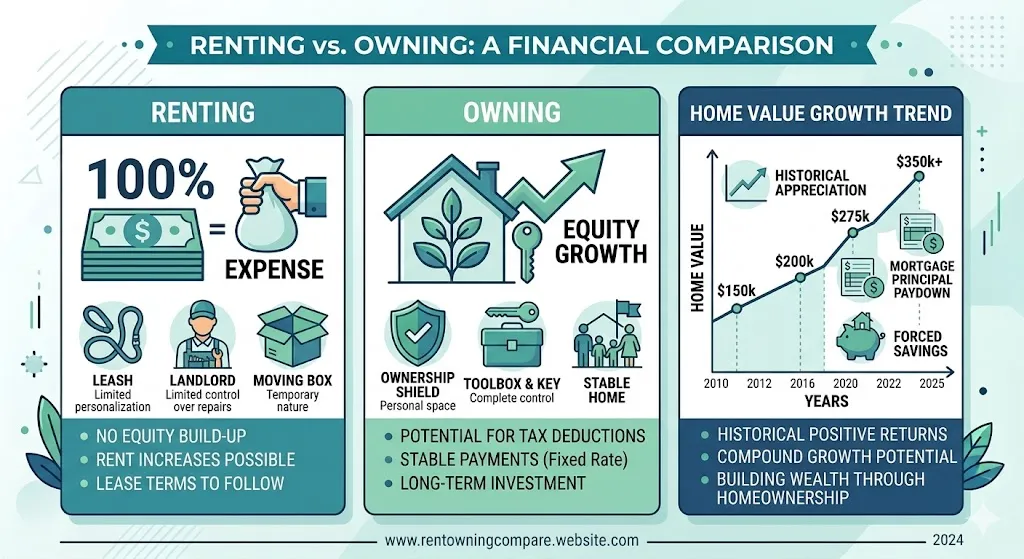
Owning a home builds equity over time, while renting offers no long-term financial return.
Now if you have served in the military, you deserve the right to own a piece of this land in this great nation. We live in the freest country in the world. And I think it's pretty awesome what we can do on a daily, weekly, monthly basis compared to so many other countries. And we just don't realize that. People come to this country and they're like, "Wow, I get to work two jobs and nobody says what I can and can't do. I get to hustle. I get to grind. I get to do all this." My whole point is anybody that served in the military deserves a piece of this land. You deserve a home. And the United States government feels the same way. That's why they give you a loan. VA, 100% guaranteed, not insured, guaranteed.
Here's what I mean by that. They guarantee the loan. So, you can buy a house and it costs you no money out of pocket. Your credit score only needs to be a 580. You don't need any money down. The seller can pay your closing costs, which typically runs you 3 to 4%, depends on where you live in the country, which depends on whether or not there's a title policy, how much are the taxes, all of this stuff factors. But I always tell folks 3 to 4% is what you're looking for when it comes to doing a VA loan. But it's so important to know that it doesn't cost you any money out of pocket if you're a veteran.
I have veterans call me literally on a weekly basis saying, "Wayne, I've been living in government housing, but it's time." I've had colonels, generals, you name it. They've called me and said, "Wayne, we're ready to buy a house. We're ready to settle down." Or, "I'm retiring. I'm ready to settle down." I get it. I totally understand. And they understand that they reserve the right. If they have an honorable discharge or DD214, they can buy a house. You get an incredible rate. Not only do you get a great rate, but you don't have to pay private mortgage insurance. That mortgage insurance payment that you have to pay with a conventional loan if you don't put 20% down, or an FHA or USDA — you don't have to pay that if you're a veteran and getting a VA loan.
So, work hard. Get your credit score up to 620. Pay down your creditors, negotiate with them. Even if it's an active card that you're not even late on, you can call and negotiate the rate with those. You can also call a credit union and say, "Hey, can I get a credit card with y'all and transfer the balance to save a little money?" That gets really technical for a lot of people. And one of the things that I always tell people you can do is the snowball effect. And that's basically where you take your credit cards, you look at your minimum payment on each card, you put them in order, you write them down on a piece of notebook paper and say, "Look, we owe $20 a month on this one, $80 a month on this one, $60 a month on this one — from the lowest to the highest." And then you put as much money as you can on that lowest balance. And then you pay it off as quick as you can. And then every cent that you have extra that you paid off on the lowest balance, you put towards the next balance. And then the next balance all the way down to the credit card that you have with the highest balance. And you pay that off.
If you're out there and you've done that, please be an inspiration to other people. Say, "Yes, I did that. Yes, that works. What Wayne's talking about does happen. It does work." Because that's just an old school way of doing it. But that can get you out of debt. That can boost your credit score. You can boost your score to get to 620. And once you're at 620, that's the honey spot where people will give you a loan. USDA, no money down. FHA, 3 and a half percent down. You only need 5% to do a conventional loan. Most people are not aware you only need 5% to do a conventional loan.
How to Improve Your Credit Score to 620 Fast
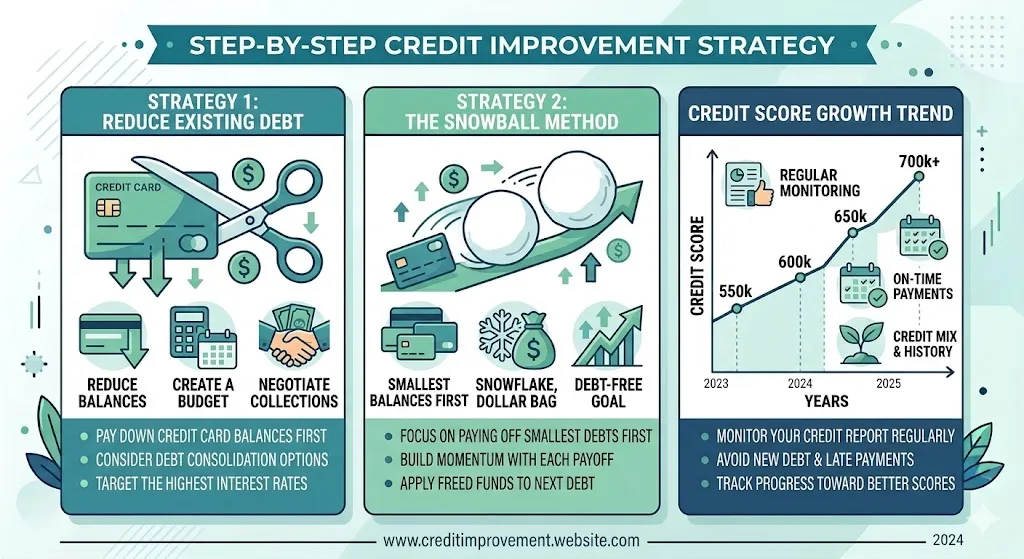
Practical steps to boost your credit score and qualify for better mortgage options.
And once you have 20% equity in a house with a conventional loan, and that may take five, six, seven years — in other words, your equity is what you bought the house for minus what you owe. You put 5% down. And then if you bought a house for $200,000, you put 5% down. That's $10,000. So if you put that money down, then you got a $190,000 balance. You live in it for five, seven years, now it's worth $240,000. Most homes appreciate 4% compound per year. So if you live in a house that you bought for $200,000, it's going to grow 4%. 4% of $200,000 is $8,000 and it compounds because it's based on the future value, the current value into the future.
I hope this helps you. I get a little frustrated because there's not enough information out there and there's so many people that are just spilling out useless, fear-mongering information. And my goal is to help people. Until next time, thank you and may God bless you and your family.