What Makes Up Your Monthly Mortgage Payment (PITI Breakdown)

See exactly where your monthly mortgage payment goes
Mortgage and Housing Guide for Chicago, USA – 2026 Edition
Buying a home in Chicago is one of the smartest financial moves you can make in 2026 — and this guide gives you the real local numbers, honest market context, and practical mortgage advice you need to do it with confidence. Whether you're a first-time buyer, a growing family, or someone finally ready to stop renting, we've got you covered from rate shopping to closing day.
Current Mortgage Rates in Chicago (April 2026)
Good news for Chicago buyers: Illinois mortgage rates are currently running slightly below the national average, giving local shoppers a meaningful edge. Here's where rates stand as of early April 2026:
- 30-Year Fixed (Illinois): ~6.13% — compared to the national average of ~6.46% (Freddie Mac, week of April 2, 2026)
- 15-Year Fixed (Illinois): ~5.47% — a strong option if you can handle the higher monthly payment
- 30-Year FHA Loan: ~6.11% nationally — often the lowest-rate option for buyers with smaller down payments
- 30-Year Jumbo Loan: ~6.74% nationally — applies to loans above $806,500 in most Illinois counties
- 7-Year ARM (Illinois): ~6.25% — worth considering if you plan to sell or refinance within 7–10 years
The national 30-year fixed average sits around 6.46% right now — but Illinois consistently comes in lower, thanks to competitive local lenders and strong regional banking infrastructure. Shopping with at least three lenders in Chicago can realistically save you $600–$1,200 per year, according to Freddie Mac research.
Rates have drifted down from a high of ~7.08% in late 2025 and are expected to hold in the mid-6% range through most of 2026. Waiting for dramatic rate cuts is unlikely to pay off — the opportunity is now.
Chicago Housing Market Snapshot 2026
Chicago's housing market in 2026 has reached a welcome equilibrium. After years of frenzied bidding wars and vanishing inventory, the market has stabilized — giving buyers more breathing room without a price collapse in sight.
Key Market Numbers (Early 2026)
- Median Sale Price (City of Chicago): ~$360,000–$390,000, depending on the source and month — Redfin reports $390,000 for February 2026, up 6.8% year-over-year
- Chicagoland Metro Median: ~$365,000–$373,500, reflecting broader suburban pricing
- Year-Over-Year Price Change: Up approximately 5%–7% across most data sources — strong but sustainable growth
- Days on Market: Homes are averaging 57–69 days on market before contract — a balanced pace that allows for due diligence without extreme pressure
- Inventory: Tight but improving. The City of Chicago had just 3,078 active listings in January 2026, down 24.9% from a year earlier — supply remains the market's biggest challenge
- Sale-to-List Price Ratio: 98.75% — homes are selling very close to asking price, meaning realistic pricing from sellers is the norm
- Homes Sold Above Asking: About 30% of homes still fetch above-list prices, particularly in competitive North Side and near-suburb neighborhoods
What This Means for Buyers
This is not the frenzied seller's market of 2021–2022. You have more time to inspect, negotiate, and think — but you can't sleep on desirable listings either. DePaul's Institute for Housing Studies forecasts Chicago-area sales to rise 5.1% through late 2026, with median prices climbing another ~5%. The window of relative calm may not last forever.
Neighborhoods like Logan Square, Bridgeport, Irving Park, and Beverly continue to offer solid value relative to the hyper-competitive Lakeview or Lincoln Park corridors. The suburbs — particularly the North Shore, western suburbs, and the south suburbs — offer even more price flexibility for buyers willing to commute via the Metra.
Rent vs. Buy in Chicago – Which Makes More Sense Right Now?
This is the question every Chicago renter eventually asks. In 2026, the answer is more nuanced than ever — but for many people, the numbers are tilting toward buying.
The Monthly Cost Comparison
Here's how renting stacks up against buying a typical Chicago home in April 2026:
-
Renting a 2-bedroom apartment in Chicago:
- Average rent: ~$2,400–$3,200/month depending on neighborhood
- Citywide median across all units: ~$2,225–$2,455/month
- Trendy areas (Wicker Park, West Loop, River North): $2,750–$3,500+/month
- South and West Side neighborhoods: $900–$1,400/month
-
Buying a $360,000 home in Chicago (10% down, 6.13% rate):
- Estimated mortgage (P&I): ~$1,955/month
- Property taxes (Chicago avg. ~2.1% effective rate): ~$630/month
- Homeowner's insurance: ~$100–$150/month
- PMI (below 20% down): ~$150–$200/month
- Total estimated monthly cost: ~$2,835–$2,935/month
Side-by-Side: Rent vs. Buy at a Glance
-
Renting in Chicago
- 💰 Monthly cost: $2,200–$3,200 (typical 2BR)
- ✅ No down payment required
- ✅ No property tax or maintenance responsibility
- ✅ Flexibility to move easily
- ❌ Rent has risen ~5–7% year-over-year — no ceiling
- ❌ Zero equity building; money doesn't come back
- ❌ No tax deductions on housing costs
-
Buying in Chicago
- 💰 Monthly cost: ~$2,800–$3,000 (median-priced home, 10% down)
- ✅ Building equity from day one
- ✅ Fixed principal & interest payment — no landlord rent hikes
- ✅ Potential mortgage interest deduction
- ✅ Chicago prices forecast to appreciate another ~5% in 2026
- ❌ Requires down payment + closing costs upfront (typically $30,000–$50,000+)
- ❌ Chicago property taxes among the highest in Illinois — budget carefully
- ❌ Responsible for maintenance and repairs
The Bottom Line on Rent vs. Buy
For renters paying $2,400 or more per month in Chicago, the monthly gap between renting and buying is narrower than most people expect — especially once you factor in equity accumulation. Chicago's above-average property tax rate (around 2.1%) is the key wildcard that tips some buyers toward renting, particularly for condos with high HOA fees on top.
The general rule still holds: if you plan to stay in Chicago for 5 or more years, buying almost always outperforms renting financially. If your timeline is shorter, renting gives you flexibility that may be worth the premium.
One silver lining unique to Chicago: the city offers several first-time buyer assistance programs through the Illinois Housing Development Authority (IHDA) that can significantly reduce your upfront costs — making the leap from renter to owner more accessible than many Chicagoans realize.
Latest Mortgage Guides & Tips
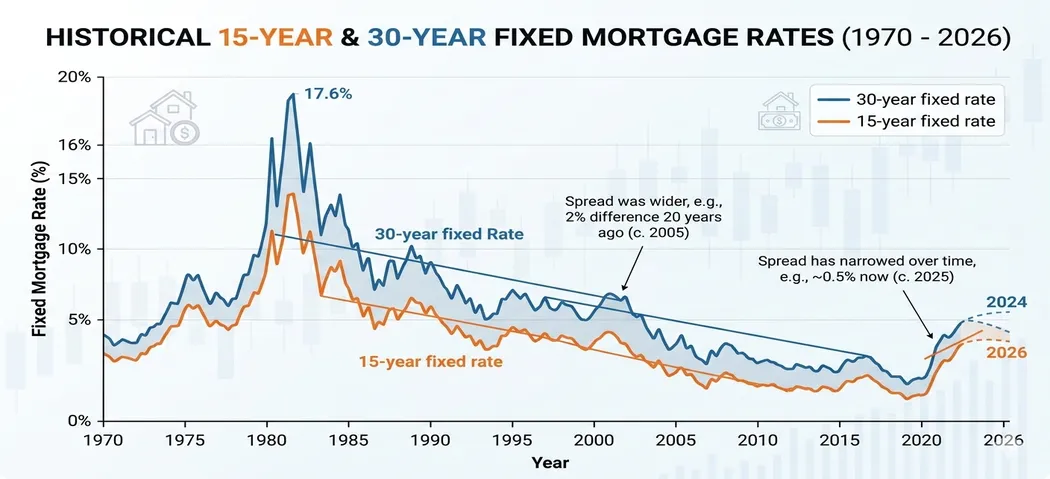
Learn the 4 key components of your monthly mortgage payment.

Compare the pros and cons for your situation.
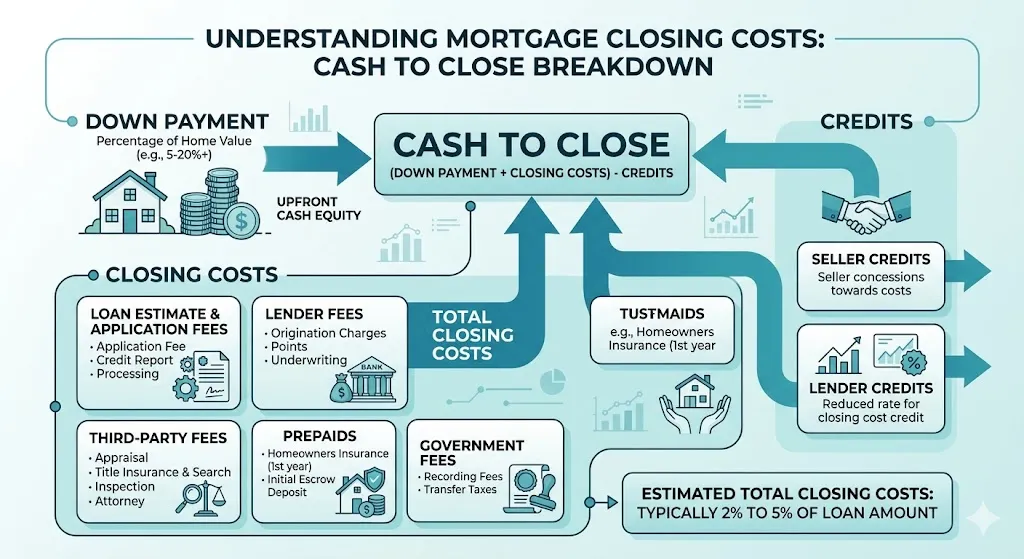
A clear breakdown of how closing costs and down payment combine into your final cash to close
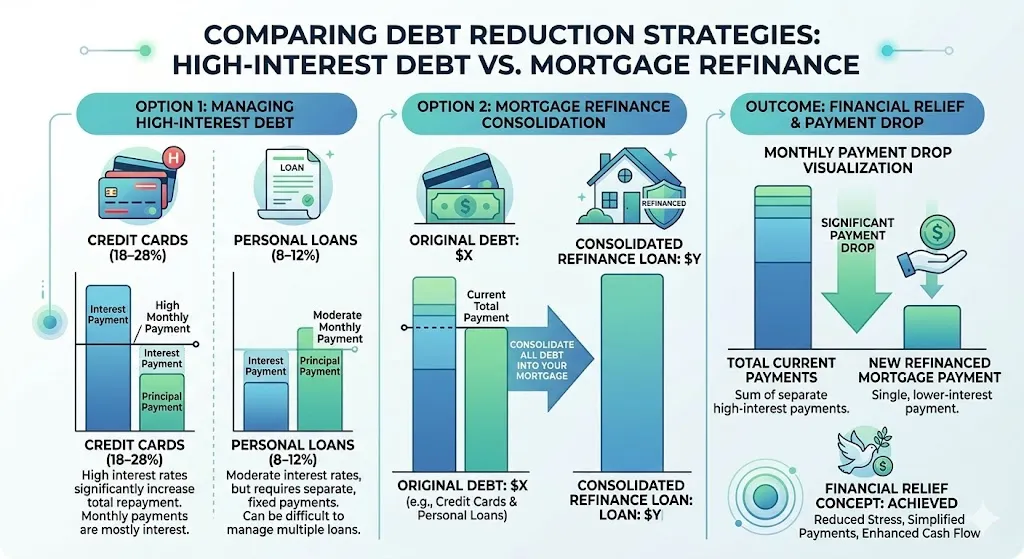
See how consolidating debt into a mortgage can dramatically reduce monthly expenses
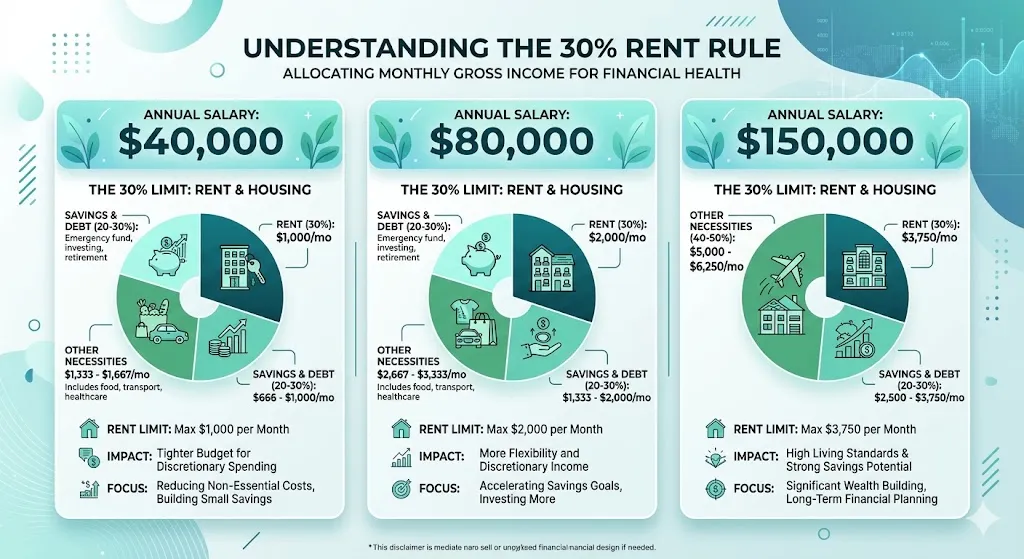
A simple breakdown of how much rent you can afford using the 30% income rule across different salary levels.
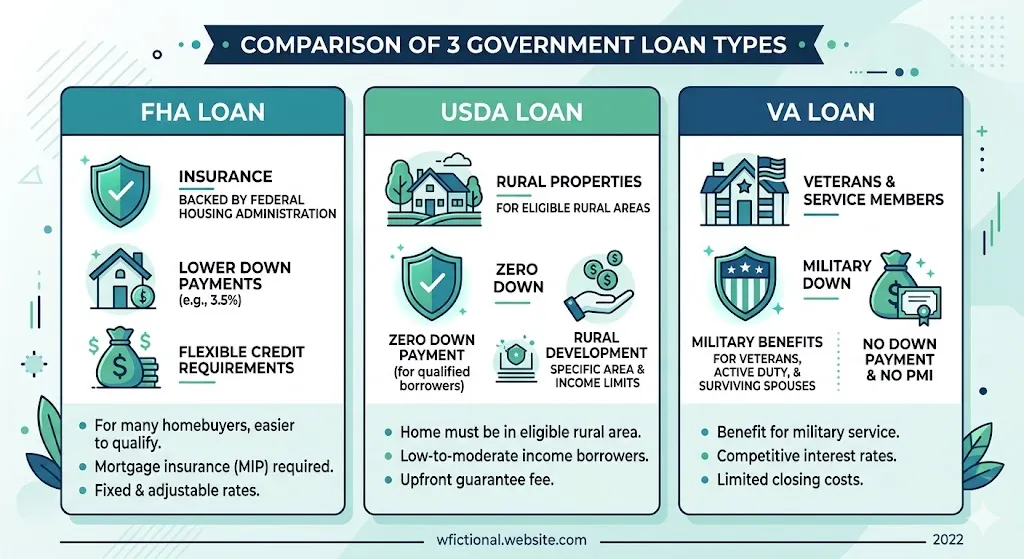
A simple breakdown of the three major government-backed home loan programs and how they differ.
Chicago Mortgage & Housing Guide – 2026 Edition (Continued)
Where to Buy in Chicago – Neighborhood Breakdown 2026
One of the most important things to understand about Chicago real estate is this: it is a city of micro-markets. Two neighborhoods just a mile apart can have median home prices that differ by $300,000 or more. Knowing where to look — and why prices vary — is half the battle for any buyer.
Luxury and High-Demand Neighborhoods
These are Chicago's most desirable addresses, and buyers here typically face tight inventory and above-asking competition even in 2026's more balanced market.
-
Lincoln Park — Median home price: ~$508,000–$700,000+ for single-family homes. Historic brownstones, world-class parks, and top-rated schools drive demand. A perennial favorite for affluent professionals and established families. Expect bidding wars on well-maintained properties.
-
Gold Coast — Chicago's most prestigious lakefront neighborhood. Luxury condos and vintage co-ops dominate, with prices easily reaching $500,000–$2M+. If you want a Lake Shore Drive address with city skyline views, this is where you look.
-
River North — Premier urban living steps from the Loop. One-bedroom condos typically start at $400,000–$600,000, with penthouses well above that. Popular with finance and tech professionals who want walkable access to Chicago's best restaurants and nightlife.
-
Lakeview / Wrigleyville — One of Chicago's most popular North Side neighborhoods. Single-family homes range from $550,000 to $1M+. Strong school options, Lake Michigan proximity, and vibrant street life make this consistently in demand.
-
West Loop / Fulton Market — Chicago's fastest-transforming neighborhood over the past decade. Former meatpacking district turned tech and restaurant corridor. Condos and lofts typically range from $450,000 to $900,000+. Google, McDonald's HQ, and a wave of startups have made this one of the city's hottest zip codes.
Most Affordable and Value-Oriented Neighborhoods
Chicago's affordability advantage over coastal cities really shines in these neighborhoods — many of which offer solid housing stock, good transit access, and a genuine sense of community.
-
Beverly / Morgan Park (Far South Side) — One of Chicago's best-kept secrets. Median single-family home prices around $220,000–$310,000. Tree-lined streets, Tudor architecture, and a strong neighborhood association make this a top pick for families priced out of the North Side.
-
Edison Park (Far Northwest Side) — A quiet, family-friendly enclave with a small-town feel inside city limits. Homes average around $345,000, and the neighborhood ranks in the top 1% for safety citywide.
-
Mount Greenwood — Heavily owner-occupied, safe, and affordable at a median of around $225,000–$275,000. Popular with Chicago firefighters, police, and city workers who need to live within city limits.
-
Bridgeport — A historic South Side neighborhood with deeply affordable housing and strong neighborhood pride. Single-family homes often start below $200,000. Close to the University of Illinois at Chicago and the Medical District.
-
South Shore / Woodlawn — Lakefront access at a fraction of North Side prices. Ongoing Obama Presidential Center development nearby is slowly lifting values. Median prices currently in the $150,000–$250,000 range.
Up-and-Coming and Best-Value Neighborhoods
These areas are where smart buyers are looking in 2026 — appreciating faster than the city average while still offering relative value.
-
Logan Square — Already one of Chicago's most talked-about neighborhoods. Median sale price around $525,000, with home values that rose roughly 10% last year. Artsy vibe, the 606 Trail, excellent dining scene. Attracts young professionals and investors alike.
-
Avondale — Logan Square's more affordable neighbor, with prices typically ranging $300,000–$450,000. Analysts at the Luxury Playbook and others flag it as a neighborhood expected to experience above-average appreciation through 2026.
-
Bronzeville — A historic South Side neighborhood experiencing genuine revitalization. Home values are climbing, and proximity to IIT, the Obama Center, and a growing restaurant scene is drawing new buyers. Median prices range roughly $250,000–$400,000 depending on property type.
-
Irving Park — Northwest Side neighborhood with classic Chicago greystone and bungalow architecture. Strong Blue Line access to downtown. Median prices around $350,000–$480,000 — a sweet spot for first-time buyers wanting character and commutability.
Neighborhoods with Economic Challenges
Chicago has a well-documented geographic divide between its high-demand North and Northwest sides and portions of its South and West sides that face persistent economic hardship. This isn't a secret — it's important context for buyers to understand.
- Neighborhoods including Englewood, North Lawndale, Austin, West Garfield Park, and Roseland have median home prices well below the citywide average, often under $150,000 — sometimes significantly so.
- These areas face higher rates of poverty, unemployment, and disinvestment, and were disproportionately impacted by recent Cook County property reassessments, with some median assessments jumping 119%–160% — a painful burden for longtime residents.
- Some buyers and investors are drawn to these areas for value and redevelopment potential, but any buyer should carefully research crime statistics, school quality, infrastructure, and long-term development plans before purchasing.
- Community organizations, city TIF (Tax Increment Financing) districts, and new investment from the Obama Center are among the forces working toward longer-term revitalization — but timelines are uncertain.
---
Economic Zones and Local Economy in Chicago
Chicago has the third-largest metro economy in the United States, with a gross metropolitan product exceeding $770 billion. It's a city that has reinvented itself economically multiple times — from livestock and grain trading to steel and manufacturing, and now to finance, healthcare, technology, and logistics. That diversity makes it resilient.
Major Industries and Employers
-
Finance & Financial Trading — Chicago is home to five major financial exchanges including the CME Group, Chicago Board of Trade (CBOT), and CBOE. It's the sixth most competitive financial center in the U.S. Major firms like Northern Trust, William Blair, and dozens of hedge funds are headquartered here.
-
Technology — Chicago's tech sector employs over 99,000 professionals and contributes $39.3 billion in economic output. Google, Salesforce, Motorola Solutions, and a thriving startup ecosystem (especially in Fulton Market and the Loop) make it a legitimate tech hub. Customer Success, software engineering, data analytics, and fintech roles are among the fastest-growing in 2026.
-
Healthcare — One of Chicago's most stable and growing sectors. Northwestern Memorial, Rush University Medical Center, University of Chicago Medicine, and the UI Health system collectively employ tens of thousands and continue to expand. Healthcare jobs range from clinical to administrative to research-focused.
-
Manufacturing & Logistics — Chicago remains the nation's top freight hub. O'Hare International Airport and the city's central rail network mean companies like Amazon, UPS, and major manufacturers rely heavily on Chicago operations. Advanced manufacturing and industrial automation are growth areas.
-
Fortune 500 Companies — Chicago and its suburbs are home to 35 Fortune 500 companies including McDonald's, Kraft Heinz, Exelon, Conagra Brands, United Airlines, and JLL (Jones Lang LaSalle). Some high-profile departures (Boeing, Caterpillar, Citadel) made headlines in recent years, but the overall employer base remains exceptionally deep.
Salary Ranges for Typical Chicago Residents
- Entry-level / service roles: $35,000–$55,000/year (retail, hospitality, logistics, customer service)
- Skilled trades / healthcare support: $55,000–$85,000/year (nurses, electricians, IT support, paralegals)
- Mid-career professionals: $80,000–$130,000/year (marketing, finance, project management, accounting)
- Tech / finance professionals: $110,000–$180,000+ (software engineers, data scientists, financial analysts, product managers)
- Chicago's tech ecosystem median wage: ~$49.42/hour (~$103,000/year), according to World Business Chicago data
- A comfortable single-person lifestyle in Chicago requires roughly $85,000/year, per cost-of-living analysis — though homeowners on two incomes have significantly more breathing room.
2025–2026 Economic Developments Worth Knowing
- The Chicago Business Barometer surged to 54.0 in January 2026 — signaling economic expansion for the first time since November 2023. This is a meaningful positive signal for local employment and consumer confidence.
- Fulton Market continues to attract corporate tenants and tech investment, with John Deere establishing a technology center there and Google deepening its Chicago presence.
- CME Group and Google Cloud are piloting blockchain-based trading infrastructure with a planned full launch in 2026 — a signal of Chicago's ongoing relevance as a global financial technology center.
- Chicago's unemployment rate hovers around 4.1% as of early 2026, roughly in line with the national average — a healthy sign of labor market stability despite some sectoral softness in professional services.
---
Cost of Living Snapshot
Chicago's cost of living is ~15–18% higher than the national average — significant, but far more manageable than New York, San Francisco, or Los Angeles. For buyers, the key cost factors beyond the mortgage itself are property taxes, insurance, commuting, and schools.
Property Taxes — The Big One
This is the number that surprises most buyers new to Chicago. Illinois has the highest residential effective property tax rate in the nation, and Cook County is no exception.
- Cook County effective property tax rate: approximately 1.89%–1.98% of market value annually — roughly double the national average
- On a $390,000 home, expect an annual property tax bill of roughly $7,400–$7,700, or about $615–$640/month
- Cook County taxes are paid in two installments: first installment due in March (55% of prior year's bill), second installment typically due in August
- A Homeowner Exemption can reduce your assessed value by $10,000 — apply through the Cook County Assessor's Office. Senior, veteran, and disability exemptions are also available.
- Good news: Chicago's 2025 city budget avoided a general property tax rate increase, opting for alternative revenue sources instead. But rates remain high, and further increases are possible as pension obligations grow.
Homeowners Insurance
- Average homeowners insurance in Chicago: approximately $1,200–$1,800/year (~$100–$150/month)
- Older brick homes and two-flats may cost more to insure; new construction tends to be lower
- Chicago's central location means relatively lower hurricane/wildfire risk but higher exposure to winter freeze damage and hail — factor this into your coverage decisions
HOA Fees
- Condos and townhomes in Chicago commonly carry HOA fees of $250–$600/month, depending on the building's age, amenities, and reserve fund health
- High-rise buildings in River North, Streeterville, and the Loop can run $700–$1,500+/month for units with full-service amenities and doormen
- Always request a copy of the association's reserve fund study and financial statements before making an offer on a condo — underfunded reserves can mean a special assessment surprise after closing
Commute Times and Transportation
Chicago is one of America's best cities for car-optional living, which is a meaningful financial advantage for buyers who can leverage it.
- The CTA "L" train serves most of the city's popular neighborhoods, with 8 color-coded lines. A 30-day unlimited pass now costs $85/month (updated after the February 2026 fare increase)
- Average commute time in Chicago: approximately 32–38 minutes by transit, depending on origin and destination
- Buyers near the Blue, Red, and Brown Lines generally command a price premium — and for good reason. The walkability and transit scores in Lakeview, Logan Square, Lincoln Park, and the Loop neighborhoods are among the best in the Midwest
- For suburban buyers, Metra commuter rail connects dozens of suburbs to Union Station — a typical monthly pass runs $150–$250/month depending on distance
- Car ownership in Chicago adds significant cost: parking can run $150–$400/month in dense neighborhoods, and Chicago's gas taxes and city sticker fees are among the highest in the state
Schools and Family-Friendly Considerations
- Chicago Public Schools (CPS) operates 600+ schools, with quality varying enormously by neighborhood — this is one of the single biggest factors influencing where families choose to buy
- Highly rated CPS selective enrollment high schools — including Northside College Prep, Walter Payton, Jones, and Lane Tech — draw applicants citywide and are a major reason some families choose city living over suburban alternatives
- Neighborhoods like Lincoln Square, Beverly, Edison Park, and Hyde Park are known for strong neighborhood schools
- The Chicago metro suburbs — especially the North Shore (Evanston, Wilmette, Winnetka), western suburbs (Naperville, Hinsdale), and the southwest suburbs — are consistently ranked among Illinois' top school districts
- Private and parochial school options are abundant throughout the city, with tuition typically ranging from $8,000–$22,000/year for K–12
- For families, doing thorough school research before choosing a neighborhood isn't just smart — it's essential. Tools like GreatSchools.org and the Illinois State Board of Education report cards are useful starting points
Chicago Mortgage Guide – 2026 Edition: Your Final Steps to Homeownership
Best Mortgage Options for Different Salaries in Chicago
Chicago's housing market is more accessible than many buyers realize — especially when you know which loan programs to use for your income level. Here's a breakdown of your best options, from entry-level budgets to higher-income buyers ready to go all-in.
For Low-to-Mid Income Households ($40k–$80k)
Homeownership in Chicago on this income is genuinely within reach — especially with the new state and city programs launched in 2026. The key is stacking programs strategically to minimize what you need on day one.
-
IHDAccess Home (launched March 2026) — This brand-new Illinois Housing Development Authority program is a game-changer. It provides up to $15,000 (6% of the purchase price) in down payment and closing cost assistance as a zero-interest, deferred second mortgage. You don't repay it until you sell, refinance, or pay off the mortgage. Cook County income limit: up to $137,885 for a household. Minimum out-of-pocket: just $1,000.
-
FHA Loans — The go-to for buyers with limited savings or credit scores of 580–679. Only 3.5% down required. On a $300,000 home, that's $10,500 — and with IHDAccess Home assistance, much of that can be covered.
-
IHDA Access Forgivable — Provides up to $6,000 in assistance, forgiven over 10 years. Effectively a grant if you stay in the home. Available to both first-time and repeat buyers statewide.
-
Chicago Housing Authority (CHA) Down Payment Assistance — City of Chicago residents can access additional assistance for purchases within city limits. Requires a HUD-approved 8-hour homebuyer education class and a minimum $3,000 personal contribution (or $2,000 for Social Security recipients).
-
Federal Home Loan Bank of Chicago — Downpayment Plus® — Forgivable grants up to $10,000 for income-eligible buyers (under 80% of area median income). Works alongside FHA, conventional, VA, and IHDA loans.
-
Target neighborhoods: Beverly, Edison Park, Bridgeport, Avondale, and Irving Park all offer solid housing stock in the $200,000–$380,000 range — realistic entry points at this income level.
For Middle Income Households ($80k–$150k)
This income band has the most flexibility in Chicago. You qualify for assistance programs at the lower end and can pursue conventional financing with competitive terms at the higher end. The key decision is how much to put down and which loan type saves you the most.
-
Conventional loans with 5%–10% down become attractive here — especially with credit scores of 700+. On a $400,000 home, 10% down means $40,000 upfront, which is manageable on this income.
-
Fannie Mae HomeReady / Freddie Mac Home Possible — These conventional programs allow as little as 3% down and are designed for moderate-income buyers. They also allow income from non-occupying household members to be counted.
-
IHDA Access Deferred — Up to $7,500 in zero-interest deferred assistance. Still available to buyers in this income range depending on household size. A useful bridge to get to a stronger down payment without cleaning out savings.
-
Chicago TaxSmart Mortgage Credit Certificate (MCC) — Available to first-time Chicago buyers, this program converts a portion of your annual mortgage interest into a direct federal tax credit — potentially saving hundreds to thousands of dollars per year. Consult a tax advisor to quantify the benefit for your situation.
-
PMI strategy: If you put less than 20% down, budget for PMI of approximately 0.5%–1.5% of the loan annually. On a $380,000 loan at 1%, that's ~$316/month — factor this into your total payment calculation.
-
Sweet spots to target: Logan Square, Pilsen, Andersonville, Lincoln Square, and the western suburbs like Oak Park and Berwyn offer excellent value in the $350,000–$550,000 range for this income band.
For Higher Income Households ($150k+)
At this income level, you have access to the full menu of mortgage products. The focus shifts from qualifying to optimizing — finding the structure that works best with your overall financial picture.
-
20% down conventional — Eliminates PMI entirely and secures the best available rates. On a $600,000 home, that's $120,000 down — substantial, but it immediately saves ~$500+/month compared to a low-down-payment loan.
-
Jumbo loans — Required for loans above $806,500 in most Illinois counties (2026 conforming limit). Typically require 10%–20% down, strong credit (720+), and lower debt-to-income ratios. Chicago's jumbo market is competitive — rates currently around 6.74%.
-
7/1 or 10/1 ARMs — If you expect to refinance or sell within a decade (common in Chicago's mobile professional class), an adjustable-rate mortgage at a lower initial rate can save meaningful money versus a 30-year fixed.
-
Self-employed buyers — Very common in Chicago's tech, finance, legal, and creative sectors. Bank statement loans and asset-based lending programs are available through specialty lenders. Work with a broker who has specific experience with non-W2 income documentation.
-
Target neighborhoods: Lincoln Park, West Loop, Lakeview, Streeterville, River North, and premium North Shore suburbs (Evanston, Wilmette, Winnetka) all have strong inventory in the $600,000–$1.5M+ range.
---
Local Success Stories and Practical Tips
Sometimes the best way to see what's possible is through someone else's experience. Here are three common Chicago buyer profiles — and what made their purchases work in 2026.
🏙️ The First-Timer: Priya, 29, Pilsen
Priya works in healthcare administration and earns $67,000/year. She'd been renting a one-bedroom in Wicker Park for $1,950/month and assumed she was years away from buying. Then her mortgage broker told her about IHDAccess Home.
- She purchased a renovated 2-bedroom condo in Pilsen for $295,000
- IHDAccess Home covered $15,000 of her down payment and closing costs — she contributed just $1,000 out of pocket
- Her FHA loan rate came in at 6.1% via an IHDA-approved lender
- Total monthly payment (mortgage + taxes + HOA): ~$2,200/month — less than her rent
- She also applied for the Cook County Homeowner Exemption immediately after closing, reducing her tax bill
Key lesson: Don't assume Chicago is unaffordable on a single income. IHDAccess Home — launched just weeks ago — can dramatically lower the barrier to entry for buyers like Priya.
👨👩👧👦 The Growing Family: The Kowalski Family, Jefferson Park
David and Anna Kowalski have a combined income of $118,000 and two kids in elementary school. They were renting a 3-bedroom apartment on the Northwest Side for $2,400/month and wanted more space and stability.
- They targeted Jefferson Park and nearby Irving Park, where brick bungalows and two-flats in the $380,000–$460,000 range offered good square footage and access to the Blue Line
- They used a conventional loan with 10% down ($43,000) and a credit score of 730 to lock in a rate just under 6.2%
- The Chicago TaxSmart MCC is saving them an estimated $1,800/year on federal taxes — effectively reducing their real mortgage cost
- They bought a home near a strong-rated CPS elementary school, avoiding private school tuition costs for the next several years
Key lesson: For families, the TaxSmart Mortgage Credit Certificate is one of Chicago's most underused tools. It doesn't reduce your rate — it gives you real dollars back at tax time every year you own the home.
🌅 The Downsizer: Margaret, 64, Hyde Park
Margaret retired after 28 years as a university administrator at the University of Chicago. She owned a large home in Evanston and wanted to downsize into a condo closer to the lakefront without abandoning the South Side she loves.
- She sold her Evanston home and purchased a 2-bedroom condo in Hyde Park for $385,000, putting 30% down to keep monthly payments manageable
- Her mortgage broker set her up with an asset-based conventional loan since her post-retirement income didn't reflect her actual net worth
- She applied for the Cook County Senior Citizen Homestead Exemption, reducing her annual property taxes by approximately $700–$900
- Her total monthly housing cost — mortgage, taxes, HOA — came in below her prior Evanston costs, and she gained a walkable urban lifestyle close to museums, the lakefront, and familiar community
Key lesson: Retiring in Chicago? The Cook County Senior Exemption and the Senior Citizen Tax Deferral Program are two powerful tools that can significantly ease the property tax burden. Talk to a mortgage broker experienced with retiree income structures before assuming you won't qualify.
✅ Actionable Tips for Chicago Buyers in 2026
- Move fast on IHDAccess Home. Launched in March 2026, this program has limited funding. IHDA programs have historically sold out — don't wait to explore this if you're in the first-time buyer income range.
- Get a full pre-approval, not just a pre-qualification. In Chicago's competitive North Side neighborhoods, sellers are seeing multiple offers. A fully underwritten pre-approval shows you're serious and can close quickly.
- Budget 2%–3% for closing costs on top of your down payment. On a $380,000 home, that's an additional $7,600–$11,400 — don't be caught off guard.
- File for the Homeowner Exemption immediately after closing. It's free, takes 15 minutes on the Cook County Assessor's website, and can reduce your annual tax bill by several hundred dollars.
- Request a reserve fund study before buying any condo. Chicago has many older, beautiful buildings — but underfunded reserves mean surprise special assessments. This is a non-negotiable due diligence step.
- Consider a two-flat or multi-unit home. Chicago has a strong tradition of owner-occupied two-flats, where rental income from one unit helps cover the mortgage. FHA loans allow owner-occupied 2–4 unit purchases with just 3.5% down.
- Shop with at least three lenders. Freddie Mac data shows buyers who compare multiple offers save an average of $600–$1,200 per year. In Illinois, IHDA-approved lenders are required to offer the same rates on IHDA products — but independent lenders vary widely on conventional loans.
---
Frequently Asked Questions about Mortgages in Chicago
What credit score do I need to buy a home in Chicago?
For an FHA loan, the minimum is 580 (with 3.5% down) or 500 (with 10% down). Most IHDA programs require a minimum of 640. For conventional loans, you'll typically need 620+, but the best rates go to buyers with 740+. Before applying, check your score free through your bank, Credit Karma, or Experian — even small improvements can unlock better rates.
What is the conforming loan limit in Cook County for 2026?
The 2026 conforming loan limit in Cook County (and most of Illinois) is $806,500. Loans above this amount are considered jumbo loans and require stricter qualification standards, typically including a larger down payment and stronger credit profile.
What is the IHDAccess Home program and how do I apply?
Launched in March 2026, IHDAccess Home provides up to $15,000 in zero-interest, deferred down payment and closing cost assistance for first-time buyers in Illinois. Cook County households can earn up to $137,885 and still qualify. You apply through one of IHDA's 160+ approved lenders — visit ihdamortgage.org to find a participating lender near you and check current eligibility requirements.
How do Chicago's property taxes affect my mortgage payment?
Significantly. Cook County's effective rate is approximately 1.89%–1.98% of your home's market value — roughly double the national average. On a $390,000 home, that's about $615–$650/month added to your housing cost. Always factor property taxes into your monthly budget when using a mortgage calculator, and apply for the Homeowner Exemption right after closing to reduce your assessed value.
Can I use an IHDA program if I'm not a first-time buyer?
Yes — some IHDA programs are open to repeat buyers. The Access Forgivable and Access Deferred programs are available statewide to both first-time and repeat homebuyers who meet income and purchase price limits. The new IHDAccess Home program is limited to first-time buyers (defined as not owning a home in the past 3 years) or qualifying veterans.
How long does the mortgage process take in Chicago?
Typically 30–45 days from accepted offer to closing once you're under contract. Buyers who pursue a fully underwritten pre-approval before shopping can potentially close in as few as 21 days — a meaningful advantage in competitive Chicago neighborhoods where sellers value speed and certainty.
Is now a good time to buy in Chicago?
For most buyers with a 5+ year horizon, yes. Chicago home prices rose approximately 6.8% in the past year and are forecast to appreciate another 4–5% through 2026. Mortgage rates, while still elevated versus historical lows, are lower in Illinois than the national average. Waiting for rates to drop significantly could mean competing for a more expensive home later — and Chicago's chronically low inventory means waiting rarely rewards the patient buyer.
---
Ready to Buy in Chicago? Start Here
Chicago is a city that rewards buyers who do their homework. With the right programs, the right neighborhoods, and the right mortgage structure, homeownership here is more achievable than the headlines suggest — and in 2026, you have some of the best tools available in years, including a brand-new $15,000 down payment assistance program that just launched this spring.
Whether you're a first-time buyer stretching toward that first set of keys, a growing family ready for more space, or a long-time renter who's finally done the math and realized buying makes sense — your next step is the same: know your numbers.
- 🧮 Use the mortgage calculator on this page to model your monthly payment with real Chicago-area home prices, today's Illinois rates, and your expected down payment
- 📋 Check your credit score — free through your bank or Credit Karma. A score above 640 opens up IHDA programs; above 740 gets you the best conventional rates
- 💼 Gather your documents — two years of tax returns, recent pay stubs, and bank statements. You'll need these for any pre-approval
- 🏦 Contact an IHDA-approved lender to check your eligibility for IHDAccess Home — the new $15,000 assistance program is first-come, first-served
- 📞 Connect with a HUD-approved housing counselor in Chicago — free, unbiased advice on every program you qualify for, from city incentives to federal programs
- 🏡 Start exploring neighborhoods — Chicago is a city of neighborhoods, each with its own character, price point, and opportunity. The right one for you is out there
The Windy City doesn't wait — and neither should you. Run your numbers with the calculator above and take your first real step toward owning a piece of Chicago today.
Mortgage Services in Other Cities

New York City
Get accurate mortgage estimates, PITI calculator, and competitive rates for New York City home buyers.
Explore New York →

Los Angeles
Calculate monthly payments and compare fixed & adjustable mortgage rates in Los Angeles.
Explore Los Angeles →
Chicago
Instant mortgage payment calculator with current rates for Chicago homebuyers in 2026.
Explore Chicago →

Phoenix
Find the best mortgage options and estimate payments for homes in Phoenix, Arizona.
Explore Phoenix →

Philadelphia
Affordable mortgage solutions and FHA, VA, USDA loan options for Philadelphia buyers.
Explore Philadelphia →

San Antonio
Easy mortgage calculator with current interest rates for San Antonio home purchases.
Explore San Antonio →

San Diego
Compare mortgage lenders and calculate payments for properties in San Diego.
Explore San Diego →

Dallas
Fast mortgage estimates and expert loan guidance for Dallas-Fort Worth area buyers.
Explore Dallas →

San Jose
High-value mortgage solutions and rate comparisons for San Jose homebuyers.
Explore San Jose →

Houston
Reliable mortgage tools and current rates for Houston metropolitan area buyers.
Explore Houston →
About the Author
This article was written by the Me (Pardeep) and My Financial Guide Team,
a group of researchers focused on mortgage education and home financing tools.
Our goal is to help home buyers understand mortgage payments, interest rates,
and loan options through simple guides and calculators. Last Updated: April 2026