Step-by-Step Home Buying Process in New York City 2026

Follow this simple roadmap to go from planning to owning your NYC home
Mortgage and Housing Guide for Houston, USA – 2026 Edition
Houston is one of the most affordable major cities in America, and in 2026 the market has swung firmly in favor of buyers — with more inventory, more negotiating room, and more seller incentives than at any point in the last five years. Whether you're a first-time buyer, a growing family, or someone relocating to the Bayou City, this guide gives you the real local numbers, honest market context, and practical mortgage advice you need to make your move with confidence.
Current Mortgage Rates in Houston (April 2026)
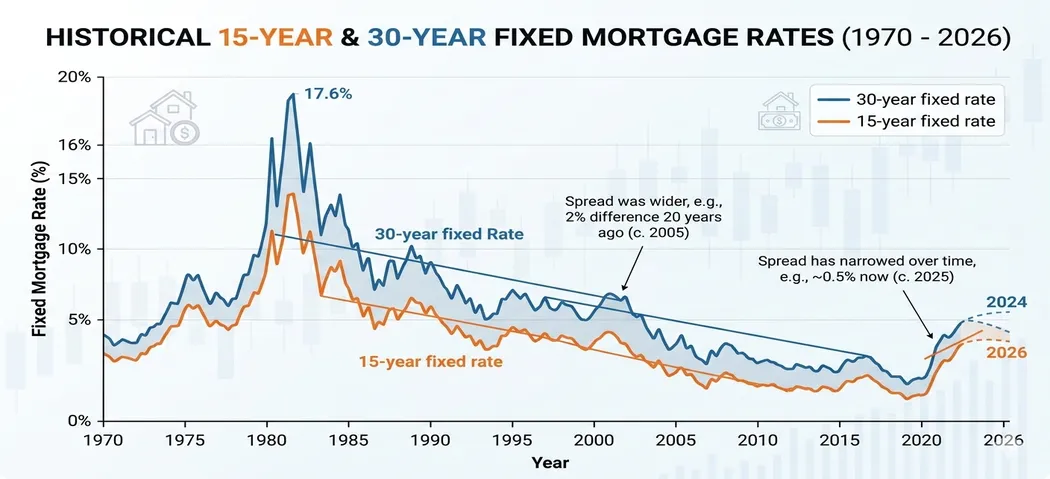
Texas mortgage rates in April 2026 are hovering right around the national average — and for well-qualified buyers, some local lenders are offering rates meaningfully below that benchmark. Here's where things stand as of early April 2026:
- 30-Year Fixed (Texas): ~6.13%–6.63% depending on lender and credit profile. Zillow data puts the Texas average at 6.125% as of late March 2026; Bankrate shows 6.63% for the state average on April 1. Shop around — the spread is real.
- 15-Year Fixed (Texas): ~5.63%–5.95% — an attractive option if your budget can handle the higher monthly payment.
- 30-Year FHA Loan: ~6.11% nationally — typically the lowest-rate option for buyers with smaller down payments or credit scores in the 580–679 range.
- 30-Year Jumbo Loan: ~6.74% nationally — applies to loans above the $806,500 conforming limit. More relevant in Houston's luxury corridors (River Oaks, Memorial, Tanglewood) than the broader market.
- 7-Year ARM: ~6.0% in Texas — worth exploring if you plan to sell or refinance within a decade.
- National average (Freddie Mac, week of April 2): 6.46% — Texas buyers with strong credit can often beat this.
The smartest move in Houston's competitive lender landscape is to shop with at least three lenders — including local credit unions and regional banks like Frost Bank and First Community Credit Union, which have consistently offered rates below the big national platforms. Freddie Mac research shows comparison shopping can save borrowers $600–$1,200 per year.
Rates peaked near 7.08% in late 2023 and have been gradually declining since. Most forecasters expect them to hold in the 6%–6.5% range through 2026 — meaningful improvement from the peak, but a dramatic return to the 3%–4% era is not expected anytime soon. If you find a rate you can live with, locking it in is generally the wiser play over waiting.
Houston Housing Market Snapshot 2026
Houston's housing market in 2026 has completed a meaningful shift from the frantic seller's market of 2021–2023 to something much more balanced — and for buyers, that's genuinely great news. More inventory, longer negotiating windows, and seller concessions are now common across the metro.
Key Market Numbers (Early 2026)
- Median Single-Family Home Price: ~$322,078 (HAR MLS, February 2026) — down 0.9% year-over-year. The average price rose slightly to $415,091, reflecting Houston's active luxury market lifting the mean.
- Broader metro median range: Most sources peg the typical Houston-area home in the $322,000–$340,000 range — a remarkably accessible figure for one of the nation's four largest cities.
- Days on Market (DOM): Single-family homes averaged 69 days on market in February 2026, up from 60 days a year prior. This is the longest average selling time since early 2020 — a strong signal that buyers have room to breathe, inspect, and negotiate.
- Active Listings: 35,128 single-family homes listed in February 2026 — up 15.2% from a year ago. That's among the highest inventory levels of any major U.S. metro.
- Months of Supply: 4.8 months for single-family homes (up from 4.3 months in February 2025). A 6-month supply is considered a balanced market — Houston is close and trending there.
- Pending Sales: Up 13.0% year-over-year — a forward-looking indicator that buyer demand is alive and picking up as mortgage rates ease.
- Price Reductions: About 30% of active listings have seen price cuts — giving buyers genuine leverage in negotiations.
- Average Price Per Square Foot: ~$170 — the lowest since January 2024, meaning buyers are getting more space per dollar.
What This Means for Houston Buyers in 2026
The Houston Association of Realtors' chief economist put it plainly: "If you are waiting for the Houston housing market to bottom, it already did several years ago and is back to normal levels." This isn't a crash — it's a healthy reset. Prices are stable, inventory is ample, and buyers in February 2026 were paying approximately $149 less per month on the median home than buyers a year earlier, thanks to the combined effect of modestly lower rates and flat pricing.
One uniquely Houston factor to budget for: MUD (Municipal Utility District) taxes. In many of Houston's newer suburban developments in areas like Katy, Cypress, Pearland, and The Woodlands, MUD taxes can add 1%–3% to your effective annual tax rate. Always ask your real estate agent and lender to factor this into your total monthly payment estimate — it's one of the most common surprises for Houston buyers.
Rent vs. Buy in Houston – Which Makes More Sense Right Now?
Houston is one of the rare U.S. cities where the rent vs. buy math is genuinely close — and in many cases, tilts surprisingly in favor of buying. Here's an honest side-by-side look at the numbers in April 2026.
The Monthly Cost Reality
First, the rental picture. Houston is a renter-friendly city by national standards — with 58% of households renting and a massive new apartment supply pipeline keeping prices competitive. Rents have actually softened over the past year.
- Citywide average rent (all unit types): approximately $1,181–$1,484/month depending on the source — well below the national average
- 1-bedroom apartment average: ~$1,199–$1,350/month
- 2-bedroom apartment average: ~$1,405–$1,570/month
- Premium neighborhoods (Montrose, Heights, Midtown): $1,750–$2,500+/month
- Suburban/value neighborhoods: under $1,000/month in some areas
Now the buying side. On a $322,000 median-priced home with 10% down at 6.3% (a blended realistic rate), the principal and interest payment is approximately $1,790/month. Add Houston's property tax reality (effective rate ~2.1%–2.5%, which is high) and insurance, and total monthly housing cost climbs to roughly $2,600–$3,000/month for a typical home.
Rent vs. Buy: Side-by-Side Comparison
-
Renting a 2-bedroom in Houston
- 💰 Monthly cost: $1,400–$2,000 (citywide range)
- ✅ No down payment required upfront
- ✅ No property tax responsibility
- ✅ Flexibility — easier to relocate for work or life changes
- ✅ Houston rents have actually fallen 4% year-over-year (Zumper, March 2026) — rare in a major city
- ❌ Building zero equity — every payment leaves your pocket permanently
- ❌ No tax benefits on housing costs
- ❌ Subject to rent increases and lease non-renewals at landlord's discretion
-
Buying a $322,000 home in Houston (10% down, 6.3% rate)
- 💰 Total monthly cost (mortgage + taxes + insurance): ~$2,600–$3,000
- ✅ Building equity from day one
- ✅ Fixed principal and interest — immune to rent hikes
- ✅ No Texas state income tax — more take-home pay to cover housing costs
- ✅ Homestead exemption reduces your taxable property value by $100,000 in Texas
- ✅ Sellers currently offering rate buydowns and closing cost credits — real savings available now
- ❌ Higher monthly cost than renting a comparable space
- ❌ Texas property taxes are among the highest in the nation — plan carefully
- ❌ Requires down payment + closing costs upfront (typically $25,000–$45,000+)
The Houston Rent vs. Buy Verdict
Here's the honest truth: in Houston, renting is genuinely affordable — more so than in almost any comparable large U.S. city. If you're here short-term, renting remains a smart, flexible choice. But if you plan to stay 3–5 years or more, buying increasingly wins on long-term value — especially given Houston's long track record of appreciation (median prices have more than doubled since 2010) and the unique advantage of no state income tax, which puts more monthly income in your pocket to service a mortgage.
The key difference-maker for Houston buyers is Texas's property tax structure. Unlike California or Illinois, Texas has no state income tax but compensates with higher property taxes — typically 2.1%–2.5% effective rates, with MUD districts adding even more in newer suburbs. Running the full PITI (principal, interest, taxes, insurance) calculation — not just the mortgage payment — is essential for accurately comparing rent vs. buy in Houston.
Latest Mortgage Guides & Tips
Learn the 4 key components of your monthly mortgage payment.

Compare the pros and cons for your situation.
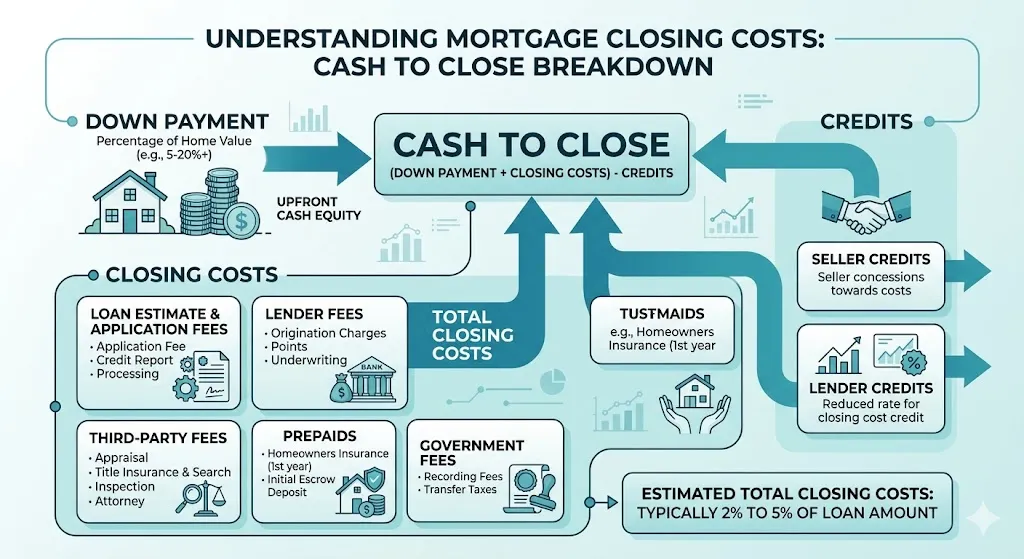
A clear breakdown of how closing costs and down payment combine into your final cash to close
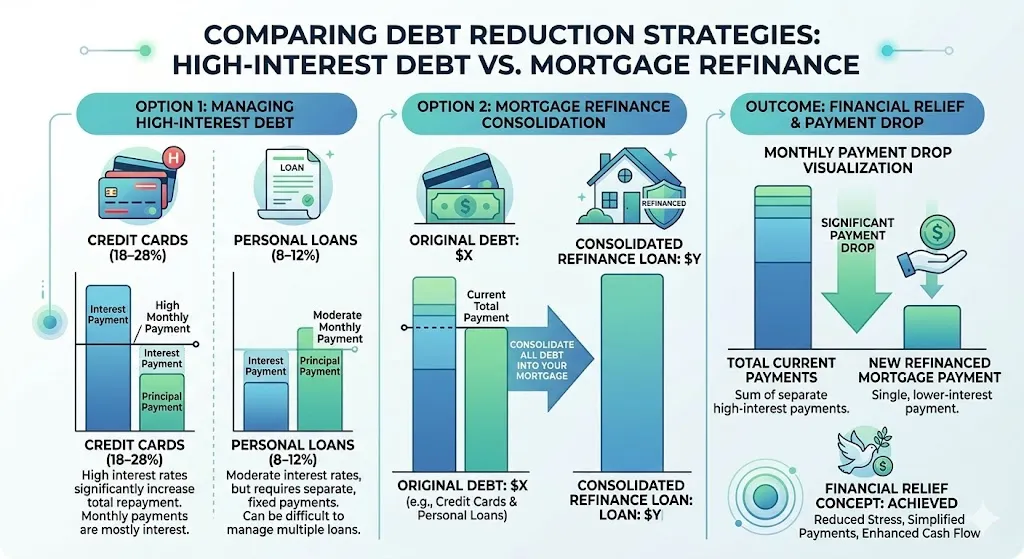
See how consolidating debt into a mortgage can dramatically reduce monthly expenses
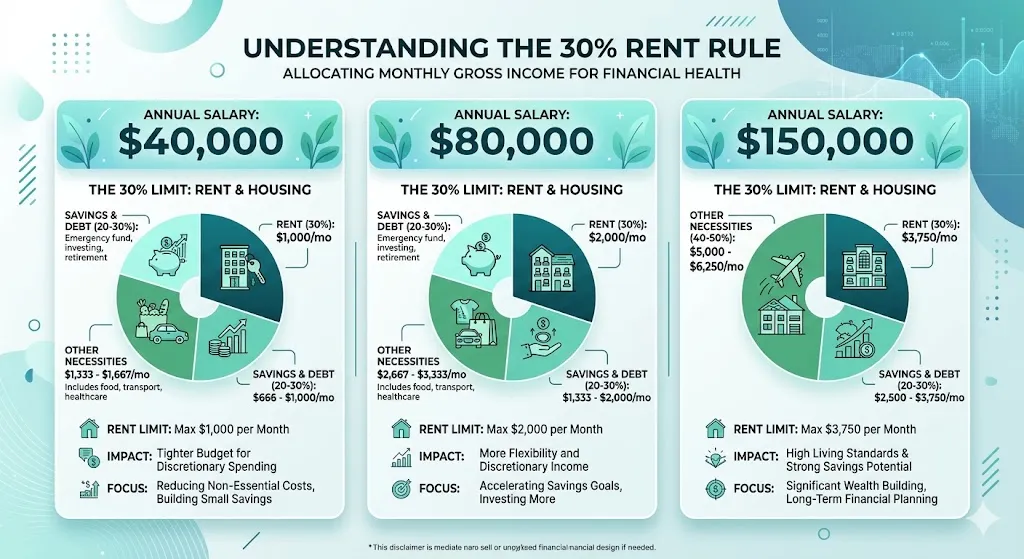
A simple breakdown of how much rent you can afford using the 30% income rule across different salary levels.
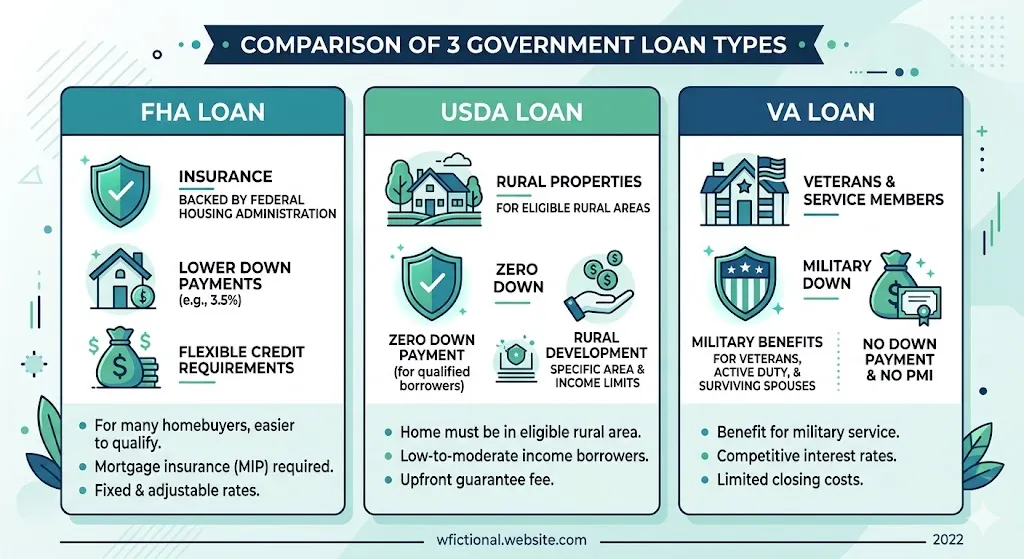
A simple breakdown of the three major government-backed home loan programs and how they differ.
Houston Mortgage & Housing Guide – 2026 Edition (Continued)
Where to Buy in Houston – Neighborhood Breakdown 2026
Houston is a sprawling, zoning-free city with no two neighborhoods quite alike. Prices can vary by $200,000 or more within just a few miles — making neighborhood research one of the most important steps in your home search. Here's how the major areas stack up in 2026.
Luxury and High-Demand Neighborhoods
These are Houston's most coveted addresses, where strong school districts, large lots, and established prestige keep demand high even when the broader market softens.
-
River Oaks — Houston's most prestigious neighborhood. Grand estates on large lots, with a central location and country club lifestyle. Median prices for single-family homes easily reach $2M–$5M+. The luxury market here has been exceptionally strong in 2025–2026, partly fueling the gap between Houston's median and average home prices.
-
Memorial Villages (Piney Point, Hunters Creek, Bunker Hill) — A cluster of independent municipalities within Houston's western loop. Excellent schools, private security, lush tree canopy, and easy access to the Energy Corridor. Median prices range from $900,000 to $2M+. Highly sought after by energy executives and medical professionals.
-
West University Place ("West U") — One of Houston's most family-oriented inner-loop neighborhoods. Nationally ranked schools, walkable streets, and tight community feel. Median single-family price: approximately $850,000–$1.2M. Extremely low turnover — when homes come up, they sell fast.
-
The Heights — Historic Victorian bungalows and craftsman homes in a walkable, restaurant-rich corridor. Median home price around $430,000–$550,000, up significantly over five years. Popular with young professionals, creatives, and anyone who wants inner-loop character without the full luxury price tag.
-
Montrose / Midtown — Dense, urban, and culturally vibrant. Townhomes dominate, typically priced in the $400,000–$650,000 range. The area appeals to professionals who value walkability, proximity to the Medical Center, and Houston's best dining and arts scenes.
Most Affordable and Value-Oriented Neighborhoods
This is where Houston's legendary affordability really shines. These areas offer real homes — not fixer-uppers — at price points that feel almost impossible in comparable major cities.
-
Katy (far western suburbs) — Consistently one of Texas's most popular family destinations. New construction subdivisions, top-tier Katy ISD schools, and median prices in the $280,000–$380,000 range. Builders in Katy regularly offer rate buydowns and closing cost incentives. Note: MUD taxes apply in many Katy subdivisions — budget accordingly.
-
Pearland (south of Houston) — Rapidly growing suburban community with strong schools, easy medical center access, and median prices around $295,000–$360,000. Highly popular with healthcare workers employed at the Texas Medical Center.
-
Cypress (northwest) — Family-friendly suburb with Cy-Fair ISD (one of Texas's largest and most respected school districts). Median home price approximately $300,000–$400,000. Lots of newer inventory with builder incentives available in 2026.
-
Greater Inwood / Mid-West — Among Houston's most affordable established neighborhoods. Median prices around $220,000–$235,000. Well-suited for first-time buyers and investors seeking value.
-
Sugar Land (Fort Bend County) — A highly livable suburban city with one of the best school districts in Texas (Fort Bend ISD), strong amenities, and diverse communities. Median prices around $335,000–$420,000. Among the most popular destinations for Houston-area families, particularly from the Houston metro's South Asian and Indian-American communities.
Up-and-Coming and Best-Value Neighborhoods
These areas are where forward-looking buyers are positioning themselves in 2026 — rising faster than the market average while still offering genuine value.
-
East End / Second Ward — Once an industrial area, the Second Ward and broader East End are undergoing a real transformation, with converted lofts, art studios, craft breweries, and growing young professional energy. Proximity to downtown and development activity point to continued appreciation. Median prices currently in the $280,000–$380,000 range — likely to climb.
-
EaDo (East Downtown) — Immediately east of downtown, EaDo has attracted significant investment tied to the Houston Dynamo stadium, new restaurants, and walkable townhome developments. A true up-and-comer. Townhomes typically priced $350,000–$500,000.
-
Greenway Plaza / Upper Kirby — A prestigious west-side enclave with luxury high-rises, high-end shopping, and strong appreciation fundamentals. Analysts see continued upward pressure here. Condos and townhomes range from $350,000–$700,000+.
-
The Woodlands (north) — More suburb than neighborhood, but worth mentioning for its masterplanned excellence. Top-rated schools, lush landscaping, strong retail, and an established employment hub. Median prices range $420,000–$650,000 with continued demand from corporate relocations and TMC workers seeking suburban stability.
Neighborhoods with Economic Challenges
Houston is one of America's most diverse cities, but that diversity comes with significant economic inequality across different areas. The Kinder Institute for Urban Research flagged in early 2026 that Houston's affordability is increasingly "at risk" in certain communities, driven by rising land values and insurance costs.
- Neighborhoods on Houston's north, northeast, and parts of the southeast side — including areas like Greenspoint, Sunnyside, Fifth Ward, and Acres Homes — have median home values often below $150,000 and face higher rates of poverty and economic stress.
- According to Kinder Institute data, land values in several majority-Black and Hispanic/Latino neighborhoods in Harris County quadrupled between 2018 and 2023 — raising property taxes significantly and increasing displacement risk for long-time residents even as home prices remain relatively low.
- About half of Houston renters are cost-burdened (spending over 30% of income on rent), and roughly a quarter are severely cost-burdened — a real challenge in a city often celebrated for affordability.
- Buyers looking at these areas for investment or primary residence should research flood zone status carefully — many lower-priced Houston homes carry elevated flood risk, and flood insurance costs can significantly change the affordability math.
---
Economic Zones and Local Economy in Houston
Houston is the energy capital of the world — but calling it just an oil city in 2026 dramatically undersells what's here. The Greater Houston metro is now home to 27 Fortune 500 headquarters, the world's largest medical complex, NASA's primary operations center, and one of the most active global seaports in the country. It is, simply, one of America's most economically powerful cities.
Major Industries and Employers
-
Energy — Houston has more than 3,600 energy-related businesses, including ExxonMobil, Chevron, Shell, ConocoPhillips, Halliburton, and Baker Hughes. With 22 of its 27 Fortune 500 companies in energy, Houston's economic identity is still defined by oil and gas — though renewable energy, clean tech, and energy transition roles are a growing slice of the pie.
-
Healthcare and Life Sciences — The Texas Medical Center (TMC) is the world's largest medical complex, employing over 100,000 people at 61 institutions. Houston Methodist, MD Anderson Cancer Center, Memorial Hermann, and Texas Children's Hospital are anchor employers. Healthcare is projected to drive 45% of all new Houston jobs in 2026 — roughly 14,000 of the 30,900 jobs forecast for the year.
-
Aerospace and Aviation — NASA's Johnson Space Center anchors a sector that generates $36.4 billion annually for the region. Companies like KBR, Axiom Space, Lockheed Martin, and Boeing have significant Houston operations. The commercial space sector is growing rapidly.
-
Logistics and Trade — The Port of Houston is one of the busiest in the nation. Houston's geography makes it a distribution hub for the entire Gulf Coast. Amazon, UPS, and major logistics firms have large footprints here.
-
Technology — Hewlett Packard Enterprise, NRG Energy, and a growing startup ecosystem (particularly in the Greenway Plaza and TMC corridors) reflect Houston's expanding tech sector. Many tech jobs are embedded within energy, healthcare, and logistics companies rather than standalone tech firms.
-
Manufacturing and Petrochemicals — The Houston-Gulf Coast region holds nearly 40% of U.S. base petrochemical capacity. This sector supports tens of thousands of skilled manufacturing and engineering roles.
Salary Ranges for Typical Houston Residents
- Entry-level / service roles: $35,000–$55,000/year (retail, food service, logistics, admin support)
- Healthcare support / skilled trades: $55,000–$90,000/year (nurses, electricians, HVAC technicians, medical technicians)
- Mid-career professionals: $80,000–$130,000/year (engineers, project managers, financial analysts, marketing)
- Energy and tech professionals: $100,000–$180,000+/year (petroleum engineers, software developers, data scientists)
- A comfortable middle-class lifestyle in Houston typically requires household income of roughly $42,000–$128,000, per 2026 cost-of-living analysis
2025–2026 Economic Developments Worth Knowing
- The Greater Houston Partnership forecasts 30,900 new jobs in 2026 — lower than recent years but still on track to hit a record 3.5 million total jobs by year-end.
- Global companies including Eli Lilly, Foxconn, and Inventec made significant commitments to Houston, signaling continued global confidence in the metro's workforce and business climate.
- Texas's economy grew at a 6.8% annual rate in Q2 2025 and personal incomes rose 6.4% during the same period — outpacing national growth and reinforcing Houston's long-term trajectory.
- Harris County has surpassed 5 million residents, with Houston continuing to add new residents at one of the highest rates of any major U.S. metro — a fundamental demand driver for housing.
- One headwind to note: sectors tied to upstream oil production are expected to see some contraction in 2026 as lower oil prices curb exploration and drilling activity. This adds uncertainty for households heavily dependent on upstream energy roles.
---
Cost of Living Snapshot
Houston's overall cost of living is approximately 6–8% below the national average — a meaningful edge for buyers and renters alike. But within that favorable picture, some costs stand out. Here's the honest breakdown.
Property Taxes — Houston's Biggest Wildcard
No state income tax is one of Texas's biggest selling points. The trade-off is significantly higher property taxes — and in Houston's Harris County, these are a real number that every buyer needs to factor into their budget upfront.
- Harris County effective property tax rate: approximately 2.09%–2.31% of appraised market value — among the highest in the nation
- On a $322,000 home, expect a gross annual tax bill of approximately $6,700–$7,400 before exemptions — or about $560–$620/month
- The General Residential Homestead Exemption provides a $140,000 school district exemption off your appraised value — a major saving. Harris County also provides an additional 20% optional homestead exemption. Apply through HCAD (Harris Central Appraisal District) between January 1 and April 30 after closing.
- After exemptions, a $322,000 home may be taxed on an effective value closer to $150,000–$180,000, depending on which taxing jurisdictions apply
- MUD (Municipal Utility District) taxes add an additional 0.5%–2%+ per year in many newer suburban developments in Katy, Cypress, Pearland, and The Woodlands. Always ask your agent to disclose all applicable tax rates before making an offer.
- Homestead cap protection: Once you have a homestead exemption, your home's appraised value for tax purposes cannot increase by more than 10% per year — a valuable protection in appreciating markets.
Homeowners Insurance — A Growing Concern
- Average homeowners insurance in Houston: approximately $2,000–$3,500+/year — notably higher than the national average due to hurricane risk, flooding, and hail exposure
- If your home is in a FEMA flood zone, separate flood insurance is typically required by lenders and can add $800–$3,000+/year to your costs
- Houston experienced significant flooding events in recent decades (Harvey, Imelda), and 2026 FEMA remapping is shifting some previously low-risk properties into higher-risk zones — always verify flood zone status before purchasing
- Some neighborhoods have seen insurance become a meaningful affordability factor, particularly in Meyerland, Kingwood, and other flood-prone areas
HOA Fees
- Condos and townhomes in Houston's inner loop typically carry HOA fees of $200–$500/month
- Master-planned suburban communities (The Woodlands, Sugar Land, Cinco Ranch in Katy) often have HOA fees of $50–$200/month covering amenities like pools, parks, and landscaping
- Always review the HOA's reserve fund financials before closing on any condo — especially in older Houston high-rises where deferred maintenance can lead to surprise special assessments
Commute Times and Transportation
Houston is famously car-dependent — one of the few major U.S. cities where owning a vehicle isn't just convenient, it's nearly essential for most residents.
- Average one-way commute time in Houston: approximately 28–34 minutes, though peak-hour freeway commutes from suburbs like Katy or The Woodlands can run 45–75 minutes in each direction
- Houston METRO operates light rail (METRORail), bus rapid transit, and local bus routes. A monthly METRO pass is $40/month — one of the most affordable transit passes of any major U.S. city
- Car ownership costs average $500–$700/month when factoring gas, insurance, and maintenance in Houston. The city's sprawl and highway infrastructure make this essentially a cost of living in most parts of the metro
- Buyers who work at the Texas Medical Center, downtown, or the Energy Corridor should strongly prioritize proximity or transit access when choosing a neighborhood — the time savings are significant
- Proximity to major freeways (I-10, I-45, 290, Beltway 8, Grand Parkway) strongly correlates with demand — and price premiums — in Houston neighborhoods
Schools and Family-Friendly Considerations
Houston's school landscape is as diverse as the city itself. Texas offers school choice, and the quality of public schools varies significantly by district — making this one of the most important neighborhood-selection factors for families.
- Top-rated public school districts in the Houston metro: Katy ISD, Fort Bend ISD (Sugar Land), Cy-Fair ISD (Cypress), Conroe ISD (The Woodlands), and Clear Creek ISD (Clear Lake/NASA area) are consistently among the highest-ranked in Texas
- Houston ISD (HISD) — the city's largest district — has undergone significant changes including state takeover and leadership reforms. Quality varies enormously by school and magnet program; research individual schools, not just the overall district rating
- HISD operates highly competitive magnet schools, including HISD's Science and Technology magnet programs, which attract students from across the city
- Private and parochial school options are plentiful, with tuition typically ranging from $10,000–$25,000/year for K–12
- The Texas Open Enrollment law gives families options to transfer to higher-performing schools within some districts — worth researching if you're buying in a boundary zone you're unsure about
- For families, Houston's suburban school districts (Katy, Fort Bend, Cy-Fair) consistently offer the best combination of quality education, new facilities, and accessible home prices — making them among the most family-friendly values in any major U.S. metro
Houston Mortgage Guide – 2026 Edition: Your Final Steps to Homeownership
Best Mortgage Options for Different Salaries in Houston
Houston's combination of relatively affordable home prices, no state income tax, and a deep stack of buyer assistance programs makes it one of the most achievable homeownership markets among major U.S. cities. Here's exactly how to approach your purchase depending on your household income.
For Low-to-Mid Income Households ($40k–$80k)
This income range is precisely who Houston's local and state programs are designed for — and in 2026, the assistance available here is genuinely exceptional.
-
City of Houston Homebuyer Assistance Program (HAP) — The headline program for Houston city-limits buyers. Eligible first-time buyers earning at or below 80% of area median income can receive up to $50,000 as a zero-interest, forgivable loan — forgiven if you stay in the home for five years. There is no maximum purchase price cap, making this remarkably flexible.
-
Harvey Homebuyer Assistance Program 2.0 (HbAP 2.0) — For buyers impacted by Hurricane Harvey, the City of Houston has invested over $19 million in a program offering up to $125,000 in down payment and closing cost assistance. If you qualify, this is among the most generous homebuyer programs in the entire country.
-
TDHCA My First Texas Home — Statewide program offering a 30-year fixed-rate mortgage with up to 5% of the loan amount in down payment and closing cost assistance. Requires a minimum credit score of 640 and a DTI below 45%. Pair with the Texas Mortgage Credit Certificate (MCC) for an additional $2,000/year federal tax credit on mortgage interest.
-
FHA Loans — The practical backbone for buyers in this income range. With as little as 3.5% down and a minimum credit score of 580, FHA loans give access to Houston's market at the lowest upfront cost. On a $290,000 home, 3.5% down means only $10,150 out of pocket — and that gap can often be bridged with HAP or TDHCA assistance.
-
SETH 5 Star Program — Offers up to 5% of the loan amount in forgivable down payment assistance (forgiven after just 3 years), available with FHA, VA, USDA, or conventional financing in Harris County.
-
Target neighborhoods: Katy, Pearland, Cypress, Greater Inwood, and parts of the Clear Lake area all offer solid inventory in the $220,000–$320,000 range — the sweet spot for maximizing assistance programs.
For Middle Income Households ($80k–$150k)
This income range opens up conventional financing and a broader selection of Houston neighborhoods. The focus shifts from qualifying for assistance to optimizing your loan structure for the best long-term value.
-
TSAHC Home Sweet Texas Loan — Open to both first-time and repeat buyers, this statewide program offers a competitive below-market 30-year fixed rate plus up to 5% in down payment assistance as either a grant (never repay) or a zero-interest second mortgage. Income limits apply but are often higher than buyers expect — up to ~$100,000–$115,000 for a family of four in Harris County.
-
Conventional loans with 5%–10% down — At this income level, conventional financing with a credit score of 700+ often beats FHA on total cost. On a $350,000 home, 5% down ($17,500) avoids a large upfront FHA insurance premium and gives you a cleaner path to eliminating PMI once you hit 20% equity.
-
My Choice Texas Home (TDHCA) — Unlike My First Texas Home, this program is open to repeat buyers too. Same structure — 30-year fixed with up to 5% assistance — but without the first-time buyer restriction.
-
Texas Mortgage Credit Certificate (MCC) — Don't overlook this one. It's a federal tax credit equal to 40% of annual mortgage interest paid, up to $2,000/year — for the life of the loan. On a 30-year mortgage, that's potentially $60,000 in tax savings. Stack it with any TDHCA loan for maximum benefit.
-
Builder incentives — In Houston's active new construction market (Katy, Cypress, Pearland, The Woodlands), many builders in 2026 are offering mortgage rate buydowns of 1%–2% and covering closing costs outright. A builder-funded 2-1 buydown can lower your effective rate for the first two years — ask your agent to negotiate this before signing.
For Higher Income Households ($150k+)
At this level, you're in strong shape to buy confidently across Houston's market — from established inner-loop neighborhoods to premium suburbs. The priority is optimizing structure, not qualifying.
-
20% down conventional — Eliminates PMI entirely and locks in the best available rates. On a $500,000 home, 20% means $100,000 down — achievable at this income level and the cleanest way to minimize long-term borrowing costs.
-
Jumbo loans — Required for loans exceeding $806,500. If you're targeting River Oaks, Memorial, West University, or The Woodlands at higher price points, expect to need 10%–20% down and strong credit (720+). Current jumbo rates in Texas run approximately 6.5%–6.9% depending on the lender and loan size.
-
7/1 or 10/1 ARMs — Worth serious consideration if you're in Houston's energy sector and may relocate in 5–10 years. An ARM's lower initial rate can save significant money compared to a 30-year fixed if you're not planning to hold the home to term.
-
Self-employed buyers — Very common in Houston's entrepreneurial energy, healthcare, and tech sectors. Bank statement loans and asset depletion programs are available from specialty lenders. Work with a mortgage broker experienced with non-W2 documentation structures.
-
Homes for Texas Heroes — If you're a teacher, nurse, first responder, police officer, or veteran earning in this range, TSAHC's Heroes program offers below-market rates and down payment assistance specifically for you. Many Houston-area applicants are surprised to find they qualify well into the $100k+ income range.
---
Local Success Stories and Practical Tips
Houston's market rewards buyers who know its quirks. Here are three common Houston buyer profiles — and what made their purchases work in 2026.
🏙️ The First-Timer: Carlos, 28, Pearland
Carlos works as a medical technician at the Texas Medical Center, earning $58,000/year. He'd been renting a one-bedroom near the TMC for $1,350/month and was ready to stop paying someone else's mortgage. His loan officer introduced him to the TDHCA My First Texas Home program.
- He found a 3-bedroom new build in Pearland for $285,000 — a 25-minute drive from the TMC
- TDHCA provided 5% in down payment assistance ($14,250), covering most of his upfront costs
- The builder kicked in an additional closing cost credit of $5,000 — a common incentive in Pearland's active new construction market
- He paired his loan with a Texas MCC, giving him a $1,800/year federal tax credit for the life of the mortgage
- Total monthly payment including taxes and insurance: ~$2,350/month — just $1,000 more than his rent, but building equity and in a larger home
Key lesson: Houston's new construction suburbs are one of the best first-time buyer plays in 2026. Builder incentives plus TDHCA assistance can dramatically reduce what you need on day one — and you get a brand-new home with warranties included.
👨👩👧👦 The Growing Family: The Nguyens, Katy
Linh and David Nguyen have a combined income of $112,000 and two kids in elementary school. After years in a west Houston apartment, they were ready for a home with a yard in Katy ISD.
- They targeted Katy's newer subdivisions and found a 4-bedroom home for $365,000
- With a 10% down conventional loan and a 720 credit score, they locked in a rate of 6.2% after shopping with three lenders
- The seller — a builder with slow-moving inventory — agreed to buy down their rate by 1% for the first two years, effectively giving them a first-year payment at 5.2%
- They applied for the Harris County homestead exemption immediately after closing, plus enrolled both kids in Katy ISD — one of the top school districts in Texas
- They budget carefully for MUD taxes (adding ~$150/month to their tax bill in the new subdivision) but are building equity in a high-demand school zone
Key lesson: In Katy, always ask for a rate buydown — builders have room to negotiate in 2026's balanced market. And budget for MUD taxes before you fall in love with a specific subdivision; they vary widely even within the same zip code.
🌅 The Retiree: Sandra, 62, Sugar Land
Sandra retired after 30 years as a nurse at Houston Methodist. She sold her large Kingwood home after one too many flood scares and wanted something smaller, newer, and flood-safe in Fort Bend County.
- She purchased a 2-bedroom patio home in Sugar Land for $415,000 — putting 30% down to keep monthly payments manageable on a fixed income
- Because of her reduced post-retirement income, her mortgage broker structured an asset depletion conventional loan using her retirement portfolio to qualify
- She applied immediately for the Over-65 Homestead Exemption through the Fort Bend County Appraisal District — saving an estimated $1,500+/year on property taxes
- Fort Bend ISD's excellent rating was a bonus — making her home highly desirable to future buyers when she eventually sells
Key lesson: Retiring in Houston? Moving from a flood-prone neighborhood to Fort Bend County or a newer Sugar Land community can dramatically cut insurance costs while maintaining Houston's lifestyle advantages. The Over-65 exemption is one of Texas's most powerful tax tools — apply the moment you turn 65.
✅ Actionable Tips for Houston Buyers in 2026
- Always ask about builder incentives. Houston has one of the most active new construction markets in the country — and builders in 2026 are actively offering rate buydowns, closing cost credits, and free upgrades to move inventory. Don't treat the listed price as the final price.
- Get flood zone status on every property before you make an offer. Check FEMA's flood map at msc.fema.gov — flood insurance adds real cost and affects your lender's requirements. Zone AE properties require mandatory flood insurance.
- Verify all applicable tax rates before calculating your payment. Ask your agent to pull the full tax breakdown for any property — city, county, ISD, and MUD (if applicable). The difference between a 2.0% and 3.5% total effective rate on a $350,000 home is over $500/month.
- File for homestead exemption the day after closing. Submit through HCAD (hcad.org) between January 1 and April 30. This locks in your exemption, caps future appraisal increases at 10%/year, and saves you real money immediately.
- Shop at least three lenders, including local Texas credit unions. Frost Bank, First Community Credit Union, and Texas-focused lenders consistently offer rates below major national platforms. The rate range in Texas is wide right now — the difference matters.
- Time your purchase for late summer or fall. Houston's market typically slows in August–November, giving buyers more negotiating room on price, repairs, and seller concessions.
---
Frequently Asked Questions about Mortgages in Houston
What credit score do I need to buy a home in Houston?
For an FHA loan: 580 minimum (with 3.5% down) or 500 with 10% down. For TDHCA programs: 640 minimum. For conventional loans: typically 620+, with the best rates available to buyers at 740+. Before applying, check your score free through Credit Karma or your bank and give yourself 60–90 days to address anything draggable.
How much is Houston's City Homebuyer Assistance Program, and who qualifies?
The City of Houston HAP offers up to $50,000 as a zero-interest, forgivable loan (forgiven after 5 years) to first-time buyers earning at or below 80% of area median income who purchase within Houston city limits. The Harvey Homebuyer Assistance Program 2.0 goes further — up to $125,000 — for Hurricane Harvey–impacted applicants. Contact the Houston Housing and Community Development Department at houstontx.gov/housing to check current funding availability.
Do I really need flood insurance in Houston?
If your home is in a FEMA Special Flood Hazard Area (Zone AE, AO, or similar), your lender will require flood insurance. Even outside designated zones, Houston's flood history means it's worth seriously considering. Flood insurance through the National Flood Insurance Program (NFIP) typically costs $800–$2,500+/year depending on location and coverage level — factor this into your total monthly housing cost when budgeting.
What is the conforming loan limit in Harris County for 2026?
The 2026 conforming loan limit in Harris County is $806,500 for a single-family home. Loans above this are jumbo loans, which generally require stronger credit (720+), larger down payments (10%–20%), and more documentation. Most Houston buyers in the $300,000–$500,000 range are well within conforming limits.
What is a MUD tax, and how does it affect my mortgage?
A MUD (Municipal Utility District) tax is an additional property tax levied by utility districts in many of Houston's newer suburban developments — particularly in Katy, Cypress, Pearland, and The Woodlands. MUD rates add between 0.5% and 2%+ per year to your effective tax rate. This is factored into your monthly escrow by lenders, so always ask your agent and lender to disclose the complete tax rate for any property before you make an offer.
Is Houston a good market to buy in right now vs. waiting?
The consensus among Houston real estate experts in 2026 is that this is one of the best buyer's markets in recent memory — with 4.8 months of inventory, 69 days on market, and 30% of listings seeing price reductions. Prices are flat to mildly declining year-over-year. Waiting rarely rewards buyers in Houston: the city added nearly 200,000 new residents in 2024 alone, and long-term demand fundamentals are strong. If you find a home you love at a price you can manage, the data favors acting now.
---
Ready to Buy in Houston? Start Here
Houston is one of America's great homeownership opportunities in 2026 — a major city with a median home price of $322,000, a buyer-friendly market, no state income tax, and some of the most generous down payment assistance programs in the country. You have more tools, more inventory, and more negotiating room right now than at any point in the last five years.
Whether you're a first-time buyer stretching to make that first purchase work, a growing family ready to land in a top school district, or a savvy professional wanting to build long-term wealth in one of America's fastest-growing metros — the path forward starts with knowing your exact numbers.
- 🧮 Use the mortgage calculator on this page to model your real monthly payment — including the full PITI (principal, interest, taxes, and insurance) with Houston-specific tax rates
- 📋 Check your credit score — free via Credit Karma or your bank. A score of 640 opens TDHCA programs; 700+ unlocks better conventional rates; 740+ gets you the best terms anywhere
- 💼 Gather your financial documents — two years of tax returns, recent pay stubs, and bank statements are your starting kit for any pre-approval
- 🏦 Contact HCAD (hcad.org) and bookmark the City HAP page — understand the homestead exemption process before you close so you can act immediately after
- 🔍 Check flood zone status for every home you seriously consider at msc.fema.gov — it's free and takes two minutes
- 🏡 Start exploring Houston's neighborhoods — from the Heights and EaDo inside the loop to Katy, Pearland, and Sugar Land in the suburbs, each community offers something different
Houston doesn't wait — and neither does your equity. Run your numbers with the calculator above and take your first real step toward calling the Bayou City home today.
Mortgage Services in Other Cities

New York City
Get accurate mortgage estimates, PITI calculator, and competitive rates for New York City home buyers.
Explore New York →

Los Angeles
Calculate monthly payments and compare fixed & adjustable mortgage rates in Los Angeles.
Explore Los Angeles →

Chicago
Instant mortgage payment calculator with current rates for Chicago homebuyers in 2026.
Explore Chicago →
Phoenix
Find the best mortgage options and estimate payments for homes in Phoenix, Arizona.
Explore Phoenix →

Philadelphia
Affordable mortgage solutions and FHA, VA, USDA loan options for Philadelphia buyers.
Explore Philadelphia →

San Antonio
Easy mortgage calculator with current interest rates for San Antonio home purchases.
Explore San Antonio →

San Diego
Compare mortgage lenders and calculate payments for properties in San Diego.
Explore San Diego →

Dallas
Fast mortgage estimates and expert loan guidance for Dallas-Fort Worth area buyers.
Explore Dallas →

San Jose
High-value mortgage solutions and rate comparisons for San Jose homebuyers.
Explore San Jose →

Houston
Reliable mortgage tools and current rates for Houston metropolitan area buyers.
Explore Houston →
About the Author
This article was written by the Me (Pardeep) and My Financial Guide Team,
a group of researchers focused on mortgage education and home financing tools.
Our goal is to help home buyers understand mortgage payments, interest rates,
and loan options through simple guides and calculators. Last Updated: April 2026