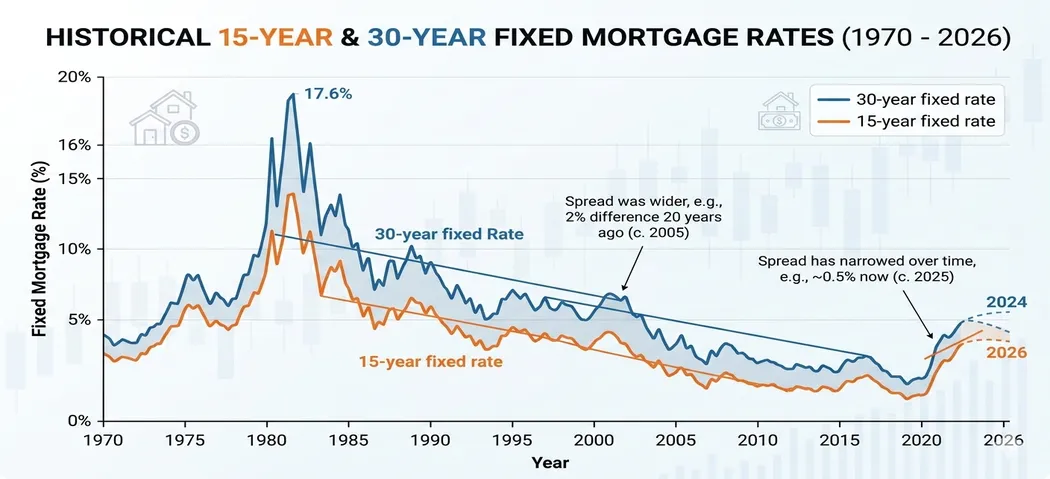
15 year or 30 Year : Mortgage Payment Basics
Learn the 4 key components of your monthly mortgage payment.
Mortgage Calculator Estimate payments, explore loan balance and compare lenders.
Illustrative rate comparison — always shop multiple lenders.
First 24 months amortization
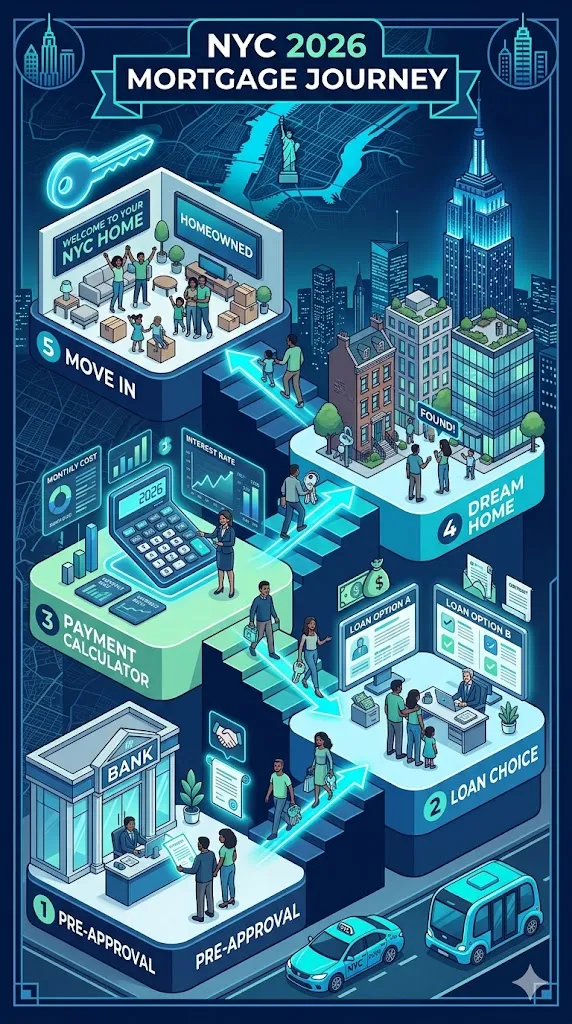
Follow a clear step-by-step mortgage path for buying a home in New York City
Buying a home in New York City can feel overwhelming — but it doesn't have to be. Whether you're eyeing a Brooklyn brownstone, a Queens co-op, or your first Manhattan studio, this guide gives you the real numbers, honest comparisons, and local insights you need to make your smartest move in 2026.
From Harlem to Staten Island, New York City's housing market plays by its own rules. Prices are high, competition is fierce, and the mortgage landscape shifts fast. That's exactly why this guide exists — to cut through the noise and give New York City buyers a clear, up-to-date picture of what it actually costs to own (or rent) in the city right now.
Good news: mortgage rates in New York City have cooled meaningfully from the near-7% highs of early 2025. As of early April 2026, here's where rates stand for New York borrowers:
*Rates vary by lender, credit score, and loan-to-value ratio. Always shop at least 3 lenders for the best offer.
The national average for a 30-year fixed mortgage sits around 6.64% APR (Bankrate, April 1, 2026). New York City borrowers are actually coming in slightly below that — a welcome advantage if you're a qualified buyer with strong credit.
Jumbo loans are the reality for most NYC buyers, since the city's median home prices far exceed the conforming loan limit of $806,500. Jumbo rates currently run a bit higher, typically in the mid-to-upper 6% range depending on your lender and profile.
The 15-year fixed at 5.99% is compelling for buyers who can handle the higher monthly payment — you'll build equity dramatically faster and pay far less interest over the life of the loan. It's worth running both scenarios before you decide.
New York City's housing market in 2026 is best described as competitive but stabilizing. Prices are rising — just not at the breakneck pace of the pandemic boom years. Here's the current picture:
The borough breakdown matters enormously. Manhattan's median sale price clocks in at roughly $1.2 million, while Brooklyn's median is closer to $829,000. Queens and the Bronx offer more accessible entry points, with median prices well below the citywide average.
Analysts forecast a 4–6% price increase citywide through the rest of 2026. That's healthy, sustainable growth — not the kind of frenzied surge that triggers buyer panic. For those on the fence, waiting may mean paying more later.
This is the question every New Yorker wrestles with. The honest answer: it depends on how long you plan to stay and how much you can put down. Here's a side-by-side comparison to help you think it through.
Assume a 20% down payment ($176,000) and a 30-year fixed at 6.49%. The mortgage on the remaining $704,000 works out to roughly $4,450/month in principal and interest — before taxes, insurance, HOA or co-op fees, and maintenance.
Factoring in NYC property taxes and common fees, total monthly ownership costs typically land between $5,500 and $6,500/month for a median-priced home, depending on the borough and building type.
| Factor | Renting | Buying |
|---|---|---|
| Typical 1-BR Monthly Cost | ~$3,500–$4,300 | ~$5,500–$6,500 (all-in) |
| Upfront Cost | 1–2 months security + broker fee | $176K+ down + closing costs (2–5%) |
| Monthly Flexibility | ✅ High — move with notice | ❌ Lower — long-term commitment |
| Equity Building | ❌ None | ✅ Every payment builds ownership |
| Rate/Price Stability | ❌ Rent can rise annually | ✅ Fixed-rate = predictable payments |
| Tax Benefits | ❌ Limited | ✅ Mortgage interest deduction (if applicable) |
| Maintenance Responsibility | ✅ Landlord handles most repairs | ❌ Yours to manage (or fund via co-op/HOA) |
| Best For | Staying fewer than 3–4 years, or building savings | Staying 5+ years with stable income and savings |
Renting in New York City is still significantly cheaper on a month-to-month basis. The citywide median rent runs around $3,500–$4,360/month across all unit sizes — notably less than the all-in cost of owning a median-priced home.
But here's the flip side: rents in New York City have surged nearly 45% over the past three years for some apartment types, and that trend isn't expected to stop. Buyers who lock in a fixed-rate mortgage today are insulating themselves from that unpredictability.
The break-even point for buying vs. renting in New York City typically falls somewhere around the 5-to-7-year mark — once you account for equity accumulation, price appreciation, and the rising cost of renting over time. If you're planting roots, the math eventually tips toward buying.

Understand the real monthly and long-term cost differences between renting and buying
Learn the 4 key components of your monthly mortgage payment.

Compare the pros and cons for your situation.
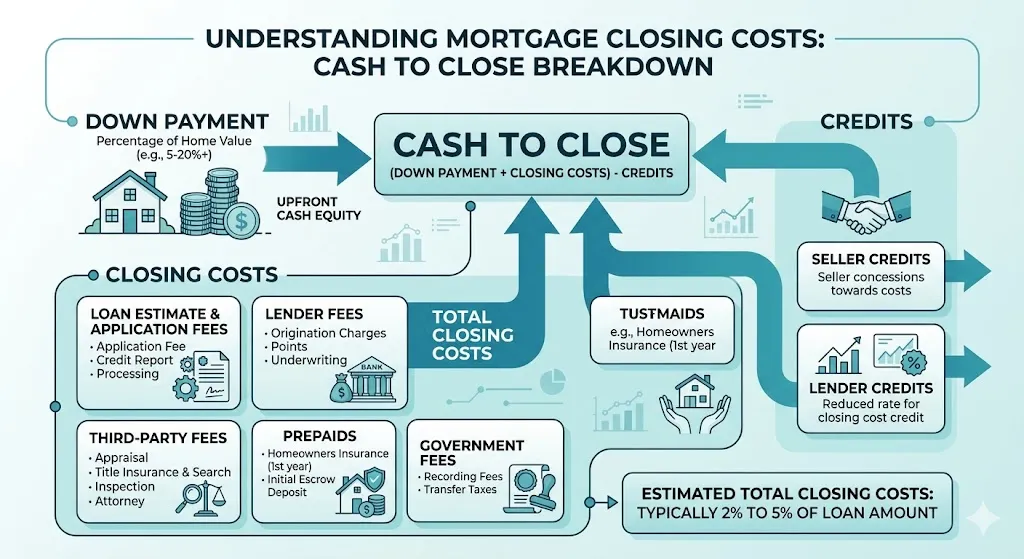
A clear breakdown of how closing costs and down payment combine into your final cash to close
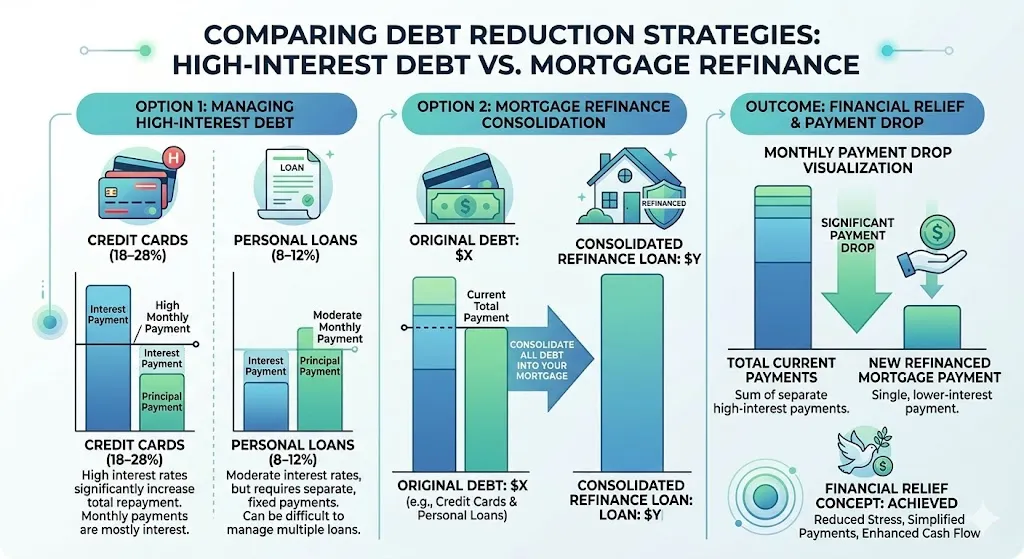
See how consolidating debt into a mortgage can dramatically reduce monthly expenses
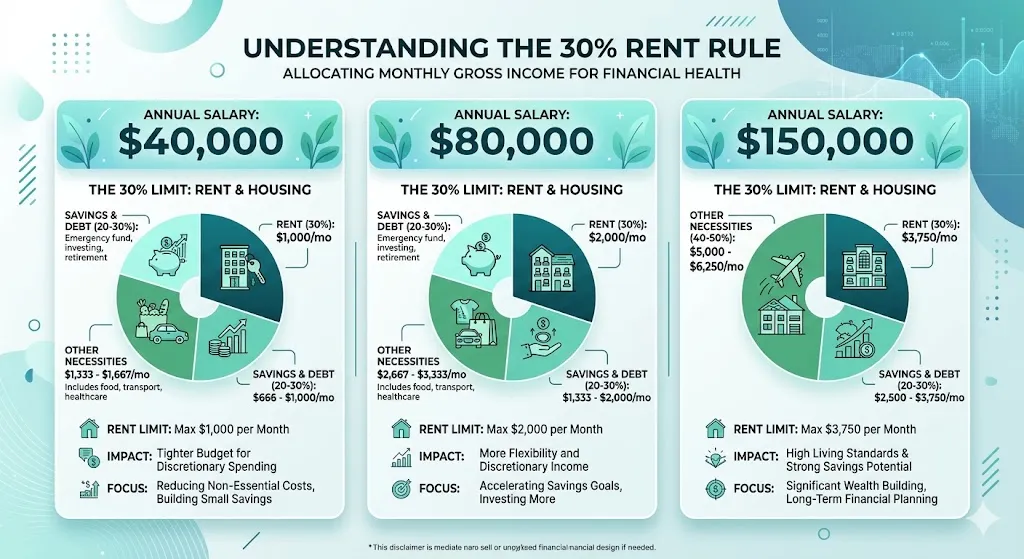
A simple breakdown of how much rent you can afford using the 30% income rule across different salary levels.
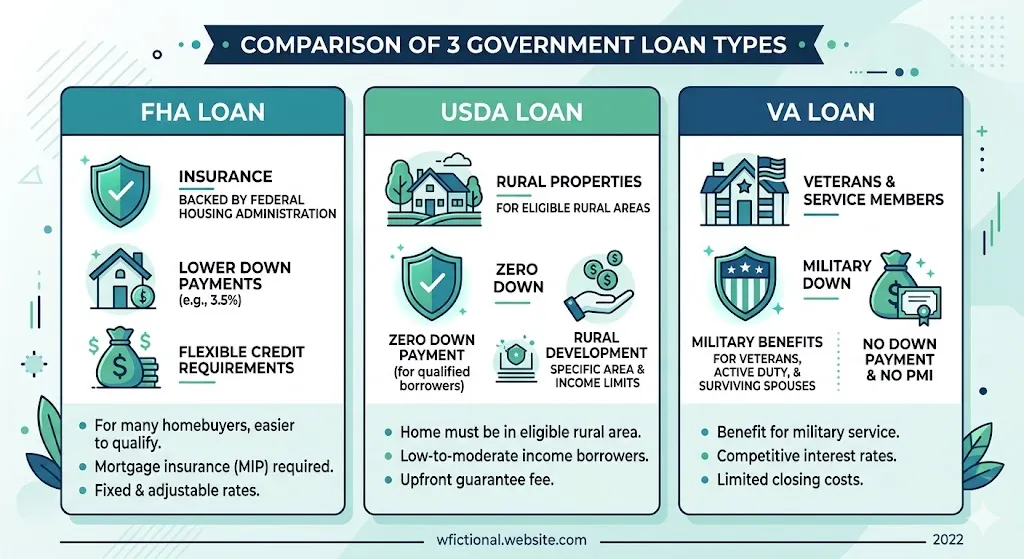
A simple breakdown of the three major government-backed home loan programs and how they differ.
New York City's five boroughs each have their own personality, price point, and pace. Whether you're chasing a Manhattan address or hunting for value in Queens, here's a clear look at where different buyers are landing in 2026.
Downtown Manhattan's most coveted loft territory. Cobblestone streets, celebrity neighbors, and some of the highest price-per-square-foot figures in the country. Trophy apartments with architectural distinction are selling fast when priced right.
Classic prewar co-ops and luxury condos along Central Park's edges. The Upper West Side commands an average of $3 million for luxury listings. Top-ranked schools and cultural institutions drive persistent demand from families.
Brooklyn's brownstone crown jewels. Brooklyn Heights carries a median listing price around $2.3 million, with actual sale prices averaging $1.7 million in recent data. Waterfront views of Manhattan and historic pre-war stock keep this area perennially competitive.
West Village townhouses and Hudson Yards ultra-modern condos sit at opposite ends of the style spectrum but share the same stratospheric price bracket. Both neighborhoods show some of Manhattan's strongest appreciation heading into 2026.
StreetEasy named Kew Gardens one of NYC's best neighborhoods for buyers in 2026, with a median asking price around $365,000 — rare for this city. Excellent subway access, tree-lined streets, and solid co-op stock make it ideal for first-time buyers.
One of Brooklyn's most affordable entries in 2026, with a median asking price near $515,000 after a nearly 20% annual drop in asking prices. Family-friendly, waterfront access, and strong transit links make it a quiet gem for budget-conscious buyers.
Prices here start as low as $550,000 in East New York, making it a realistic entry point for first-time buyers priced out of other Brooklyn neighborhoods. An active rezoning pipeline and new development are gradually improving inventory and infrastructure.
Two- and three-family properties in Staten Island's South Shore remain among the city's better investment bets, offering more space and better cap rates than comparable Brooklyn properties. A quieter pace of life and suburban feel attract young families.
Inventory jumped more than 30% year-over-year in Bushwick, while median asking prices fell 16.3% — the biggest buyer-friendly swing of any NYC neighborhood in 2026 according to StreetEasy. Artists, young professionals, and savvy investors are paying close attention.
Sunnyside has seen a 43.7% increase in buyer searches — the largest spike of any NYC neighborhood. With a median asking price of $475,000 and proximity to Brooklyn, Ridgewood and Sunnyside are absorbing spillover demand at genuinely competitive prices.
Crown Heights home values are projected to reach $1.25M–$1.35M by late 2026, making now a strategic window before further appreciation. Bedford-Stuyvesant continues attracting buyers who want brownstone character at a discount from pricier Brooklyn ZIP codes.
New York City is a city of contrasts. Some neighborhoods — particularly parts of the South Bronx, East New York, and Far Rockaway in Queens — continue to face higher unemployment, lower median incomes, and underinvestment in infrastructure and schools compared to citywide averages.
These areas typically have lower home prices (often $300,000–$500,000 for single-family homes), which can look attractive on paper. However, prospective buyers should research school ratings, transit access, and local services carefully before committing. The good news: city and state programs are actively directing housing investment toward many of these communities, and long-term value potential is real for patient buyers.
A 2025 report by the Community Service Society also highlighted that NYC's property tax system can create higher effective rates in some lower-income, predominantly minority neighborhoods — something to be aware of when calculating your true cost of ownership.
New York City's economy is one of the largest on earth — the city's GDP reached approximately $1.35 trillion in 2024, with Manhattan alone accounting for roughly three-quarters of that figure. In 2026, the economy remains diverse, resilient, and evolving fast.
| Role / Sector | Typical Annual Salary |
|---|---|
| NYC Overall Average | $85,000–$95,000 |
| Finance / Investment Banking | $120,000–$400,000+ (incl. bonuses) |
| Technology (Software / AI) | $110,000–$200,000+ |
| Healthcare (Nurses, PAs) | $75,000–$130,000 |
| Legal (Corporate Lawyers) | $130,000–$300,000+ |
| Education / Teachers | $55,000–$90,000 |
| Retail / Hospitality | $35,000–$60,000 |
| Entry-Level / Minimum Wage | ~$16–$17/hr ($33K–$35K/yr) |
Beyond the mortgage payment, owning in New York City comes with a distinct set of additional costs. Here's what buyers should budget for beyond principal and interest.
New York City's property tax system is famously complex — and famously uneven. Effective rates vary widely by borough, neighborhood, and property type, thanks to how assessed values are calculated for different classes of property.
New York City's school system is massive — over 1,700 public schools serving 900,000+ students. Quality varies dramatically by neighborhood, making school research an essential part of the home-buying process for families.
💡 Buyer tip: In New York City, the neighborhood shapes your daily life more than almost anywhere else in the country. Visit on a weekday morning, check the subway commute yourself, and look up the specific school district before you fall in love with an apartment. The numbers matter — but so does the feel of the block.

Understand NYC home prices, appreciation, and mortgage conditions at a glance
New York City's real estate market is one of the most competitive in the world — but the right mortgage strategy makes all the difference. Whether you're earning $45k or $450k, there's a path to homeownership in New York City tailored for your situation.
Buying in New York City on this income requires creativity, patience, and the right programs. The good news? There are more options than most first-timers realize.
Tip: At $60k household income, you may qualify for a home priced around $200k–$280k with FHA financing — realistic in parts of the Bronx, Staten Island, and outer Queens.
This salary range gives you real options in New York City — including conventional loans with competitive rates and access to a wider range of neighborhoods.
Tip: At $120k household income, purchasing a co-op (which tends to be 20–30% cheaper than condos in New York City) can be a savvy first step into the market.
Higher earners in New York City have the full menu of mortgage products available — and the strategic question shifts from can I qualify? to what structure works best?
Tip: Work with a mortgage broker who specializes in New York City co-op financing — the board approval process and debt-to-income rules are unique to New York and require specialist navigation.
Sometimes the best way to understand what's possible is to see how real New Yorkers — people just like you — have made homeownership work in one of the world's most expensive cities.
Marcus, 31, a graphic designer earning $72k a year, had been renting in Astoria for four years. He assumed homeownership in New York City was a decade away — until a coworker mentioned the HomeFirst Down Payment Assistance Program.
The Rivera family — two teachers with a combined income of $118k — needed more space but thought they were priced out of single-family homes in New York City. Staten Island changed the math.
Patricia, 64, sold her large Queens home and wanted to stay in New York City but simplify her finances. She explored a reverse mortgage but ultimately chose a forward purchase instead.
For an FHA loan, you need a minimum score of 580 for 3.5% down (or 500–579 with 10% down). For conventional loans, 620+ is the baseline, but the best rates go to borrowers with 740+. In New York City's co-op market, many boards informally expect 700+ as well.
Plan for more than just the down payment. A realistic savings target in New York City includes:
Co-ops are typically 20–30% cheaper than comparable condos and make up about 75% of New York City's for-sale housing stock. However, they come with board approval requirements, restrictions on subletting, and often stricter financing rules. Condos offer more flexibility and are easier to finance with conventional loans. For first-time buyers, a co-op is often the more affordable entry point.
Yes — several. The top programs to research in New York City include:
Longer than most cities. Expect 60–90 days from accepted offer to closing — sometimes longer for co-ops due to board approval. Cash deals can close faster. Work with an experienced New York City attorney and lender to keep your timeline on track.
New York State's mansion tax applies to residential purchases of $1 million or more. The rate starts at 1% and increases on a sliding scale up to 3.9% for purchases above $25 million. If your budget is close to the $1M threshold, buying just below it saves real money.
Yes, but it requires more documentation. Lenders typically want 2 years of tax returns, profit-and-loss statements, and sometimes business bank statements. Bank statement loans are also available for self-employed buyers who have strong cash flow but complex tax situations — common among New York City's large freelance and small business community.
Buying a home in New York City is one of the most significant financial decisions you'll ever make — and one of the most rewarding. Whether you're dreaming of a co-op in Astoria, a brownstone in Brooklyn, or a condo with Manhattan views, the path starts with knowing your numbers.
The good news? You don't have to figure it out alone. The mortgage landscape in New York City has more options, more programs, and more support for buyers at every income level than most people realize.
Here's your simple action plan:
New York City is competitive, yes. But thousands of New Yorkers buy homes here every single year — at every income level, in every borough. With the right preparation, the right programs, and the right team around you, you can be next.
Start with the calculator. See what's possible. Your New York City home is closer than you think. 🗽
Get accurate mortgage estimates, PITI calculator, and competitive rates for New York City home buyers.
Explore New York →
Calculate monthly payments and compare fixed & adjustable mortgage rates in Los Angeles.
Explore Los Angeles →
Instant mortgage payment calculator with current rates for Chicago homebuyers in 2026.
Explore Chicago →
Find the best mortgage options and estimate payments for homes in Phoenix, Arizona.
Explore Phoenix →
Affordable mortgage solutions and FHA, VA, USDA loan options for Philadelphia buyers.
Explore Philadelphia →
Easy mortgage calculator with current interest rates for San Antonio home purchases.
Explore San Antonio →
Compare mortgage lenders and calculate payments for properties in San Diego.
Explore San Diego →
Fast mortgage estimates and expert loan guidance for Dallas-Fort Worth area buyers.
Explore Dallas →
High-value mortgage solutions and rate comparisons for San Jose homebuyers.
Explore San Jose →
Reliable mortgage tools and current rates for Houston metropolitan area buyers.
Explore Houston →