Phoenix Home Loan Journey 2026 – Easy Mortgage Roadmap

Navigate your mortgage journey smoothly with this Phoenix home loan roadmap
Mortgage and Housing Guide for Phoenix, USA – 2026 Edition
Hero Introduction: Whether you're a first-time buyer eyeing the Valley of the Sun or a seasoned homeowner thinking about refinancing, navigating Phoenix's real estate market in 2026 takes more than a quick Google search. This guide breaks down current mortgage rates, real market data, and the honest rent-vs-buy math so you can make the smartest move for your situation.
Current Mortgage Rates in Phoenix (April 2026)
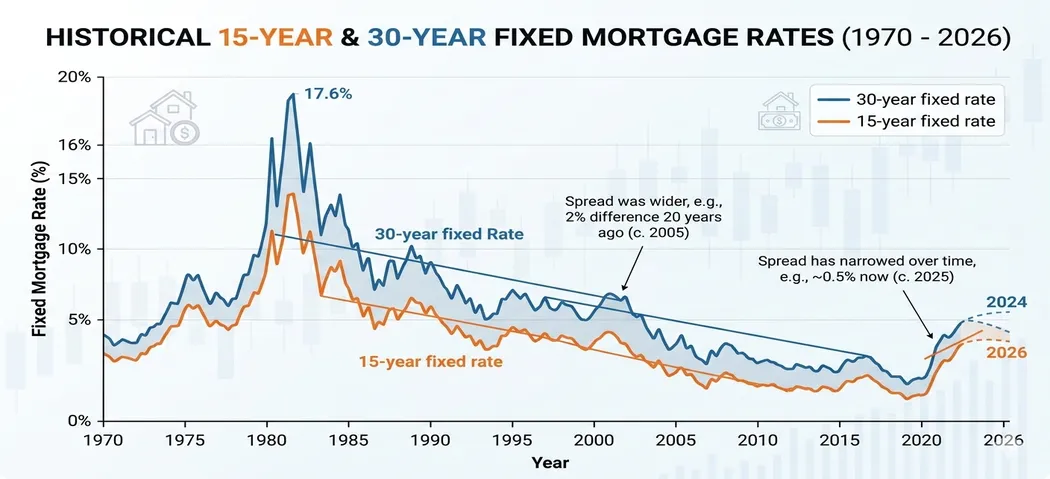
Mortgage rates across the country have settled into a more predictable range heading into spring 2026. The national average for a 30-year fixed mortgage sits around 6.3% — a meaningful improvement from the highs of 2023, but still elevated compared to the record-low years of 2020–2021.
In Phoenix, local lenders are quoting rates that closely track the national benchmark, though your personal rate will depend on your credit score, down payment size, and loan type. Here's a snapshot of what borrowers are seeing right now:
- 30-Year Fixed: ~6.3% – 6.6% (most common for conventional buyers)
- 15-Year Fixed: ~5.6% – 5.9% (lower rate, higher monthly payment)
- FHA Loan (30-Year): ~6.0% – 6.4% (popular for first-time buyers with lower down payments)
- Jumbo Loan (30-Year): ~6.5% – 7.0% (for loan amounts above $766,550 in Maricopa County)
- VA Loan: ~5.8% – 6.2% (for eligible veterans and active-duty military — a major Phoenix demographic)
The good news? Phoenix lenders are competitive. Shopping at least 3–4 lenders — including local credit unions, national banks, and online mortgage companies — can shave 0.25% or more off your rate, which translates to real money over the life of a loan.
Rates can shift week to week, so locking in when you find a good deal makes sense in this environment. If rates drop further in late 2026, refinancing remains a solid option for those who buy now.
Phoenix Housing Market Snapshot 2026
Phoenix's housing market has entered a calmer, more balanced chapter after years of pandemic-era chaos. The era of homes flying off the market in 48 hours with 20 competing offers is largely behind us — and that's actually great news for buyers.
Here's where things stand as of early 2026:
- Median Sale Price: ~$455,000–$461,000 (Redfin/Houzeo, February 2026)
- Year-Over-Year Change: Down approximately 1.3%–2.3% — a modest, healthy correction after pandemic peaks
- Average Days on Market: ~62–65 days — giving buyers real time to think and negotiate
- Inventory: Over 4,000 active listings in the city proper, with inventory up ~12% year-over-year — buyer-friendly conditions
- Sale-to-List Price Ratio: ~98% — meaning sellers are accepting offers just below asking price, not above it
- New Construction: Active across suburban Maricopa and Pinal counties, with builders offering incentives including rate buydowns and closing cost credits
The Phoenix metro's long-term fundamentals remain strong. The region is growing into a major semiconductor, healthcare, and advanced manufacturing hub, drawing skilled workers and new residents from California, Seattle, and Chicago. Maricopa County has been one of the fastest-growing counties in the entire nation for several years running.
Mid-tier Phoenix proper — homes in the $400K–$550K range — is the sweet spot right now. Condos have softened more than single-family homes, creating potential deals for buyers who don't need the extra space. Luxury Scottsdale, meanwhile, is a different animal: median prices there hover around $1.0M+, driven by lifestyle demand and a strong stock market at the high end.
The bottom line: Phoenix isn't a buyer's market in the traditional sense, but it's the most buyer-friendly it has been since before the pandemic.
Rent vs. Buy in Phoenix – Which Makes More Sense Right Now?
This is the question every Phoenix resident is wrestling with in 2026. Rents have softened, but so have home prices. Here's the honest comparison.
The average apartment rent in Phoenix is approximately $1,476/month (RentCafe, 2026), with a typical 2-bedroom running closer to $1,621/month. For a single-family rental home, expect to pay $1,800–$2,100/month depending on location and size.
On the ownership side, a $455,000 home purchase with a 10% down payment ($45,500) and a 6.4% mortgage rate produces a principal-and-interest payment of roughly $2,565/month. Add property taxes (~$1,300/year in Maricopa County), homeowner's insurance (~$2,000/year in Phoenix given wildfire and heat considerations), and HOA fees where applicable, and your true all-in monthly cost is closer to $2,900–$3,100/month.
Side-by-Side Comparison
- Renting a 2-Bedroom Apartment
- Monthly cost: ~$1,621
- Upfront cost: 1–2 months deposit ($1,600–$3,200)
- Pros: Flexibility, no maintenance costs, lower upfront commitment, rents are declining year-over-year
- Cons: No equity building, subject to rent increases, no long-term stability
- Buying a Median-Priced Home (~$455,000)
- Monthly all-in cost: ~$2,900–$3,100
- Upfront cost: $45,500+ down payment plus closing costs (~$9,000–$14,000)
- Pros: Building equity, locked-in mortgage payment, long-term appreciation potential, stability
- Cons: Higher monthly payment, large upfront cash requirement, market risk in short term
The rent-to-own gap in Phoenix is real — you'll pay roughly $1,200–$1,500 more per month to own than to rent a comparable 2-bedroom. That gap is the price of stability, equity, and Phoenix's long-term growth story.
For buyers planning to stay in Phoenix for 5+ years, ownership typically wins. For those with shorter time horizons, still building savings, or uncertain about their neighborhood preference, renting remains a smart, financially sound choice — especially with today's softer rental market offering genuine negotiating room.
Phoenix's strong job market, continued in-migration, and infrastructure investments give patient homeowners good reason for long-term optimism. The question isn't really "rent or buy" — it's "rent or buy right now versus in 12–18 months." And that depends entirely on your financial picture.
Latest Mortgage Guides & Tips
Learn the 4 key components of your monthly mortgage payment.

Compare the pros and cons for your situation.
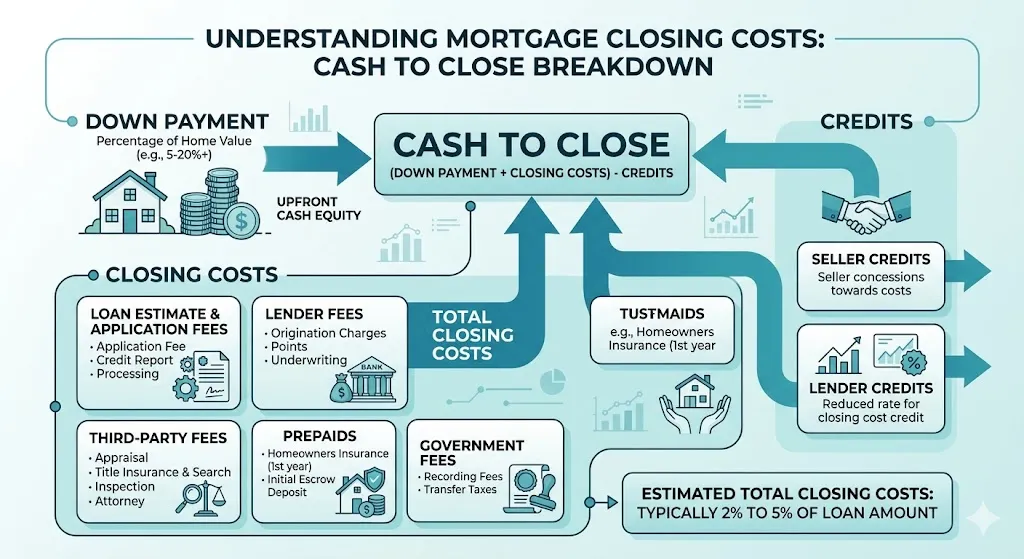
A clear breakdown of how closing costs and down payment combine into your final cash to close
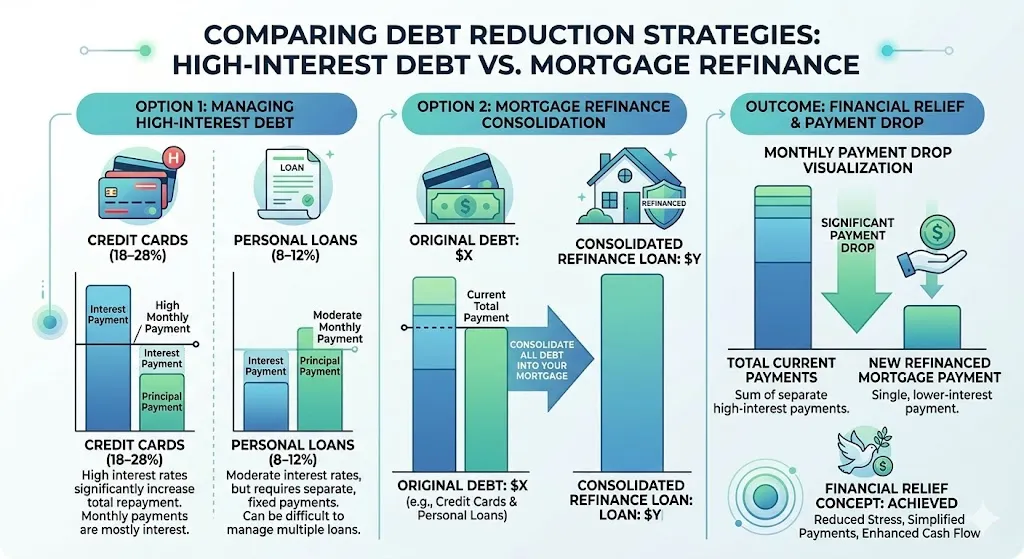
See how consolidating debt into a mortgage can dramatically reduce monthly expenses
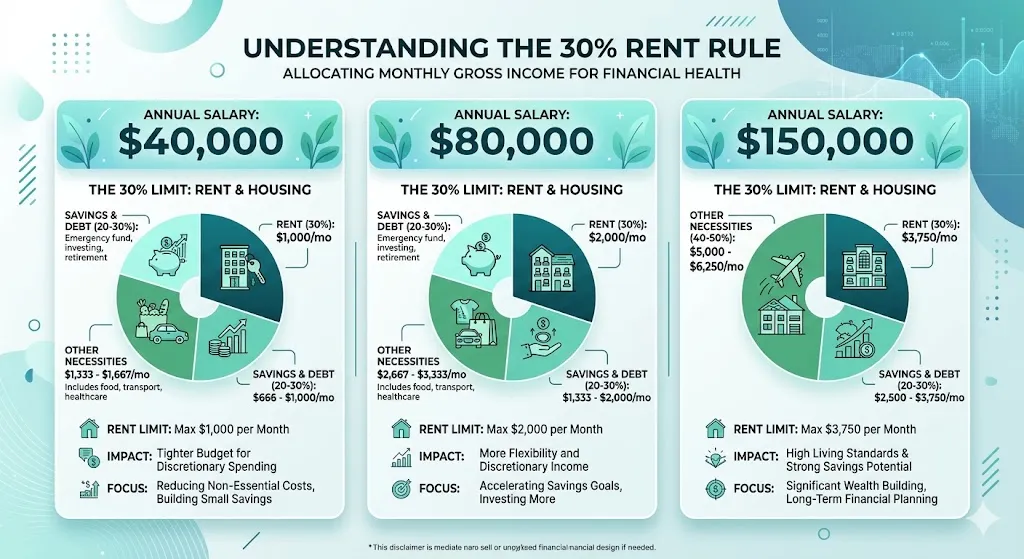
A simple breakdown of how much rent you can afford using the 30% income rule across different salary levels.
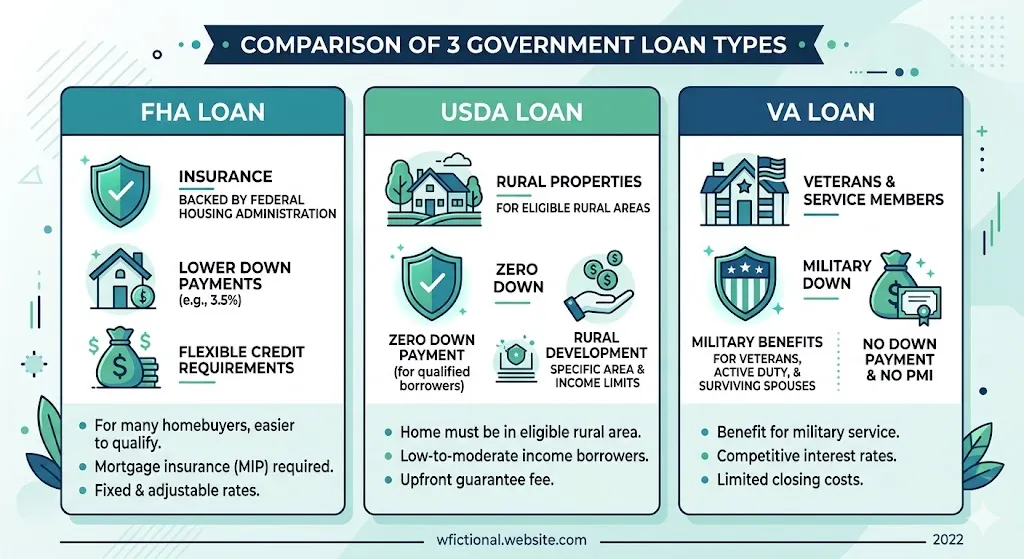
A simple breakdown of the three major government-backed home loan programs and how they differ.
Phoenix Neighborhood Guide, Local Economy & Cost of Living – 2026
Where to Buy in Phoenix – Neighborhood Breakdown 2026
Phoenix isn't one market — it's many. From ultra-luxury enclaves with mountain views to emerging neighborhoods where savvy buyers are getting in early, where you buy matters just as much as what you buy. Here's an honest, street-level breakdown.
Luxury and High-End Areas
These neighborhoods consistently command Phoenix's highest price tags — and for good reason. They offer top-rated schools, lifestyle amenities, proximity to outdoor recreation, and strong long-term value.
- Paradise Valley (adjacent to Phoenix proper): The crown jewel of the Valley. Median home prices hover around $2.5M–$4M+. Large lots, desert estate homes, and a resort-like feel draw executives, retirees, and out-of-state transplants from LA and New York.
- Scottsdale-adjacent North Phoenix (85255 / 85254): Median home prices in the $750K–$1.2M range. Excellent schools, easy access to hiking, and proximity to the Scottsdale corridor make this a perennial favorite for families and tech workers.
- Ahwatukee Foothills (South Phoenix suburb): A quieter, family-oriented enclave tucked between South Mountain and the I-10. Median prices around $550K–$700K, with low crime rates and good schools. Often called "the bedroom of Phoenix."
- Arcadia: One of the most beloved in-city neighborhoods. Tree-lined streets, citrus orchards, walkable to Biltmore-area dining. Median prices $900K–$1.3M. Huge demand, limited inventory — homes here sell quickly even in a slower market.
Phoenix luxury sales over $1 million increased 10% year-over-year in January 2026, confirming that the high end of the market is its own world right now.
Most Affordable and Growing Areas
Good news for budget-conscious buyers: Phoenix's geographic size means genuine affordability options exist within city limits and nearby suburbs.
- Maryvale (West Phoenix): One of the most affordable areas in the city, with homes frequently listing in the $280K–$380K range. A predominantly Latino community with deep roots and strong neighborhood character. Investors and first-time buyers are increasingly active here.
- Laveen: A rapidly developing southwest Phoenix community with newer construction. Median prices around $380K–$440K. Great for families seeking newer homes with more square footage at lower prices.
- Glendale (northwest metro): Glendale offers a value pocket near major amenities, with a median sale price around $455K and roughly 65 days on market. Home to State Farm Stadium and great sports access.
- Buckeye / Maricopa (far West/South Valley): Buckeye tends to offer the most room to choose, with a median sale price around $400K and roughly 2,000 listings — ideal for buyers who don't mind a longer commute in exchange for newer, larger homes at lower prices.
Up-and-Coming Best-Value Neighborhoods
These areas are showing early signs of appreciation and attracting buyer interest ahead of the curve.
- South Phoenix: Long undervalued due to its history, South Phoenix is in genuine transformation. The area continues to attract both homeowners and developers, with infrastructure and commercial improvements boosting its appeal and homes staying on the market for an average of 62 days. Its proximity to downtown is a growing selling point.
- Roosevelt Row / Downtown Phoenix Corridor: The arts district and surrounding streets are seeing condo and townhome development. Entry prices for smaller units start around $300K–$400K, with strong rental demand from ASU students and young professionals.
- North Mountain / Sunnyslope: Landlords in North Mountain are expected to see stronger-than-average rent growth, especially where new development remains limited and tenant demand continues to rise. Buyers are taking note of the same dynamics.
Areas With Economic Challenges
Every major city has neighborhoods still working through economic challenges, and Phoenix is no different. Being informed — without fear-mongering — helps buyers make smart decisions.
- Parts of West and South Phoenix (including areas around 35th Avenue south of I-10) have higher poverty rates, older housing stock, and higher vacancy in some pockets. Home prices are lower, but buyers should research specific streets, school ratings, and infrastructure carefully before committing.
- These areas often attract community investment and developer attention over time, and some are already showing signs of revitalization — but patience and due diligence are key.
- Working with a local Phoenix real estate agent who knows hyper-local conditions is especially valuable in these areas.
Economic Zones and Local Economy in Phoenix
Phoenix's economy in 2026 is genuinely exciting — and that's not just local boosterism. The city has quietly become one of the most strategically important economic regions in the entire United States.
Major Industries and Employers
- Semiconductors (the big story): TSMC's first three Phoenix fabs will result in 6,000 direct high-tech jobs, in addition to tens of thousands of construction and supplier jobs. TSMC's total investment in Arizona has grown to $165 billion — the largest foreign direct investment in a greenfield project in American history. Intel also maintains a major Phoenix-area presence.
- Healthcare: Banner Health, Dignity Health, Valleywise Health, and Mayo Clinic's Phoenix campus are among the region's largest employers. Healthcare is the largest employment sector by headcount in the metro.
- Financial Services / Fintech: JPMorgan Chase, American Express, Vanguard, and a growing fintech startup scene have made Phoenix a recognized financial hub, particularly for back-office and technology operations.
- Advanced Manufacturing and Logistics: Boeing, Honeywell, Raytheon, and Amazon have major facilities in the Phoenix metro.
- Education: Arizona State University (Tempe campus) is the largest public university in the US by enrollment, employing thousands and anchoring a research and innovation ecosystem across the Valley.
Salary Ranges for Typical Residents
- Semiconductor Technician (TSMC / Intel): $55,000–$90,000 entry to mid-level; engineers $100,000–$160,000+
- Healthcare (Registered Nurse): $75,000–$105,000
- Financial Services / Banking: $55,000–$95,000 depending on role
- Software / Tech Developer: $90,000–$150,000+
- Retail / Service Industry: $35,000–$55,000
- Median household income in Phoenix: approximately $72,000/year
Big Economic Developments in 2025–2026
TSMC is pushing to have its first Arizona chip factory operational earlier than expected, further entrenching Phoenix as a critical node in the global semiconductor supply chain. This acceleration is rippling through the entire regional economy.
A March 2026 MOU between JETRO, ASU, GPEC, and ACA was signed to boost semiconductor and AI ties with Japan. Phoenix is actively building international economic relationships that will drive job creation for years.
Phoenix also launched its first nonstop flight to Asia in January 2026, a milestone that opens new doors for international business travel and tourism — and signals how seriously Phoenix is being taken on the global stage.
The bottom line: Phoenix's economy is diversifying in all the right directions. The semiconductor cluster alone is expected to generate a massive multiplier effect on surrounding businesses, real estate, and workforce development over the next decade.
Cost of Living Snapshot for Phoenix
Understanding the full picture of what homeownership actually costs in Phoenix — beyond the mortgage payment — helps you budget confidently and avoid surprises.
Property Taxes
This is one of Phoenix's genuine advantages. The effective property tax rate in Maricopa County is just 0.40%, significantly lower than the national median. In practical terms:
- On a $455,000 home, expect to pay roughly $1,800–$2,300/year in property taxes, or about $150–$190/month
- Arizona limits annual Limited Property Value increases to 5%, so homeowners are generally protected from sudden tax bill jumps — a major advantage in a fast-appreciating market
- Approximately 75% of property tax revenue in Phoenix funds education
Homeowners Insurance
Phoenix's desert climate brings specific risks worth knowing. Wildfire risk in some zones, monsoon storms, and extreme heat mean insurance premiums run higher than the national average for some properties.
- Average annual homeowners insurance in Phoenix: $2,000–$3,000/year for a median-priced home
- Homes in the wildfire risk zone (especially northeast Phoenix / foothills) should budget toward the higher end
- Flooding from monsoon season is worth checking — some properties near washes require additional flood coverage
HOA Fees
HOAs are extremely common in Phoenix, especially in newer communities and master-planned developments.
- On average, Phoenix homeowners can expect to pay around $100 to $150 per month in HOA fees for standard single-family communities
- High-amenity communities (golf courses, resort-style pools, gated access) can run $300–$600+/month
- Condos and townhomes in the downtown corridor often have higher HOAs ($300–$500/month) that cover exterior maintenance and insurance
Commute Times and Transportation
Phoenix is a car-centric city — that's the honest truth. But it's improving.
- Average commute time: 28–32 minutes one-way (varies significantly by neighborhood)
- Valley Metro Light Rail connects downtown Phoenix to Tempe, Mesa, and Sky Harbor Airport — useful for specific corridors
- North Phoenix residents near TSMC face longer commutes to downtown (~35–45 minutes) but shorter drives to Scottsdale and the Tech Corridor
- Gas prices in Phoenix have been stable around $3.20–$3.50/gallon in early 2026
- Remote and hybrid work remains common in tech and finance, reducing daily commute pressure for many Phoenix residents
Schools and Family-Friendly Notes
School quality in Phoenix varies considerably by zip code, which is a major factor for families choosing a neighborhood.
- Top-rated public school districts: Paradise Valley Unified, Scottsdale Unified, and Chandler Unified consistently score among Arizona's best
- Charter school options are abundant across Phoenix — Arizona has one of the most active charter school markets in the country, giving families real alternatives to traditional district schools
- Arizona State University anchors a world-class higher education ecosystem, with Maricopa Community College offering affordable pathways and the new TSMC technician training programs gaining real momentum
- Family-friendly neighborhoods with the best school-to-price ratios include Ahwatukee, Gilbert, Chandler, and North Phoenix — all offering strong academics without the full Scottsdale price premium
Phoenix rewards buyers who do their homework on neighborhoods. The right zip code can mean the difference between a starter home with mediocre schools and a long-term investment in a community your family will love for decades.
Best Mortgage Options, Tips & FAQs for Phoenix Buyers – 2026
Best Mortgage Options for Different Salaries in Phoenix
There's no single "right" mortgage for every Phoenix buyer. Your income, savings, credit score, and goals all point to different strategies. Here's a practical breakdown by household income — so you can see exactly where you might fit.
Low-to-Mid Income: $40,000–$80,000 Household
Buying in Phoenix on this income is genuinely possible in 2026 — especially with the assistance programs Arizona has built specifically for buyers in this range. The key is stacking the right programs together.
- Best loan type: FHA Loan — requires just 3.5% down with a credit score of 580+, and FHA rates in Phoenix are running around 6.0%–6.4%. On a $380,000 Laveen or Maryvale home, that's a down payment of roughly $13,300.
- Home in Five Advantage (Maricopa County): Qualified buyers can receive up to 6% of the loan amount in down payment assistance through an interest-free, forgivable second mortgage. Teachers, first responders, veterans, and those earning under $49,500 may qualify for an extra 1%.
- Home Plus AZ (statewide): A 30-year fixed-rate mortgage paired with up to 4%–5% in down payment and closing cost assistance, available in every county, city, and zip code in Arizona. Income must not exceed $112,785.
- WISH Program: For qualifying first-time buyers, this grant matches your contributions 4-to-1 — up to $32,837 toward down payment and closing costs. If you save $5,000, the program can add $20,000.
- Arizona Is Home Program: A state-run program offering below-market fixed-rate mortgages plus 4% down payment assistance for first-time buyers in Maricopa County at or below 120% of Area Median Income.
- Pro tip: Get a home buyer education certificate — it's required by most assistance programs and only takes a few hours online. It also makes you a smarter, more confident buyer.
The realistic target for this income bracket in Phoenix: homes in the $280,000–$420,000 range, concentrated in Laveen, Maryvale, Glendale, and parts of West Phoenix. These neighborhoods offer real value and are seeing steady investor and buyer interest.
Middle Income: $80,000–$150,000 Household
This is the largest and most active buyer segment in Phoenix right now. With solid income but still feeling the pinch of today's rates, strategic loan choices make a big difference.
- Best loan type: Conventional (Fannie Mae / Freddie Mac) — puts you in a stronger negotiating position with sellers than FHA, and avoids lifetime mortgage insurance if you put 20% down. With 10% down on a $455,000 home, that's $45,500 upfront.
- 3%–5% down conventional options are available through programs like HomeReady and Home Possible — both designed for moderate-income buyers and offering reduced private mortgage insurance (PMI) costs.
- Middle-Income Grant Program: First-time buyers can receive up to $50,000 toward down payment and closing costs — you contribute a minimum of $10,000 of your own funds and the program covers the rest. This is a genuine game-changer for buyers in this bracket.
- VA Loan (if eligible): Phoenix has a large military and veteran population. If you've served, a VA loan with zero down payment and rates around 5.8%–6.2% is almost always the best deal available. No PMI, ever.
- 15-Year Fixed option: At $120,000+ household income, some buyers run the numbers on a 15-year fixed (~5.6%–5.9%). Monthly payments are higher but you build equity dramatically faster and pay far less in total interest.
- Target neighborhoods: North Phoenix, Chandler, Tempe, Gilbert, and Ahwatukee — all offering excellent school districts and long-term value in the $430,000–$650,000 range.
Higher Income: $150,000+ Household
At this income level, flexibility is your advantage. The focus shifts from "how do I qualify" to "how do I optimize."
- Conventional 20% down: Eliminates PMI entirely. On a $600,000 Arcadia or North Phoenix home, that's $120,000 down — but your monthly payment drops meaningfully and you start with instant equity cushion.
- Jumbo Loans: For homes above the Maricopa County conforming loan limit (~$766,550), jumbo loans apply. Rates are running 6.5%–7.0% in early 2026. Lenders typically require 10%–20% down, strong reserves, and a credit score above 720.
- ARM Loans (Adjustable Rate): A 7/1 or 10/1 ARM at a lower initial rate (~5.5%–6.0%) can make sense if you plan to sell or refinance within that window — a calculated bet many higher-income buyers are comfortable making.
- Investment play: With Phoenix's strong rental fundamentals, some buyers at this level are purchasing a second property as a rental income vehicle, particularly near ASU in Tempe or near the TSMC corridor in North Phoenix.
- Target areas: Arcadia, Paradise Valley, Desert Ridge, North Scottsdale-adjacent, and premium new builds in the Peoria / North Phoenix corridor.
Local Success Stories and Practical Tips
The best mortgage advice isn't theoretical — it's grounded in what's actually working for real Phoenix buyers. Here are three common local scenarios playing out in 2026.
The TSMC Technician: New to Phoenix, First Home
Marcus, 27, relocated from Ohio to take a manufacturing technician role at TSMC's North Phoenix fab. Annual salary: $68,000. He had $8,000 saved — not enough for a 20% down payment on anything in Phoenix.
His solution: He combined an FHA loan with the Home in Five Advantage program, receiving 5% in down payment assistance on a $375,000 townhome in Peoria. His out-of-pocket upfront cost dropped to under $5,000. His monthly payment including taxes, insurance, and HOA: $2,650/month — about $200 more than his previous apartment rent, but building equity every month.
Lesson: New Phoenix residents taking semiconductor and tech jobs should explore assistance programs immediately — they're often eligible even without years of local history. Ask your HR team if your employer has any homebuyer partnership programs too.
The Growing Family: Trading Up in Chandler
The Reyes family — two working parents, combined income $128,000 — had owned a starter condo in Tempe for four years and built up $85,000 in equity. In early 2026, they used that equity as a down payment on a $560,000 four-bedroom home in Chandler with top-rated schools.
They locked a conventional 30-year fixed at 6.35% and negotiated 2% in seller concessions (covering most closing costs) — something that was nearly impossible during the frenzied 2021–2022 market but is increasingly available now. Total monthly payment: $3,490/month.
Lesson: The Phoenix market's softening is real leverage for move-up buyers in 2026. Don't be shy about asking for seller concessions — more than half of transactions in the $200,000–$600,000 range now include them.
The Arizona Retiree: Rightsizing Wisely
Sandra, 64, sold her California home for a significant profit and moved to Phoenix — a path that thousands of Californians are taking every year. She paid cash for a $480,000 patio home in Ahwatukee Foothills, eliminating her mortgage entirely. Her only ongoing housing costs: HOA ($180/month), property taxes (~$165/month), and insurance (~$200/month). Total: under $550/month.
Lesson: Phoenix's price point relative to California, Seattle, and Chicago makes it a retirement wealth-optimization play. Even buyers who don't pay cash can use California or Pacific Northwest home equity to dramatically reduce their Phoenix mortgage.
Practical Tips for Phoenix Buyers in 2026
- Get pre-approved before you tour. Phoenix listing agents take pre-approved buyers far more seriously. It also forces you to know your real number before you fall in love with something out of budget.
- Shop monsoon season timing. August through November tends to have higher inventory and slower sales — giving buyers more negotiating room than the competitive spring market.
- Budget for summer electricity bills. Phoenix heat is legendary. Average summer electric bills can run $200–$350/month from June through September. Factor this into your true monthly housing cost.
- Check HOA documents carefully. Phoenix HOAs vary wildly in quality, reserves, and restrictions. Request the last 2 years of HOA financial statements before making any offer on a community property.
- Ask builders about rate buydowns. New construction is active across the Valley, and builders in 2026 are offering interest rate buydowns (sometimes 1%–2% below market for the first 1–3 years) to move inventory. This can save thousands in early ownership years.
Frequently Asked Questions About Mortgages in Phoenix
-
What credit score do I need to buy a home in Phoenix?
For an FHA loan, the minimum is 580 (with 3.5% down) or 500 with 10% down. Conventional loans typically require 620+, though you'll get the best rates at 740 or above. Most Phoenix assistance programs also require 640–680.
-
How much do I need to save before buying in Phoenix?
With assistance programs, as little as $5,000–$10,000 out of pocket is realistic for a first-time buyer purchasing in the $350,000–$420,000 range. Without assistance, plan on 3%–5% down plus 2%–3% in closing costs — roughly $25,000–$40,000 on a median-priced Phoenix home.
-
Is it a good time to buy in Phoenix in 2026?
For buyers planning to stay 5+ years, the answer is yes. Prices have moderated, inventory is up, sellers are accepting concessions, and Phoenix's long-term economic fundamentals — driven by TSMC, healthcare, and continued migration — remain strong. Short-term buyers should be more cautious given still-elevated rates.
-
What is the FHA loan limit in Phoenix / Maricopa County for 2026?
The 2026 FHA loan limit in Maricopa County is $472,030 for a single-family home. For higher-priced homes, a conventional or jumbo loan is required.
-
Are there programs for non-first-time buyers in Phoenix?
Yes. The Home in Five Advantage program is open to both first-time and repeat buyers in Maricopa County. Home Plus AZ is also available to repeat buyers who meet the income and other eligibility requirements.
-
How long does it take to close on a home in Phoenix?
Most Phoenix purchases close in 30–45 days from accepted offer. VA loans and transactions involving down payment assistance sometimes take 45–60 days due to additional processing steps. Building extra time into your search timeline is always smart.
-
Should I use a local or national lender in Phoenix?
Both can work well. Local lenders and credit unions like Arizona Central Credit Union often have the best knowledge of state assistance programs. National online lenders can offer competitive rates. The smart play: get quotes from at least 3 lenders — one local, one national, one credit union — and compare the full cost, not just the headline rate.
Ready to Buy in Phoenix? Start Here
Phoenix in 2026 is one of the most interesting — and genuinely promising — housing markets in the country. Prices have cooled from pandemic peaks, inventory is recovering, sellers are negotiating, and the city's underlying economic engine is stronger than ever thanks to TSMC, healthcare, and a steady stream of new residents from higher-cost states.
Whether you're a first-time buyer stretching to get into Laveen, a family ready to trade up to Chandler's great schools, or a retiree arriving from California with equity to deploy, there is a real path to homeownership in Phoenix right now — and real programs to help you get there.
The most important first step? Know your number. Before you tour a single home, before you call a real estate agent, understand what monthly payment you're genuinely comfortable with — not just what a lender will technically approve you for.
- Run your numbers with the mortgage calculator above — plug in real Phoenix prices, today's rates, and your down payment to see your estimated monthly payment instantly
- Explore whether you qualify for Arizona's assistance programs — the Home in Five Advantage, Home Plus AZ, or the Middle-Income Grant Program could put thousands of dollars back in your pocket
- Get pre-approved by at least 3 lenders before you start seriously touring homes
- Connect with a Phoenix-based real estate agent who knows neighborhood-level trends — the difference between the right and wrong zip code in this city is significant
The Valley of the Sun rewards buyers who come prepared. You've done the research — now use the calculator above to take your first real step toward owning a piece of Phoenix.
Mortgage Services in Other Cities

New York City
Get accurate mortgage estimates, PITI calculator, and competitive rates for New York City home buyers.
Explore New York →

Los Angeles
Calculate monthly payments and compare fixed & adjustable mortgage rates in Los Angeles.
Explore Los Angeles →

Chicago
Instant mortgage payment calculator with current rates for Chicago homebuyers in 2026.
Explore Chicago →

Phoenix
Find the best mortgage options and estimate payments for homes in Phoenix, Arizona.
Explore Phoenix →

Philadelphia
Affordable mortgage solutions and FHA, VA, USDA loan options for Philadelphia buyers.
Explore Philadelphia →

San Antonio
Easy mortgage calculator with current interest rates for San Antonio home purchases.
Explore San Antonio →

San Diego
Compare mortgage lenders and calculate payments for properties in San Diego.
Explore San Diego →

Dallas
Fast mortgage estimates and expert loan guidance for Dallas-Fort Worth area buyers.
Explore Dallas →

San Jose
High-value mortgage solutions and rate comparisons for San Jose homebuyers.
Explore San Jose →

Houston
Reliable mortgage tools and current rates for Houston metropolitan area buyers.
Explore Houston →
About the Author
This article was written by the Me (Pardeep) and My Financial Guide Team,
a group of researchers focused on mortgage education and home financing tools.
Our goal is to help home buyers understand mortgage payments, interest rates,
and loan options through simple guides and calculators. Last Updated: April 2026